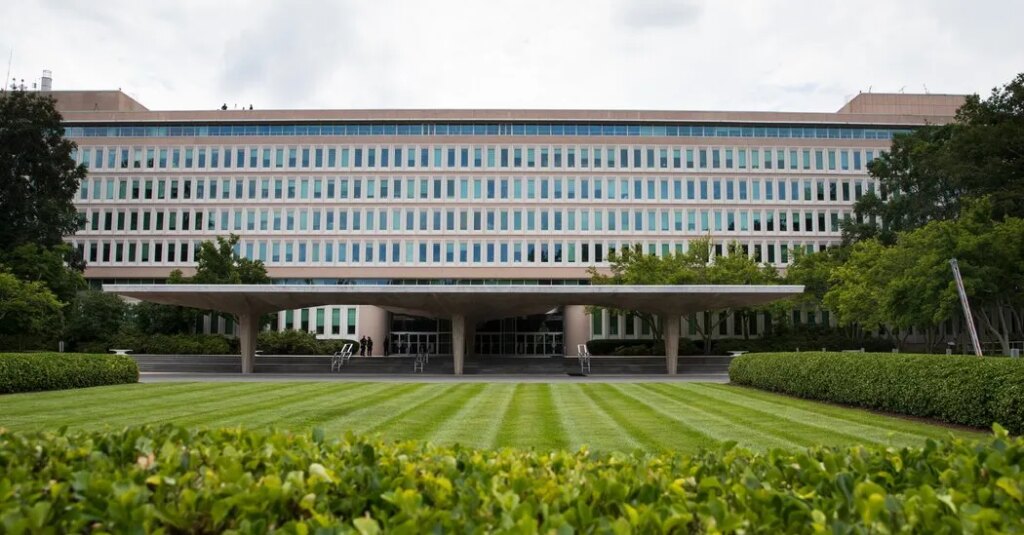
The Central Intelligence Agency and the Office of the Director of National Intelligence recently discovered a cybersecurity breach that exposed some of their unclassified information, according to U.S. officials and other people familiar with the matter.
The intrusions affected an open-source intelligence analysis system, a computer network that looks for intelligence insights in public, unclassified material, the people familiar with the issues said.
It was not clear specifically what information was compromised, but classified material was not jeopardized, the people said. Information at other government agencies was also believed to have been exposed in the breach, according to two of the people.
Open-source intelligence can include vast troves of commercially available data sets, social media content, satellite imagery and other online material. Much of it is publicly available, but it can include information sold by data vendors that can be highly revealing, especially when combined with other tranches of data.
Spy agencies can also use the data alongside other sources of intelligence to inform analytical judgments.
It is not uncommon for federal agencies to suffer cybersecurity breaches, but several have recently detected intrusions into some of their systems, prompting heightened concern among current and former U.S. intelligence officials.
The officials and others familiar with the matter spoke on the condition of anonymity to discuss a sensitive security matter that had not been made public.
The C.I.A. declined to comment. The Office of the Director of National Intelligence did not immediately respond to requests for comment.
The episode coincides with a surge of technological disruptions, including a dayslong outage last week of the National Security Agency’s internal classified network that officials and businesses said were not the result of cyberattacks. The problems have rattled the American public. U.S. officials say that in some cases, artificial intelligence is uncovering software vulnerabilities that need to be quickly patched.
In this instance, it appears that a hacker gained unauthorized access to at least one government system, though the people familiar with the matter did not say whether investigators knew who was responsible.
It is just the most recent breach of government systems to surface recently. Last week, President Trump appeared to confirm that the F.B.I.’s National Crime Information Center — a nationwide database used to swap information among local, state and federal law enforcement agencies about criminal suspects — had recently been hacked.
“I will say that it’s not good — I don’t like that,” Mr. Trump said on Saturday during a phone interview with Fox News when asked about the F.B.I. breach, which CNN had reported earlier. The F.B.I. is investigating the breach, according to people familiar with the matter.
Also last week, the U.S. Department of Agriculture discovered a cybersecurity incident that led to some of its internal applications being taken offline, according to a department employee. News of the U.S.D.A. matter was reported earlier by Nextgov, a site that focuses on federal government technology issues.
Jay Clayton, the director of national intelligence, whom Mr. Trump recently tapped as his acting cyber director, appeared on several news programs on Sunday trying to quell rising public anxieties about recent technology outages, including the national air grounding earlier this month. Officials have said the flight issues were caused by issues related to router maintenance.
Pressed on the recent hack of the F.B.I. crime database, Mr. Clayton said breaches occurred frequently and that there was no cause for alarm.
“Cyberprobing, cyberincidents, they have been part of the American economy, part of the American life for a long time,” Mr. Clayton said on ABC’s “This Week.”
“And what we’re hearing about the F.B.I., and what I’ve talked to them about is, they have an incident. They’re dealing with it in the ordinary course.”
Glenn Thrush contributed reporting.
The post U.S. Spy Agencies Suffer Breach of Some Unclassified Information appeared first on New York Times.