In the summer of 1977, Tea Rose, a potent fragrance made from essential oils unrelated to the actual flower known as the tea rose, arrived with all the subtlety of a Grand Theft Auto launch.
Donald Bauchner, a founder of the Perfumer’s Workshop, the company that created the stuff, mounted a full-scale offensive, instructing his sales directors to make sure that Tea Rose was everywhere: to pour vials down the backs of airplane seats and into hotel air-conditioning ducts, and to put drops on escalator handrails. The scent inserts for the ads he bought in Women’s Wear Daily, the trade paper for the fashion industry, were so thoroughly saturated with the fragrance that postal workers complained, and so did people working in the offices where the publication was delivered.
“You couldn’t kill it if you tried,” one irate subscriber yelled at Mr. Bauchner.
But many women loved Tea Rose. So did teenage girls, who prowled the aisles at Bloomingdale’s in clouds of the fragrance, having doused themselves with the samples that were so freely handed out at the Perfumer’s Workshop counter.
Within a few years, as Mr. Bauchner told Michael Edwards, the fragrance historian who recounted the origin story of Tea Rose in his book “American Legends: The Evolution of American Fragrances” (2024), annual sales of the scent increased tenfold, to $3 million.
“Roses were associated with old ladies, but Donald made Tea Rose young and cool and beautiful,” Ann Gottlieb, a veteran fragrance developer, said in an interview. “Everybody wore it; it was that kind of fragrance. There was no social media in those days, of course, but it spread as if someone had discovered it on TikTok.”
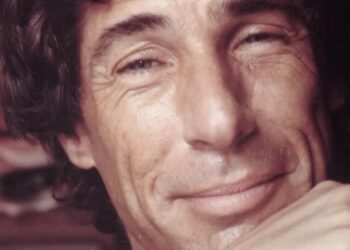
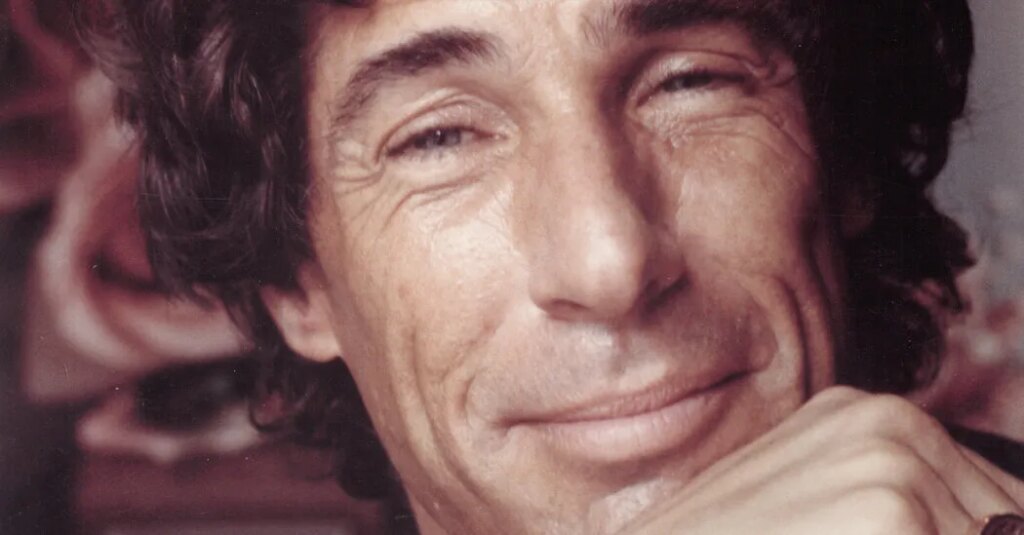
Mr. Bauchner, whose company brought essential oils out of head shops and into department stores — and, in so doing, accidentally created a blockbuster fragrance favored by Princess Diana, Nicole Kidman, Lillian Hellman and the royal families of the Middle East — died on Sept. 18 in Manhattan. He was 85.
His death, at a hospital, was announced by William Skinner, a longtime consultant to the company.
In the early 1970s, patchouli and musk were the go-to scents of young bohemians, male and female, and anyone else who aspired to such a state. They were essential oils, more potent than blended perfumes, and sold mostly at head shops, health food stores and record stores.
But Mr. Bauchner and Howard Molyneux, his partner at the time, had an idea: What if they made the stuff more mainstream and high-end?
They built a counter at Bloomingdale’s in Manhattan that looked like a combination of a hippie boutique and an old apothecary and called it the Perfumer’s Workshop. It was a do-it-yourself perfumery; along with musk and patchouli, it sold 64 different oils that customers could use to mix their own bespoke scents.
“The fragrance industry then was still built around the big signature scents of the French couture houses,” Paul Austin, a fragrance industry strategist and creative director, wrote in an email, “which were finished compositions handed down with a lot of authority and mystique. Donald flipped that dynamic. He invited customers to explore raw materials, play with combinations and mix something of their own.”
He added, “He made perfume feel personal, democratic and fun.”
That “smorgasbord of fragrances was news,” Mr. Bauchner said. “There were some unusual requests. ‘Make me a blue fragrance to match the blue dress I’m wearing tonight.’ One favorite customer was blind. She could smell her way to our counter, guided by the scents of the oils that permeated the entire store.”
Tea rose was one of those oils — not a single essence, as it happens, but a blend that had been given the code name Tea Rose by Firmenich, the Swiss company that produced it. (Fragrances are created by master perfumers at organizations like Firmenich, on assignment from companies like the Perfumer’s Workshop.)
“Tea Rose had an almost startling realism,” Mr. Austin said. “It was green, crisp and vivid, much closer to smelling a real rose in a garden, leaves and all. New rose molecules coming out of Firmenich at the time made that possible, which is a nice paradox. One of the most natural-smelling fragrances of the era owed its character to cutting-edge synthetic chemistry.”
The Perfumer’s Workshop soon had counters at Saks Fifth Avenue in New York and Harrods and Selfridges in London. Tea Rose was such a standout that they decided to make it a separate line.
It was perhaps because the fragrance was an outlier that it became such a hit. It appeared at a time when American perfumes were being marketed as “lifestyle” products, with huge department store rollouts and marketing campaigns. “Hero” fragrances, as Mr. Austin put it. The ads for Charlie, out in 1973, for example, had a narrative that was proto-feminist and youthful, featuring the model Shelley Hack striding about in pants.
Tea Rose — niche, and a bit renegade — was just selling itself.
“Love it or loathe it,” Mr. Bauchner told Mr. Edwards, “Tea Rose could not be ignored.”
Donald Bauchner was born on May 11, 1941, in Newark, one of two children of Rose (Cooperberg) Bauchner and Milton Bauchner, the president of a hotel in Myrtle Beach, S.C.
He grew up in South Orange, N.J., and earned a Bachelor of Science degree in economics at the Wharton School of the University of Pennsylvania in 1963. Then he went to work in the cosmetics industry, with jobs at Revlon and Estée Lauder. It was not the career he had planned on.
“I had a date with this girl whose father was an executive at a cosmetics firm,” he told The Miami News in 1974. “He said to me, ‘Donald, I want you to work in the mailroom this summer.’ I wanted to be a lifeguard.”
Mr. Bauchner founded the Perfumer’s Workshop in 1970 with Mr. Molyneux, who had worked in fashion. In 1972, he married Gun Backstrom, a Swedish-born artist and fashion illustrator. She joined the company, and after Mr. Molyneux sold his share of the business to Mr. Bauchner, the Bauchners ran it together.
They were a compelling pair, drawing crowds to department stores across the country whenever they made appearances. (Mr. Bauchner had the look of a young Warren Beatty during the “Shampoo” years.) They had a jet-set gloss, with homes in New York City, Paris and Provence, in southeastern France.
“They had such style and panache,” Mr. Austin said, “and stood out because they were doing their own thing when the rest of the industry was playing to a big-brand department-store formula.”
Ms. Bauchner died in 2021. Mr. Bauchner is survived by his sister, Sonny Gillis.
A half-century after the debut of Tea Rose, the fragrance community, a vast and diffuse group of influencers, YouTubers and reviewers, has a lot to say about it. Posters on Fragrantica, an encyclopedic online resource, are particularly eloquent. A sampling:
“Beyond wearing it straight, its real superpower is as a high-utility layering weapon to inject an authentic floral backbone into other compositions.”
“A big strident opening filled with bergamot, jammy pink roses, and sort-of-chemically woody and neon green notes.”
“Smells a bit damp.”
(That last one was a compliment.)
The Perfumer’s Workshop, which operated out of a Paris office for a few decades, made many other scents over the years, including Samba: The women’s version was a medley of freesia, mandarin orange and oak moss; the men’s version featured vanilla. It came in a funky, rippled bottle that resembled an expensive bong. The company also made fragrances for the designers Sonia Rykiel (who had been a Tea Rose fan) and Louis Féraud, among others.
Mr. Bauchner never retired.
In the last few months of his life, when he was in palliative care, Mr. Skinner and others found that they could engage him by handing him fragrance samples to evaluate. If he approved, he might declare, “This one’s a winner. Should be in Saks!”
The post The Man Who Created Tea Rose, the Smell of the ’70s and ’80s, Has Died appeared first on New York Times.