A coastal California city this week is facing a scare amid concerns that someone popped open a water storage tank and dropped in “an unknown substance.”
Residents of about 500 homes in San Luis Obispo are on notice, likely through Thursday, not to drink the water pending test results. The city said in a statement Monday that it had evidence of trespassing at one of its water storage tanks. An alarm sounded Sunday night indicating that the access hatch on top of a tank had been lifted — and spurring concerns a substance “may have been introduced to the drinking water supplied by the City of San Luis Obispo,” the city said on its website.
While the incident raises questions about the vulnerability of a city’s water supply to bad actors, one expert says water storage tanks are seldom broken into. Cyberattacks, on the other hand, have recently proved to be a more credible threat.
UCLA associate professor Greg Pierce, the director of the UCLA Water Resources Group, said water storage tanks are usually surrounded by fences, monitored by cameras, and have security alarms. Aside from occasional stories of youth climbing and vandalizing water tanks in Southern California, he said, they’re not much of a target.
But the U.S. has seen an uptick in cyberattacks targeting water supply facilities this year, Pierce noted.
In July, the FBI said in a statement that water and wastewater sector utilities companies in at least seven states had reported cyberattack incidents — including some that “degraded water operations” to the agency.
Colorado’s governor said in September that foreign actors had targeted private water providers in the state, changing equipment settings and disabling remote access and alarms, according to ABC News.
There are three levels of drinking water advisories, according to Pierce. The most stringent of them is the “do not use” notice, followed by the “do not drink” notice issued by San Luis Obispo on Monday. The least restrictive of them, the “boil water” notice, is often issued after a drop in water system pressure because of microbial contamination.
The “do not drink” notice applied to 516 homes mostly in the Serrano and Patricia neighborhoods that received water from the tank. The notice was expected to be in place for about 72 hours — through Thursday — pending testing results.
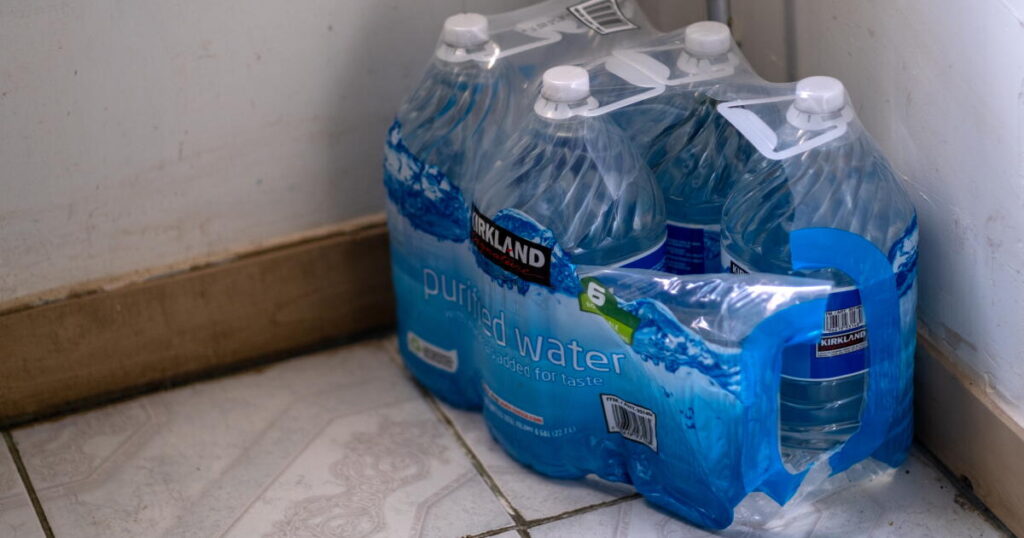
Residents were instructed to use bottled water for all drinking, brushing teeth, washing dishes, making ice and food preparation until further notice. People could still shower safely, according to the city.
“Do not try and treat the water yourself,” the statement read. “Boiling, freezing, filtering, adding chlorine or other disinfectants, or letting water stand will not make the water safe if contamination exists.”
Last year, damage from the Eaton and Palisades fires prompted nine L.A.-area water systems to issue “do not drink” notices due to lingering contaminants. The last of these notices were lifted in May 2025.
Pierce said San Luis Obispo likely issued the advisory out of an abundance of caution. Tampering with a water supply is more difficult than movies suggest, because any substance introduced would be heavily diluted, he said.
The post California city faces water contamination scare after alarm indicates a tank trespasser appeared first on Los Angeles Times.