After a generational flogging in the midterms, Republicans are bracing for a sharp loss of power with little consensus on how to regain their footing.
Democrats swept them out of office on the back of a public fury that rivaled the post-Watergate backlash of the 1970s, winning 56 percent of the popular vote — a margin unparalleled in the modern era — and ending decades-long streaks of Republican dominance in Texas, Kansas, Mississippi and South Carolina.
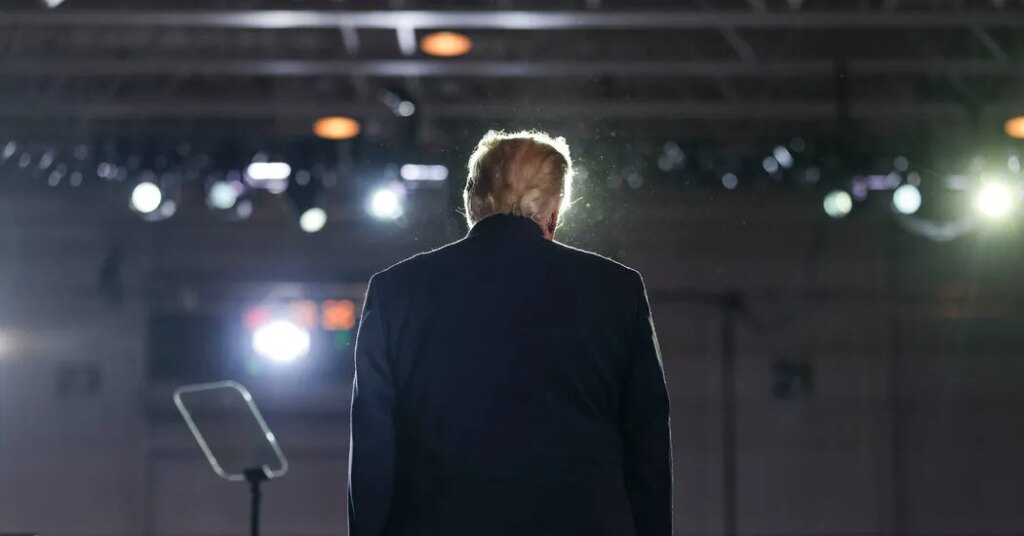
Republicans are now in the early stages of the soul searching that is typical for a party after major election defeats. But for this Republican Party, that period of reflection is complicated by President Trump’s enduring dominance. A clear divide has already emerged between those who say he bears significant culpability for the midterm losses, and those who are unwilling to cast blame his way.
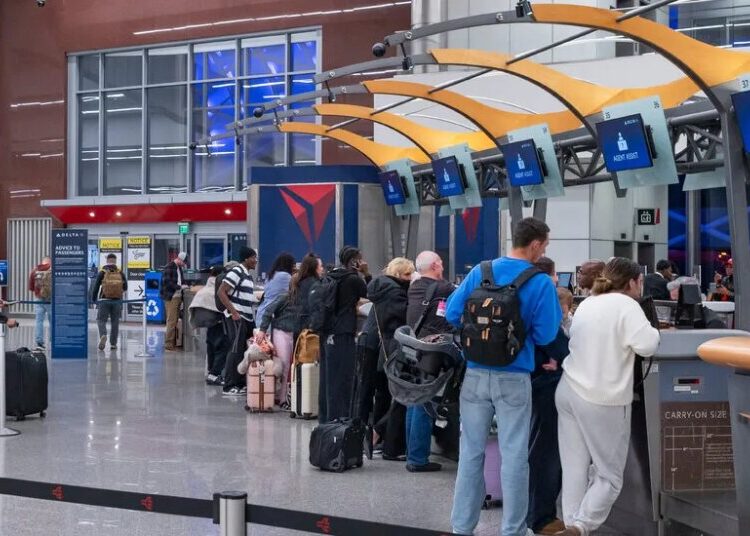
In interviews, nearly 20 Republican lawmakers, strategists and officials gave a wide range of explanations for what they called a “shellacking,” an “apocalypse” and a “wholesale repudiation” of the party. They cited inflation, off-base messaging, vulnerability to Democratic attacks about corruption, and overzealous immigration enforcement.
David Kochel, an Iowa Republican strategist, called the midterms “a rejection of the president,” adding that “it felt to me like a bit of a recall election — like, ‘We screwed up in 2024 and we’re going to try to fix it as best we can.’”
Other party strategists, commentators and departing lawmakers have also grown far more blunt about what they see as Mr. Trump’s political failings. Prominent right-leaning figures like Elon Musk, Stephen K. Bannon and Joe Rogan have distanced themselves from the president.
Ben Shapiro, a prominent conservative pundit who campaigned for Mr. Trump, told NPR this past week that voters this election “went in and they said: ‘I think that the Trump administration has basically stunk up the joint. Throw ’em out.’”
“And I think it was really that simple,” he added.
But many other Republicans have blamed Mr. Trump’s policies, like tariffs, without directly blaming him. Vice President JD Vance frustrated the president by attributing the defeats to the Iran war, perhaps his boss’s most politically consequential decision.
Mr. Trump’s allies in Republican leadership, including Speaker Mike Johnson, have also avoided criticizing him or even offering much explanation of what went wrong. House Republicans just elected a close Trump ally, Representative Jim Jordan of Ohio, to be their next leader. And while Mr. Trump has acknowledged that he may have overstepped on immigration, on Friday he blamed lawmakers for failing to “get the things that I wanted passed.”
The party’s limited reckoning over the midterms foreshadows the coming battle over its direction now that Mr. Trump is a lame-duck president — and suggests that influential Republican figures may be reluctant to change course.
Too Much Red Meat, Not Enough Meat and Potatoes
Republican elected officials and strategists broadly agree that the party focused too much on culture-war issues, like transgender athletes in girls’ and women’s sports, and too little on kitchen-table topics that could appeal to independents and swing voters.
Senator Ted Cruz, now set to become the only major statewide Republican official in Texas, said on his podcast days after the election that “too many Republican politicians seemed like they didn’t understand or they didn’t care” about Americans’ “very real pain.”
Representative Beth Van Duyne of Texas, a Trump ally who won re-election in a House district that swung less to the left than any other in the state, said in an interview that her colleagues had not talked enough about “meat-and-potato issues.” Representative Nathaniel Moran, a Texas Republican who also performed better than the top of the ticket, told The New York Times that “we became disconnected from the everyday, working-class man and woman and what was important to them at this moment.”
But the messaging problem was hard to untangle from the party’s actions. Many Republicans became increasingly vocal opponents of Mr. Trump’s tariffs and the Iran war, which were a major driver of cost increases, particularly for gas and diesel. And some aspects of Mr. Trump’s signature domestic policy law also proved unpopular, notably its cuts to Medicaid benefits.
Senator Josh Hawley, a Missouri Republican who is a potential 2028 presidential contender, said the election showed that his party must focus more on affordability issues and working-class voters.
“We’re a blue-collar state,” Mr. Hawley told The Associated Press this past week, referring to Missouri. “And I think the Republican Party will either be a blue-collar party or we will be a permanent minority party.”
Did the Party Go ‘Too Far’ on Immigration?
In 2024, Mr. Trump campaigned on a promise to secure the border and deport immigrants who were in the country illegally. It worked.
But after this year’s rout, some Republicans have suggested that voters punished the party for the Trump administration’s aggressive tactics. Nationally, Hispanic voters shifted 31 percentage points to the left compared with the 2024 presidential election, according to Times Voter Trends, a larger change than for any other racial group.
Mr. Trump himself told CBS’s “60 Minutes” less than a week after the election that his deportation policy “might be too tough” and might have “hurt” Republican candidates.
Giancarlo Sopo, a Republican strategist who worked on two House campaigns in South Texas, said the immigration crackdown and high prices had supercharged turnout for Democrats and driven many Trump voters to turn on Republicans.
In 2024, Mr. Sopo said, Hispanic Americans “voted to make carne asada less expensive and to deport gang members,” not to see longtime neighbors locked up and sent away.
He added: “When you have masked agents showing up in sacred civic centers to pick people up, people are understandably indignant.”
At the same time, some hard-line Republicans — including Representative Lauren Boebert of Colorado, who lost her re-election bid — have said that the administration should have deported more people.
Mr. Trump has not indicated that he will change direction. Days after the election, he announced that Stephen Miller, the architect of his immigration agenda, would be his new chief of staff. The move raised political concerns even from some Trump allies.
“If your team takes a beating as badly as we took last week, you have to fire people,” Representative Marlin Stutzman of Indiana told CNN, calling Mr. Miller’s appointment a “mistake.”
A ‘Whiff of Corruption’
Corruption was a top issue for voters this year, polls showed, a shift from previous elections.
The Republicans who have blamed concerns about self-dealing for the party’s losses include former Vice President Mike Pence and Senator John Cornyn of Texas, who lost his primary this year to Mr. Trump’s preferred candidate, the state attorney general, Ken Paxton.
Mr. Shapiro, the conservative commentator, told NPR that “the whiff of corruption surrounding the White House is truly awful.”
Former Gov. Chris Christie of New Jersey, a potential 2028 presidential candidate and a longtime Trump critic, said his party needed to demand higher standards of its leaders.
“We’ve taken a character holiday in the Republican Party for the last 10 years,” he said this month on the radio show “New Hampshire Today,” adding, “That lack of character has an impact on the country.”
The White House denied allegations of corruption, with a spokeswoman, Lauren Bis, saying that “President Trump only acts in the best interests of the American public — which is why they overwhelmingly re-elected him to this office.”
‘We Got Fat and Happy’
Republicans said they underestimated their opponents’ chances in states like Texas, Mississippi, South Carolina and Kansas, assuming decades of dominance would protect them.
In Texas, “we’ve been a one-party state for too long,” said Matt Mackowiak, a Republican strategist. “We got fat and happy.”
Ms. Van Duyne, the Texas congresswoman, said “Voters felt like they were taken for granted.”
Several said the party had focused too much on appeasing right-wing hard-liners.
“They think nothing is good enough, they think nothing is extreme enough,” said Representative Dan Crenshaw, who lost a Republican primary in March. “They think there’s not enough deportations.” He added that the party would “never win anything again” if it centered the hard-liners.
Divides Over the Future
Republicans now face an uncertain leadership transition between Mr. Trump and the party’s eventual 2028 presidential nominee.
Few in the party have called for a new policy agenda, viewing the headwinds they faced in this year’s midterms as temporary or strictly related to messaging. Many are counting on Democrats to give them fodder for the campaign trail in two years by overreaching in oversight efforts or failing to deliver on their promises to lower costs.
An early indicator of Republicans’ direction will come in January, when the chair of the Republican National Committee, Joe Gruters, is up for re-election. Mr. Trump has already endorsed him, and a challenge from Mr. Gruters’s co-chair seems unlikely to succeed.
Frank Luntz, a longtime Republican pollster, had two words of advice for Republicans after the midterms: “Wake up.” He said that the party had ignored glaring red flags in the polls, and that Mr. Trump had gravely erred in telling voters that affordability was “a hoax.”
“Republicans need truth tellers,” Mr. Luntz said.
Others in the party are looking to history for answers.
“The Republican Party finds itself in a position that’s not unlike when we were coming out of ’06,” said Jimmy Centers, a Republican strategist in Iowa, referring to President George W. Bush’s midterm losses during the Iraq War.
He added, “It took the party roughly 10 years to figure it out.”
Shawn McCreesh contributed reporting.
The post Republicans Debate Why They Lost This Year, and Whether It Rhymes With Trump appeared first on New York Times.