The Democratic “moderates” are at it again, this time trying to keep America as the only developed country in the world that doesn’t invest in its intellectual infrastructure and the young people that represents.
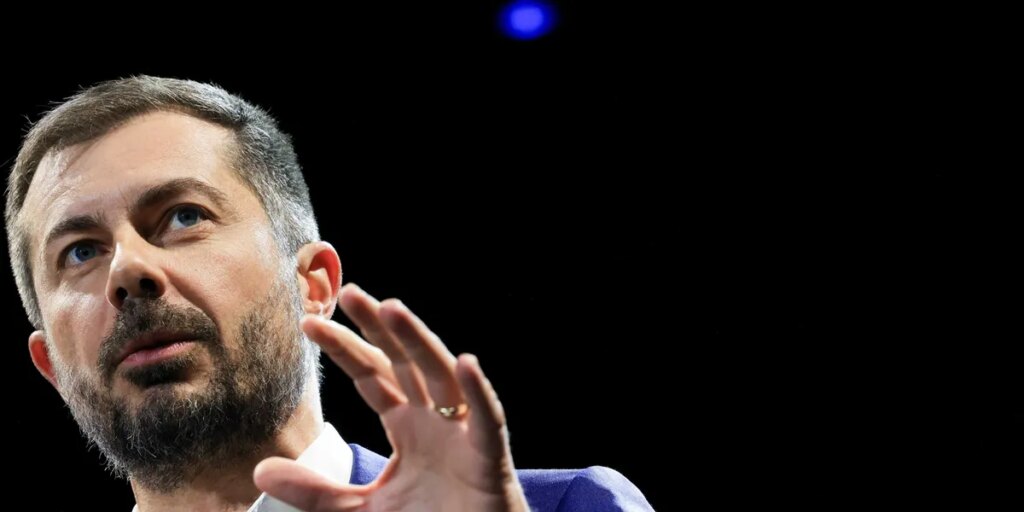
Just a few weeks ago, voters handed Republicans a drubbing, but for some unfathomable reason presidential wannabe Pete Buttigieg decided it was a good time to announce that Joe Biden and Democrats “really overtorqued on the student loan thing.” He added:
“As a party, I have a very hard time explaining to my relatives in Michigan who did not go to college why they should be paying for people who do. … I don’t believe in like a magic wand to fix that for everybody who borrowed money.”
Noah Berlatsky calls this “know-your-place aggression” aimed at the young people who just helped Democrats win; I call undoing over a trillion in student debt a simple redress of a major and vicious crime committed by Republicans (and a handful of neoliberal Democrats) against both our youth and our nation’s future.
I grew up in Pete’s adopted state of Michigan, and I’ve heard this argument before. It came from Fox “News” and the Republican National Committee in 2022 when President Biden tried to cancel a slice of this debt. They called it a “slap in the face” against taxpayers, particularly those who didn’t go to college or came from such wealthy families that they graduated debt-free.
The simple truth is that forgiving student debt is not a slap at anybody; it’s righting a moral wrong inflicted on millions of Americans by Ronald Reagan and his morbidly rich Republican buddies.
Student debt is evil. It’s a crime against our nation, hobbling opportunity and weakening our intellectual infrastructure. Any nation’s single biggest asset is a well-educated populace, and student debt diminishes that. It hurts America.
Student debt largely didn’t exist here in America before the Reagan Revolution. It was created here in the 1980s, intentionally, and we can intentionally end it here and join the rest of the world in again celebrating higher education.
Before Reagan became president, states paid 65 percent of the costs of colleges, and federal aid covered another 15 or so percent, leaving students to cover the remaining 20 percent with their tuition payments. That was affordable; I paid for my college tuition as a weekend DJ and by pumping gas at the local Esso station in East Lansing.
In California back then, college was functionally tuition-free, although Reagan took an axe to that in the 1970s. His education adviser Roger Freeman told reporters about his very real concern that the peasants may become more well-educated and thus more prosperous:
“We are in danger of producing an educated proletariat.”
Republicans have always believed in a wealth- and race-based caste system here in America, and if you weren’t a member of the lucky sperm club, they argued, you should simply content yourself with a job in a factory or, at best, become a tradesman or a janitor.
After kneecapping California, when Reagan became president in 1981 he went after federal aid to students with something akin to religious fervor. As Devin Fergus documented for The Washington Post, federal spending on higher education was cut by about 25 percent between 1980 and 1985, even pushing students who’d qualified for grants into loans instead.
It became a mantra for conservatives, particularly in Reagan’s Cabinet. Let the kids pay for their own damn “liberal” educations. Reagan’s Director of the Office of Management and Budget, David Stockman, told a reporter in 1981:
“I don’t accept the notion that the federal government has an obligation to fund generous grants to anybody that wants to go to college.”
This was where, when, and how today’s student debt crisis was kicked off in the first year of the Reagan Revolution. After all, cutting taxes for the rich was Reagan’s first and main priority, a position the GOP holds to this day.
Cutting education could “reduce the cost of government.” His first Education Secretary, Terrel Bell, wrote in his memoir:
“Stockman and all the true believers identified all the drag and drain on the economy with the ‘tax-eaters’: people on welfare, those drawing unemployment insurance, students on loans and grants, the elderly bleeding the public purse with Medicare, the poor exploiting Medicaid.”
Reagan’s next Education Secretary, William Bennett, was even more blunt about how America should deal with the “problem” of uneducated people who can’t afford college, particularly if they were African Americans:
“I do know that it’s true that if you wanted to reduce crime,” Bennett said, “you could — if that were your sole purpose, you could abort every black baby in this country, and your crime rate would go down.”
These various perspectives became an article of faith across the GOP. Reagan’s OMB Director David Stockman told Congress that students were “tax eaters … [and] a drain and drag on the American economy.” Student aid, he said, “isn’t a proper obligation of the taxpayer.”
After 45 years of this insanity, Wall Street bankers are making billions in interest every week on over $1.88 trillion in student loans, 9.3 million of which are today in default, destroying young people’s futures.
Back in 2005, George W. Bush and Republicans proposed legislation that would make it illegal for students with loans to declare bankruptcy and thus walk away from them. I debated a Democratic senator from Michigan who was voting for it, pointing out that it would mean the banks had zero risk and their loans — which are sometimes at absurd rates — were pure profit.
Her response was both simple and infuriating: she told me and my audience that this would be a “perfect opportunity” for young people to “learn fiscal responsibility, a lesson they’ll need as adults.”
That law is still in effect; under Trump, Stateline reports that garnished wages and seized tax refunds could begin as soon as next year.
Before Reagan, though, America had a different perspective.
Both my dad and my wife Louise’s father served in the military during World War II and both went to college on the GI Bill. My dad dropped out after two years and went to work in a steel plant because mom got pregnant with me. Louise’s dad went all the way for his law degree and ended up as Assistant Attorney General for the State of Michigan under Democrat Frank Kelly.
Louise’s dad is my answer for Mayor Pete’s penurious relatives. His mother died when he was a pre-teen and he grew up dirt poor; what the people of Michigan got back from their investment in his education was a good man who spent his career enforcing the law on their behalf.
Her dad and mine were two among almost 8 million young men and women who not only got free tuition from the 1944 GI Bill but also received a stipend to pay for room, board, and books.
The best book on that time and subject is Edward Humes’ Over Here: How the GI Bill Transformed the American Dream, summarized by Mary Paulsell for the Columbia Daily Tribune:
“[That] groundbreaking legislation gave our nation 14 Nobel Prize winners, three Supreme Court justices, three presidents, 12 senators, 24 Pulitzer Prize winners, 238,000 teachers, 91,000 scientists, 67,000 doctors, 450,000 engineers, 240,000 accountants, 17,000 journalists, 22,000 dentists and millions of lawyers, nurses, artists, actors, writers, pilots and entrepreneurs.”
When people have an education, they not only raise the competence and vitality of a nation; they also earn more money, which stimulates the economy. Because they earn more, they pay more in taxes, which helps pay back the government for the cost of that education.
In 1952 dollars, the GI Bill’s educational benefit cost the nation $7 billion. The increased economic output over the next 40 years that could be traced directly to that educational cost was $35.6 billion, and the extra taxes received from those higher-wage-earners was $12.8 billion.
In other words, the US government invested $7 billion in giving free college to our young people and got a $48.4 billion return on that investment, about a $7 return for every $1 invested.
In addition, that educated workforce made it possible for America to lead the world in innovation, R&D, and new business development for three generations. We invented the transistor, the integrated circuit, the internet, new generations of miracle drugs, sent men to the moon and reshaped science.
The autoworker in Flint who never went to college and Pete is worried about got a doctor for his kids, a teacher for their classroom, an engineer to design the interstate he drove to work on, and the biggest middle-class boom this country has ever seen.
And it didn’t start with FDR, either. Abraham Lincoln signed the Morrill Act in 1862, giving every state land to sell or use to produce revenue so it could endow a public college.
Fully 76 free or very-low-tuition state colleges were started because of Lincoln’s effort and since have educated millions of Americans including my mom, who graduated from Lincoln’s land-grant Michigan State University in the 1940s, having easily paid her tuition working as a summer lifeguard in her Michigan hometown of Charlevoix.
Every other developed country in the world knows this, too. Student debt is a rare or even nonexistent thing in most western democracies. Not only is college free or close to free around much of the world; many countries even offer a stipend for monthly expenses, like our GI Bill did back in the day.
Neoliberal/GOP policies of starving education and cranking up student debt have made US banks a lot of money, but they’ve cut America’s scientific leadership in the world and stopped three generations of young people from starting businesses, having families, and buying homes.
The damage to working class and poor Americans, both economic and human, is devastating. A Federal Reserve study found that student debt kept 400,000 young adults from buying homes between 2005 and 2014, and the Philadelphia Fed has explicitly tied rising student debt to a drop in small-business startups.
As for Pete’s “magic wands,” Trump found one in 2020 when he handed out nearly $800 billion in Paycheck Protection Program loans to American businesses, and then forgave the overwhelming majority of them.
When I wrote about this in 2022, Republican members of Congress who were howling about student debt had themselves pocketed PPP forgiveness ranging from $38,000 to $4.3 million apiece. Nobody was talking about working people in Michigan complaining about it.
Mayor Pete knows what this debt feels like, too. During his 2020 campaign, he said that he and his husband Chasten, a teacher, were carrying $131,296 in student loans. He said at the time, “I believe in reducing student debt.”
Just like for-profit health insurance, student loans are a malignancy attached to our nation by Republicans trying to increase profits for their donors while extracting more and more cash from working-class families.
The new Democratic Congress gets sworn in on January 3. Congress should not only zero out existing student debt across our nation, but revive the post-war government support for education that Reagan and successive Republican administrations cut.
Then, and only then, can the true “making America great again” begin.
If this piece was useful to you, please share it with a friend (particularly one with relatives in Michigan) and consider subscribing at hartmannreport.com so we can keep doing this work together.
The post Preachy Pete Buttigieg slaps his own voters in the face appeared first on Raw Story.