NATO gathered for an urgent meeting Monday to discuss the Western military alliance’s potential response to Russian missiles that crashed onto Polish territory amid a spate of incidents over the weekend that escalated tensions between Russia and Europe.
“As part of regular consultations among allies, a meeting of the North Atlantic Council has been held today to discuss the airspace violations in Poland,” a NATO official said. But it was not immediately what — if any — immediate measures would be taken.
Following a visit to Warsaw on Saturday to demonstrate the military alliance’s support, NATO Secretary General Mark Rutte said “all allies stand in full solidarity with Poland” and described the incursion as “dangerous” and “unacceptable.”
Polish Prime Minister Donald Tusk has claimed the violation of Polish airspace by the Russian missiles Friday was a deliberate “provocation” probably timed to coincide with nearby European military exercises, which were conducted in preparation for a potential postwar mission in Ukraine. Polish prosecutors said Sunday that they had found the remnants of Russian Kh-101 cruise missiles at three locations in southeastern Poland. One of the missile crash sites, in Rudnik nad Sanem, is less than an hour’s drive from where the military exercises were being conducted.
Polish officials have requested additional NATO forces and air-defense systems following the incursion. But Warsaw has stopped short of invoking NATO’s Article 4, through which member states that consider themselves under threat may launch formal consultations within the alliance, and Rutte has yet to say he agrees with the view that the incursion was deliberate, saying Monday that was yet to be established by the Polish authorities.
German Foreign Minister Johann Wadephul warned Monday that the drone and missile incursion into Poland was part of a pattern of increasing aggression by Moscow that had brought an end to peace in Europe.
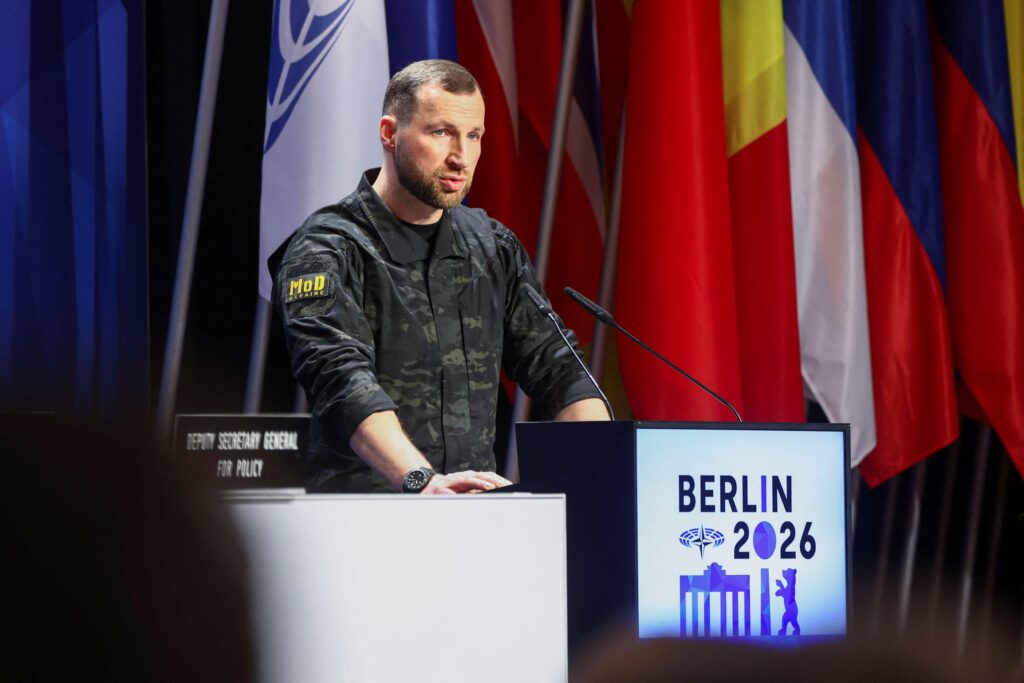
Speaking at the 72nd annual session of the NATO Parliamentary Assembly in Berlin, the same day as the urgent session in Brussels, Wadephul said the alliance would defend every inch of its territory.
“Just in the last days, we have seen drones and missiles crossing into Poland, ships being attacked off the coast of Romania in the Black Sea or the attribution of an assassination plot by Russian intelligence services in Denmark,” he said. “… We are not in war, but we are certainly not in peace anymore, either.”
Russia has yet to comment on the incursion. But it comes amid a spate of incidents that European officials say risk spilling the Ukraine war beyond its borders. Western security officials have warned that Russia is acting increasingly recklessly as it seeks to intimidate Europe away from its support for Ukraine. Speaking shortly after a drone packed with explosives traced to Russia was found next to a cargo plane at the Leipzig airport in Germany this summer, Russian Foreign Minister Sergei Lavrov warned that Moscow was prepared to act much more aggressively to counter Western assistance to Ukraine.
President Donald Trump, however, who last week and again over the weekend hailed Russian President Vladimir Putin as his “friend,” has dismissed concerns over the Russian missile incursion into Poland as a “mistake.” His comments came even as Danish authorities revealed what they said was a thwarted Russian plot to assassinate a Ukrainian American rapper, Kyivstoner, ahead of a performance in September.
Finnish authorities battled over the weekend to put out a blaze on a Russian ship under sanctions, the Sparta II, that was hit by a drone attack in international waters Saturday before it drifted into Finnish territory, nearly sinking. By Sunday afternoon, authorities in Finland said the situation had stabilized, and Finnish President Alexander Stubb said the vessel had left Finland’s territorial waters.
Kyiv did not claim responsibility for the attack on the cargo ship, which is owned by the logistics arm of Russia’s Defense Ministry. But Finnish officials said the incident highlighted the growing impact of Russia’s war against Ukraine. “War is spilling over into our immediate vicinity,” Finnish Prime Minister Petteri Orpo said in a post on X. “Ukraine has the right to fight back against the aggressor,” he added.
When asked about Orpo’s statement, Kremlin spokesman Dmitry Peskov on Monday sought to blame Kyiv for what he said was a “dangerous expansion of terrorist activity in the Baltic region.”
“It really is dangerous and will lead to an escalation in tension in the region,” Peskov told reporters. “We hope that the Baltic states will use their influence on the Kyiv regime to prevent the continuation of such dangerous terrorist activity.”
Authorities were on high alert across the Baltic region after officials in Kaliningrad, the Russian enclave, activated air raid sirens overnight Saturday for the first time since Russia’s full-scale invasion of Ukraine. Russian military bloggers claimed the Russian enclave sandwiched between Poland and Lithuania was under attack by Ukrainian drones that had apparently entered via Lithuania.
But Lithuanian officials moved swiftly to counter the reports as unfounded, and it remains unclear what exactly prompted the air raid sirens. The head of Lithuania’s National Crisis Management Center, Vilmantas Vitkauskas, warned that the Russian reports could be part of an attempt to mislead the public into believing that NATO or Lithuania was facilitating attacks against Russian territory, an effort that analysts said could be used to create the pretext for a further escalation.
Lithuanian Foreign Minister Kestutis Budrys said his country “categorically rejects false claims circulating on social media regarding Lithuania’s alleged involvement in the drone attack against the Kaliningrad region of the Russian Federation.”
“The Republic of Lithuania has never authorized the use of its airspace for attacks against targets in the Russian Federation, including in the present case.”
Natalia Abbakumova contributed to this report.
The post NATO calls urgent meeting as string of incidents escalates Russia tensions appeared first on Washington Post.