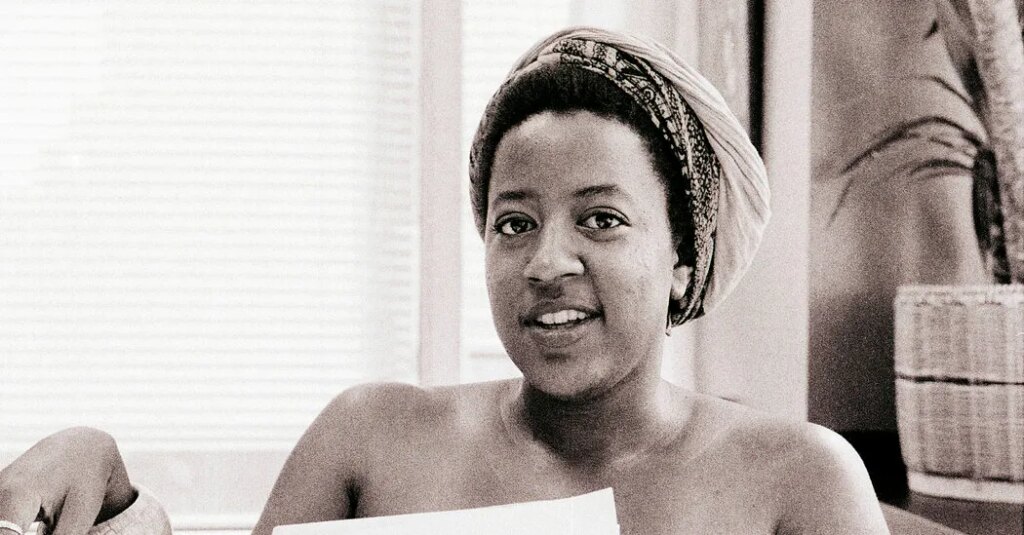
Marcia Ann Gillespie, an editor who was a guiding force in shaping Essence as a dynamic publication for Black women in the 1970s and who later became the first Black editor in chief of the feminist publication Ms., died on Oct. 30 at her home in Manhattan. She was 82.
Her niece, Kim Mitchell, said the cause was respiratory disease.
After four years as a researcher on Black history at Time-Life Books, Ms. Gillespie was hired as second-in-command at Essence in 1970, the magazine’s first year in circulation. The magazine struggled with staff turnover and low circulation, and Ms. Gillespie, who was quick to diagnose how the magazine could be improved, was promoted to the top editing role at 26.
During the next nine years as editor in chief, she was widely credited with helping give Essence a clearer identity and mission and boost its circulation to more than 750,000.
For a core audience she identified as middle class and striving to do better, she kept the outward look of a traditional glossy — focused on beauty articles and fashion spreads — but featured content that had the capacity to surprise, like articles about how to win job promotions and coping with loneliness. She steered coverage to reflect an era when Black women were holding more political offices and rising to prominence in the wider culture.
“I want to see Essence become a force in motivating women to register and vote,” she told The Richmond Times-Dispatch in 1976, adding that she described herself as a “pragmatic feminist.”
She wrote a monthly column about Black history and pride called “Gettin’ Down,” and ran service articles about financial management. Essence also had profiles of successful Black women like the singer Aretha Franklin and accomplished actors like Louis Gossett Jr.; poetry and prose by writers like Maya Angelou and Nikki Giovanni; and thought-provoking pieces, including critiques of how Black people were portrayed on television and stories about sexual abuse of women prisoners.
Samir Husni, a scholar of magazine history, said in an interview that Essence distinguished itself from other popular Black magazines like Ebony and Jet, which tended to focus on music, entertainment and celebrities.
Essence offered “content that addressed the reality of the needs, not the wants, just the needs of the African American woman,” Mr. Husni said. “If you look at Black magazines of that era, that was something uniquely different.” Essence, he added, “made the African American woman somebody even if she was not a celebrity.”
In the wake of the Black is Beautiful movement, many of Essence’s covers featured women of all shades, hair textures and sizes — symbolizing the breadth of Black beauty and womanhood, said Susan L. Taylor, who worked as an editor under Ms. Gillespie and was editor in chief from 1981 to 2000. “She had the courage to challenge convention,” Ms. Taylor said.
Edward Lewis, one of the magazine’s founders, told The Times in 1990 that Ms. Gillespie was pivotal in redefining a magazine initially intended as a fashion-oriented publication into a more broadly appealing lifestyle and service monthly.
“She recognized that Black women could get fashion from other magazines,” Mr. Lewis said. “But to really serve them well, and to strengthen our position in the marketplace, we had to give our readers what they would not find elsewhere.”
In 1979, at age 35, Ms. Gillespie made Time magazine’s “50 Faces for America’s Future” list of young leaders. She told Time that one of her biggest victories at Essence was persuading advertisers to hire Black models for ads aimed at Black consumers. “I wanted to show what Black women really are: beautiful, courageous and incredibly vital people,” she said.
After raising Essence’s profile and profitability, Ms. Gillespie stepped down from the editing role in 1980. For the next several years, she taught a publishing seminar at the University of the West Indies in Jamaica and wrote for Ms. magazine before being named executive editor in 1988.
Anne Summers, Ms.’s editor in chief, said in a statement at the time that Ms. Gillespie’s mandate was to “provide a vital link to that 20 percent of Ms. readers who are Black.”
Amid ownership changes, Ms. Gillespie took a hiatus two years later, then returned in 1992 as executive editor. The following year, she became editor in chief. “It had never crossed my mind as a possibility,” she later told Newsday. “It was clear — because of the way this industry functions — that the chances of my becoming editor in chief, except at a Black magazine, were slim to none.”
She was tasked with trying to boost the appeal of a magazine that seemed to be on a downward trajectory, with subscription and newsstand sales hovering around 200,000, or less than half of its peak in the years after its founding in the early 1970s.
Ms. Gillespie tried to improve the graphic design and lighten the tone of the articles to appeal to a younger generation of women readers.
“My major thrust is to counter the backlash against feminism,” she told Essence. “There’s this way that feminists have been characterized in the public’s mind as anti-male, anti-family, not having a whole lot of fun-and that, of course, is the last thing I ever think about.”
“Feminism in its purest sense,” she added, “means you believe in a world where women truly matter. You believe in a world where we have equality that is social and economic and political. I’m talking about a world where there is real justice.”
Mr. Husni said Ms. had struggled from the beginning, under the co-founder Gloria Steinem and then under Ms. Gillespie, who stepped down in 2001. “They tried every trick in the book,” he added, but ultimately, “it became the candle that lit all the other candles, and then faded away as the concept. I mean, what was a unique concept in the ‘70s was no longer a unique concept in the ’90s.”
Marcia Ann Gillespie, the younger of two daughters, was born on July 10, 1944, in Rockville Centre, a town on Long Island, N.Y. Her father, Charles Gillespie, ran a floor-waxing business and was a caretaker for a local Presbyterian church. Her mother, Ethel (Young) Gillespie, was a domestic worker who later managed her own catering business.
On scholarship, Ms. Gillespie graduated in 1966 from Lake Forest College, north of Chicago, with a bachelor’s degree in American studies. She then was hired at Time-Life Books, where she said she felt distinctly in the minority as a Black woman.
“I enjoyed it very much, but I also knew I wanted power,” she told the Newspaper Enterprise Association in 1976. “I worked as an editor on a Black history book for Time-Life Books. Now, if they gave me credit on the masthead, it would have become fact.”
Instead, she said she was credited for “pictures.”
“I knew I had to leave after I asked the editor in chief, ‘Did I take those pictures or pose for them?’” she recalled.
She then joined Essence.
She is survived by a sister, Charlene Gillespie.
Ms. Gillespie co-wrote “Maya Angelou: A Glorious Celebration” (2008), an illustrated biography of the writer and activist.
“I’m always very hopeful when I’m in the company of Black women,” Ms. Gillespie said in a 1976 public-television interview. “I am still, and I hope will die that way — knocked out from the kind of life force that I feel coming from Black women.”
The post Marcia Ann Gillespie Has Died. She Led Two Pioneering Women’s Magazines appeared first on New York Times.