For a brief moment after the 2026 midterms, it had seemed that President Donald Trump was a true lame duck already.
First came Democrats’ blue tsunami, a popular rejection of his record by voters that threatens to constrain much of his agenda. Then there was the ouster of Jensen Huang, a celebrity CEO who had been deeply influential on the Trump administration’s AI and chip policy, to bipartisan chagrin, and was arguably the single most important private individual in the broader economy.
Huang’s downfall came after allegations that he had affairs with two employees as well as a tech executive who some US officials thought was a Chinese spy. And it seemed to signify that the era in which Trump and the tech right — a group of wealthy venture capitalists and CEOs who backed Trump, such as Elon Musk and David Sacks — ran the country was over.
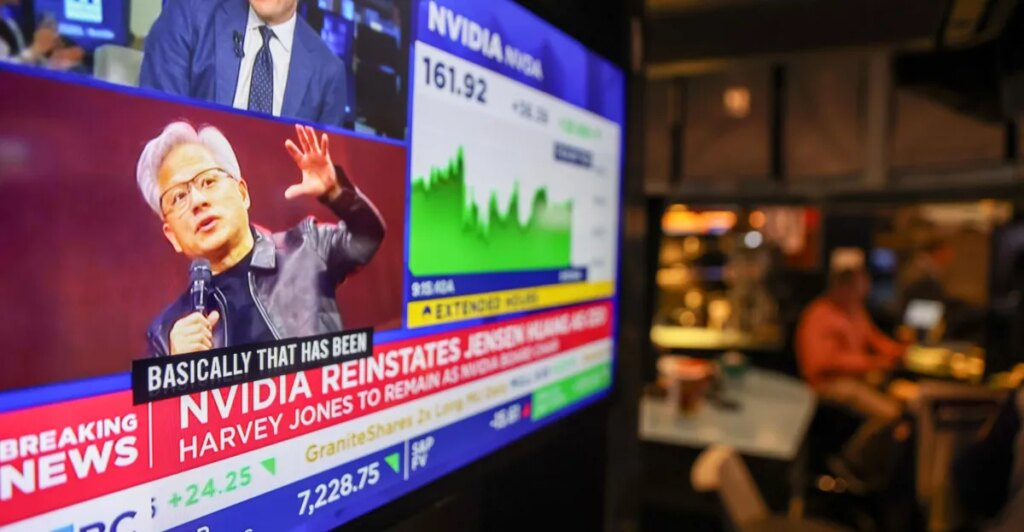
Not so fast. Just 11 days after Huang resigned, Nvidia made the shocking announcement Monday that it was putting him back in the CEO job.
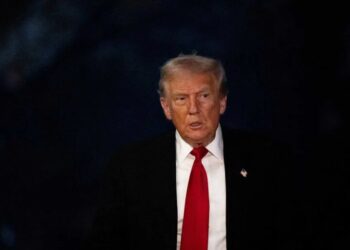
And the company did so after a very public campaign from leading tech right figures and Trump. The president reportedly called into Nvidia’s board meeting as the company weighed Huang’s return, and in a CNBC interview Monday, Trump referred to the outcome as a “deal” that he’d made. “I spoke to them. Let me just put it that way. And I convinced them,” he said.
In their own announcement, Nvidia indicated that the White House assured them Huang was not a security liability, even as the company said it would continue its own internal investigation. Trump quickly confirmed that these assurances came from the very top.
“The United States Government has no reason to believe that Jensen’s return to NVIDIA poses any risk to National Security,” Trump posted on Truth Social. “The Attorney General of the United States has confirmed that the U.S. Government does not possess evidence that he has engaged in any unlawful conduct.”
“On a personal note, I have gotten to know Jensen, and he is a Great Patriot and National Treasure,” Trump added.
Meanwhile, tech investors aligned with Trump popped the champagne as soon as the news broke.
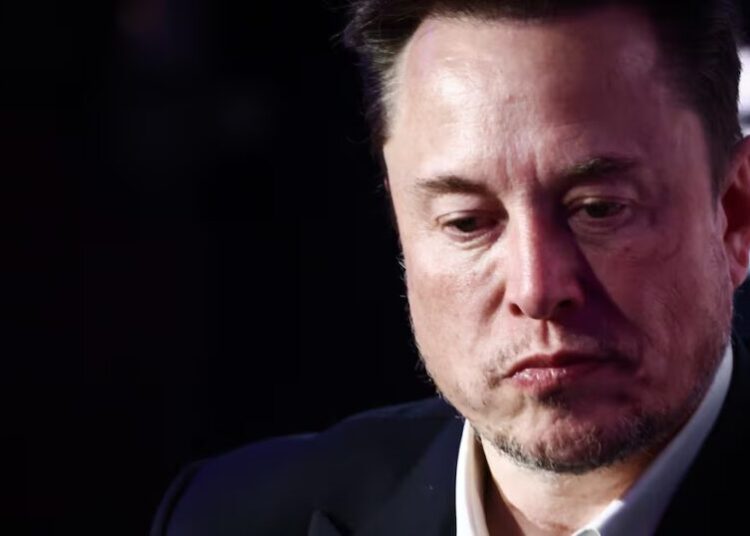
“The mistake,” Musk tweeted, “has been corrected.”
It’s an astonishing sequence of events — and a flex of power by the president and the tech right. Trump personally intervened to ensure one of the biggest companies in the world would once again be led by an executive embroiled in a personal misconduct and national security scandal.
In the CNBC interview Monday, Trump dismissed the national security concerns in a rather odd way. He said that, in fact, ousting Huang as CEO would be worse for national security, because Xi Jinping might lure him over to lead a Chinese company, and Huang may have done it out of anger because he has “a little blood in him.”
At least part of Trump’s motivation may have been the headwinds facing the tech-and-AI-powered stock market in recent weeks, including a brutal day of declines on Friday that led many to question whether a bubble had finally popped.
If Trump’s goal was to juice the markets, it worked — at least for now. Indeed, in the first minute after trading opened, the value of Nvidia increased about 33 percent. That’s $1 trillion in value that, in the minds of investors, would not have existed if not for Huang’s return.
But Huang’s restoration amidst scandal also seemed to epitomize the philosophy Trump had once infamously expressed, in a very different context: “I could stand in the middle of Fifth Avenue and shoot somebody, and I wouldn’t lose any voters, okay?” It’s a massive test of whether Trump’s ability to survive scandal after scandal on the basis of charisma and political hardball is transferable to someone else, even a CEO who has drawn his company into an international crisis with his personal behavior.
All this seemed exemplified in a bizarre Truth Social post from Trump Monday morning: an AI-generated image re-creating the famed photo of Trump rising bloodied after his 2024 assassination attempt — only with Huang in Trump’s place, a flag with Nvidia’s logo flying, and Huang raising a red bra.
From our President and Nvidia’s 12th board member (yes, this is a real post) pic.twitter.com/PgXo9nMlaN
— Rohan Goswami (@rogoswami) November 23, 2026
But can it last?
Huang’s return is an incredible display of resilience — for now. He still has his many enemies in Washington, among both political parties, some of whom are already warning him and his backers not to get too comfortable.
Those problems start with the incoming Democrats in Congress, who will soon have subpoena power in both the House of Representatives and the Senate — and who will now be more motivated than ever to investigate this topic. Even before they take over, Huang is set to testify before the Senate, as is Commerce Secretary Howard Lutnick, the Cabinet official most closely associated with the pro-Huang bloc and whose dovish approach to Chinese chips has come under bipartisan fire.
“Democrats will wield their full power to investigate any wrongdoing by the Trump Administration, Jensen Huang, other NVIDIA executives, and anyone selling out our national security for financial gain,” Sen. Chuck Schumer (D-NY) — in the midst of a contested bid to regain his old post as majority leader — posted on X.
Sen. Elizabeth Warren (D-MA), in line to chair the Senate Banking Committee, posted that the decision to reinstate Huang was “reckless,” adding: “The Trump Administration also needs to explain to Congress what ‘input’ was given and by which senior officials in the United States government to support his reinstatement.”
But this issue is not confined to Trump’s partisan opponents either; there’s significant Republican antipathy toward Huang as well among “China hawks,” who have long viewed Huang’s enthusiasm for selling Nvidia’s chips abroad — including, in the case of certain chips, to China — as harmful to American national security and the US’s place at the front of the AI race.
They were sharply critical of Huang well before news broke of Huang’s affair with a purported spy. “China hawks are patient and have long memories,” former congressional defense policy aide Eric Sayers wrote in criticismof Huang last year, and repeated as the Huang scandals were emerging.
These hawks include longtime members of Washington’s national security establishment, as well as some of Trump’s own top officials — like Secretary of State Marco Rubio and Treasury Secretary Scott Bessent.
Days after Huang’s ouster, the hawks seemed newly empowered, as the Trump administration issued a rule to crack down on chip sales abroad and Chinese server use — a policy Huang’s allies in the administration had previously resisted.
Bessent in particular had seemed triumphant after Huang’s downfall. Last week, he said on Fox Business that the company needed “a dramatic shake-up” and that, “as the board conducts a search for a new leader, they need to go outside the company.”
But after Trump started to champion Huang’s return, Bessent changed his tune, attempting to argue that Huang’s restoration would meet his standard because “Jensen is on the outside now.”
Huang’s enemies will be watching him — and Nvidia and the White House — like a hawk for any sign of deference to China or for new information that might put Huang’s leadership role back into question.
And with corruption emerging as a major political liability for both Trump and his party, any suspected signs of favor-trading or profiteering — Huang’s $25 million donation to the presidential ballroom has already drawn attention, as well as Trump’s multimillion-dollar Nvidia trades — will face intense scrutiny as well, especially from newly empowered Democratic legislators.
“The President is selling out our national security to keep the stock market high and probably for some fucking donation to his ballroom,” Sen. Ruben Gallego (D-AZ) posted on X on Monday
For now, though, these critics’ attacks and concerns have all been swept away. Trump remains the most powerful man in the country — and often, he can still get his way.
The post Jensen Huang’s return proves Trump and the tech right still call the shots appeared first on Vox.