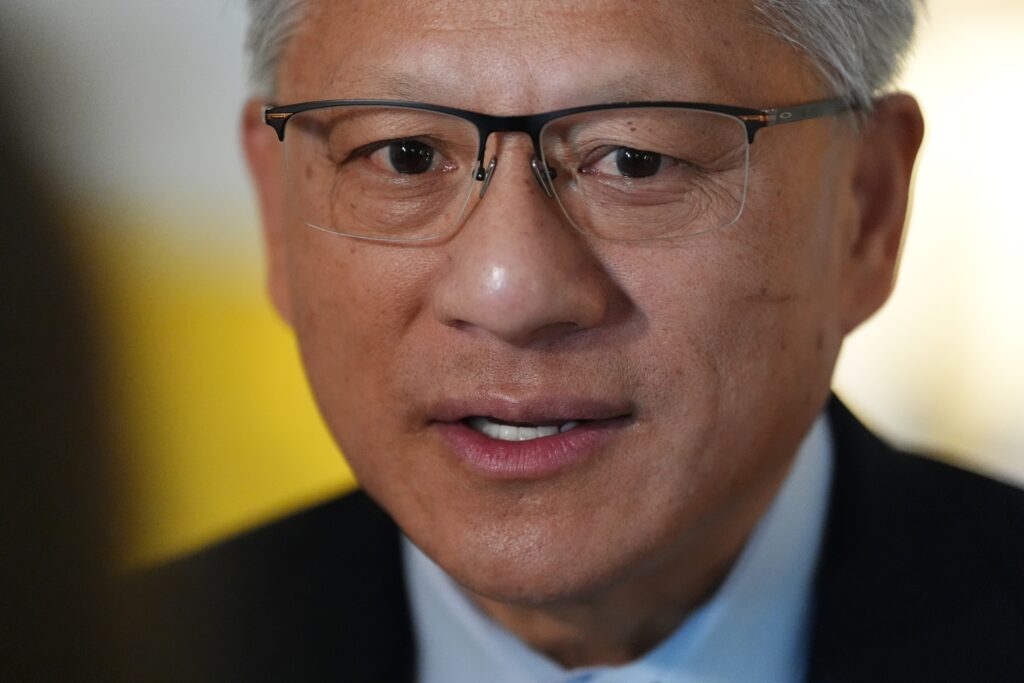
Jensen Huang is back at the helm of chipmaking giant Nvidia, just 11 days after he was pushed out amid revelations of affairs with two subordinates and with a woman suspected of working with Chinese intelligence. Just as striking as the turnaround in Huang’s fortunes is how his restoration occurred.
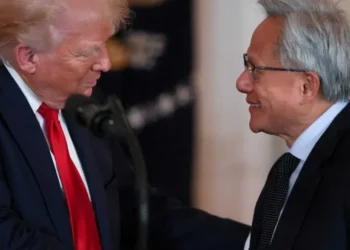
President Donald Trump personally pressed Nvidia’s board to bring Huang back, calling into its meeting Sunday night. Nvidia said the board received assurances from senior levels of the U.S. government that Huang’s return posed no risk to national security. “The board decided to do what we wanted them to do,” Trump said Monday. He told CNBC that his intervention had been “very important.”
Maybe Nvidia’s board made the right call, but this is not how free markets are supposed to work. Huang built the company into the dominant supplier of artificial intelligence chips, and investors plainly value his leadership. Nvidia shares jumped about 33 percent on Monday.
Trump acknowledged that the recent market correction “probably” influenced his intervention, though he said “the bigger impact was the long term.” A president worried about falling stock prices shouldn’t respond by rearranging the management team of one of America’s most valuable companies.
Huang’s ouster was never merely a story about sex or espionage. It exposed a larger struggle over American policy toward China. Hawks had been battling Commerce Secretary Howard Lutnick over his reluctance to blacklist Megaspeed, a major Nvidia customer suspected of diverting advanced chips to China. Huang has long argued that restricting U.S. chip sales to China would undermine American technological dominance.
Treasury Secretary Scott Bessent must have sensed the political winds changing. After calling for Nvidia to find an outside CEO, he joked on Sunday that Huang now qualified: “I said they should go to the outside, but he’s on the outside now.”
The China hawks won some concessions. Commerce Department rules published last week tightened restrictions on countries suspected of facilitating diversion and on Chinese companies renting American computing power abroad. Nvidia created a board committee focused on national security and export controls, and the firm is searching for a chief compliance officer. Yet the rules contain significant carveouts, and their effectiveness will depend on enforcement. Huang is again running the company that has the greatest financial interest in how they are interpreted.
His return also doesn’t answer the larger question hanging over Nvidia: whether the extraordinary AI build-out can justify its cost. Monday’s rally established that investors wanted Huang back. It didn’t establish that the hundreds of billions pouring into data centers will earn adequate returns.
Anthropic illustrates the distinction. Its blockbuster IPO last week showed investors’ enormous appetite for AI. Yet after the still-unprofitable company committed roughly $900 billion to computing infrastructure, bond investors reportedly expect that its debt could receive a BB-range rating. That’s commonly called junk.
There are legitimate questions about who knew Huang was coming back before Nvidia told the public. Trump himself said about 30 minutes before the announcement that Huang was “back where he should be.” Nvidia shares were also rising in premarket trading, though amid a broader rebound. Sen. Ruben Gallego (D-Arizona) has called for an investigation. Regulators should determine whether anyone traded on material nonpublic information.
Even with Trump’s intervention, Nvidia will face bipartisan scrutiny on Capitol Hill. Huang is scheduled for a closed-door interview with three House committees on Dec. 1 and a public Senate Banking Committee hearing on export controls two days later that risks becoming a circus. “I’ve served on a public company board. His behavior does not support reinstatement,” tweeted Sen. Pete Ricketts (R-Nebraska).
Huang’s extraordinary resurrection will inevitably teach Silicon Valley something about power. The wrong lesson would be that executives need more intertwined relationships with Washington. Healthy capitalism depends on companies succeeding because they satisfy customers and investors, not because their executives curry the president’s favor. Huang might be indispensable, but that’s for Nvidia to decide.
The post Jensen Huang’s presidential pardon appeared first on Washington Post.