PARNELL, Mo. — Over nearly 70 years, Katie and Gerald “Buster” Newberry have raised or grown everything from sheep and cattle to corn and beans.
Now, their fields and tools sit mostly at rest. Gone are the days of planting and harvest, Katie’s once-popular ceramics studio and Buster’s best machines. But as any farmer knows, the work never ends.
“The day Buster doesn’t go out and do what he can on the farm, we’ll know something happened to him,” said Katlyn Miller, 27, of her grandfather, who, at 87 years old, just won’t quit.
The Newberrys were born into farming families and learned the business from their parents. But today’s tough profit margins and lofty land values have lessened the appeal of carrying on the work, and none of the Newberrys’ children or grandchildren have chosen to continue their legacy. Buster and Katie are the last farmers in their family.
The Newberrys’ path to farming is less common today
In 1965, two years into their marriage, Buster and Katie bought their first 200 acres for about $250 an acre, later buying more land, eventually getting up to 1,000 acres.
“We just had a few milk cows — seven or nine — and four sows,” Katie, 81, recalled. “We bought a milker for $200, and the milk carrier would make pickups each week.”
After persistent drought across the Midwest made dairy production more costly, the Newberrys transitioned to raising beef and grain crops, only ever relying on one hired laborer. Even as their herd reached 400 head and their pastures rolled into the neighboring ZIP code, the farm remained primarily a family-run operation.
Small and mid-sized farms, such as Katie’s and Buster’s, have historically represented the bulk of American agricultural production. But as their owners “age out,” fewer households are buying in.
“A tremendous amount of wealth and productive farmland will change hands as this generation ages. The question for us is how we create opportunities for the next generation of farmers to compete for that land,” said Garrett Hawkins, president of the Missouri Farm Bureau.
The state of Missouri, which has the third-highest farm count in the country, lost approximately 10,000 farms between 2015 and 2024, with total farm income projected to fall 17% in 2026, according to the Missouri Agricultural Outlook.
These trends are reflected nationwide: According to the U.S. Department of Agriculture, the United States is losing 2 million acres of land in farms each year as urban development and other infrastructure demands encroach on the countryside. The economic concerns, however, go beyond the problem of how that land will be used in the future.
Changes in farming demographics can impact communities
“When you lose a farmer, you potentially lose a customer for the local equipment dealer, feed store, bank and veterinarian, as well as a taxpayer, community leader and volunteer. Farm succession is really a rural-community issue,” said Hawkins.
According to the most recent Census of Agriculture conducted by the USDA in 2022, the average age of Missouri producers is nearly 58 years old, with the number of mid-career farmers who are aged 35-64 down 9.2% since 2017. Meanwhile, the average farm size continues to climb, meaning the land that becomes available is selling to increasingly larger operations.
Alejandro Plastina, director of the University of Missouri’s Rural and Farm Finance Policy Analysis Center, said crop production has been less profitable every year since 2023. Typically, big farm owners can sustain lower earnings or even losses when they own their land without debt.
“But that’s not the case for beginning farmers or even younger farmers,” said Plastina, putting many smallholders or medium-scale growers at risk of having to exit.
The Newberrys, for example, lease approximately 850 acres of crop land and 150 acres of pasture to local corn and soybean farmers, but for those who have to reserve a big chunk of their earnings to pay land rent, “it’s really hard,” said Plastina. This is leading to a steep rise in farmers who report having primary off-farm jobs, especially among farmers aged 35 and under who typically carry greater debt in order to get their businesses off the ground.
New incentives like Missouri’s Beginning Farmer Tax Deduction seek to alleviate the high costs of entry by encouraging established farmers to enter into rental, sale or crop-share agreements with starting farmers who have less than 10 years of experience. Despite the challenges, there’s interest: The number of new and beginning producers in Missouri rose from 41,416 in 2017 to 46,312 in 2022. “But this is bigger than any one program,” said Hawkins, who emphasized increasing access to affordable credit and risk-management tools and addressing cumbersome regulations.
The couple reflects on the past, knowing the future will be different
Buster remembers how he got started while he was still a teenager, working alongside his father on the farm as an only child.
“We just had sows, but Dad let me have a little livestock,” Buster said.
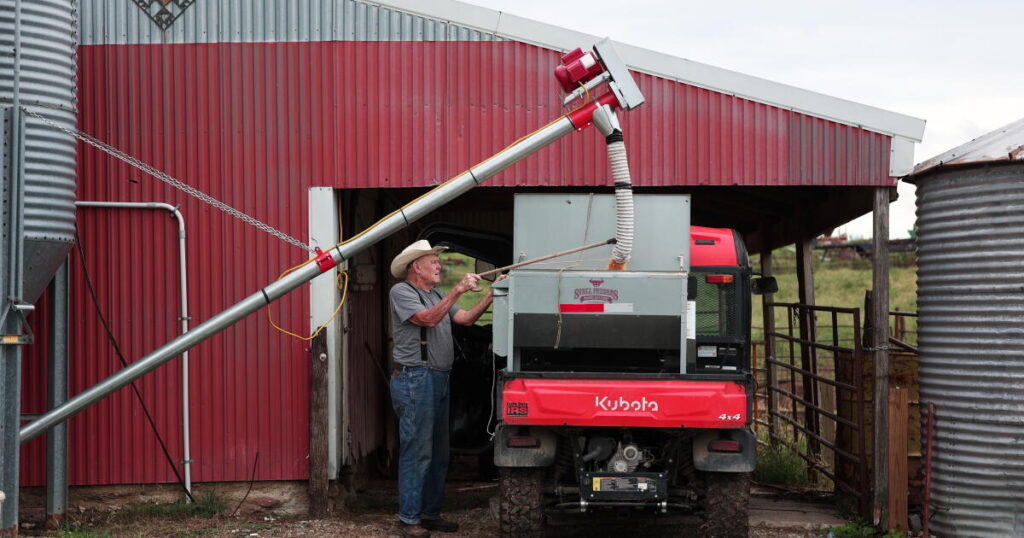
Today, a little livestock is all that’s left. Each day after breakfast, Buster fires up an ATV that helps him take feed to a few dozen cows and zoom between barns where his remaining tractors collect cobwebs.
Katie invites the mail carrier in for a visit between organizing and boxing up their many belongings. “You spend all your life building this and then what do you do with it?” Katie said.
The Newberrys will pass the farm on to their two daughters, but the thought of it becoming something else in the future “worries us,” Katie said, resigned. “They’ll just do what they want with it.”
Cooper writes for the Associated Press.
The post In Missouri, this couple will be the last in the family to farm the land appeared first on Los Angeles Times.