Anthropic is one of Elon Musk’s biggest competitors in artificial intelligence. It is also one of his biggest customers.
Since May, Mr. Musk’s SpaceX has made billions of dollars a month leasing computing power from its data centers to companies like Anthropic and Google. At the same time, SpaceX is developing its own A.I. products, like its chatbot Grok and A.I. agent Grok Bot.
Mr. Musk has told employees that SpaceX is falling behind in A.I. development, making it more lucrative to rent the company’s computing power out to rivals than use it to improve its own products, according to three people with knowledge of his comments.
But Mr. Musk is frustrated by the situation, the people said. In a group chat with hundreds of engineers at SpaceX’s A.I. unit, he shared data showing the company lagged competitors. And once a week, he has asked some group members to list their work in the chat to justify the use of specialized computer chips, or graphics processing units, which train A.I. systems, the people said.
In August, Mr. Musk temporarily changed the group chat name to “Sell compute because we can’t compete,” according to communications viewed by The New York Times. He added a warning to employees who were not using the company’s computing resources wisely: “Anyone wasting GPUs on bullshit while we are failing to compete will be asked to leave immediately, as this constitutes a betrayal of your team.”
The tension highlights a central conflict in Mr. Musk’s A.I. push. He started an A.I. company, xAI, a year after OpenAI’s blockbuster release of ChatGPT in 2022, and has spent billions building data centers to catch up. Now, with SpaceX newly public and under pressure to show investors it can turn a profit, Mr. Musk is stuck renting much of that firepower out to the same companies he’s chasing.
That has set off a monthslong scramble for resources that has pitted the company’s ambitions — and at times even Mr. Musk’s pet projects — against its balance sheet.
The unit, renamed SpaceXSI, now generates more than half of all revenue for SpaceX, which once relied on money from government contracts to send rockets to space. SpaceX highlighted the risks of selling computing power to competitors in a prospectus before going public in June, saying the company’s data center leasing business could “create operational complexity.”
Anthropic and Google have each forged deals to lease computing power from SpaceX, with Anthropic’s valued at about $3.1 billion a month and Google’s $800 million a month. These deals could run through 2029, but could also be terminated by either party with 90 days’ notice.
Over the past few months, Anthropic has become SpaceXSI’s largest customer. Anthropic, which went public last week, has so much demand for computing power that by October, SpaceXSI needed to finish new data centers to fulfill the A.I. company’s orders, according to two people with knowledge of the work, who spoke on the condition of anonymity because they were not permitted to speak publicly on the company’s behalf.
Representatives for SpaceX and Mr. Musk did not respond to a request for comment. Anthropic referred The Times to a portion of the company’s prospectus for its initial public offering that detailed its agreement with SpaceX.
While SpaceX has lagged rivals like OpenAI and Anthropic, Mr. Musk found an advantage in building data centers quickly. The more computing power a company has, the more powerful it can make its A.I. systems.
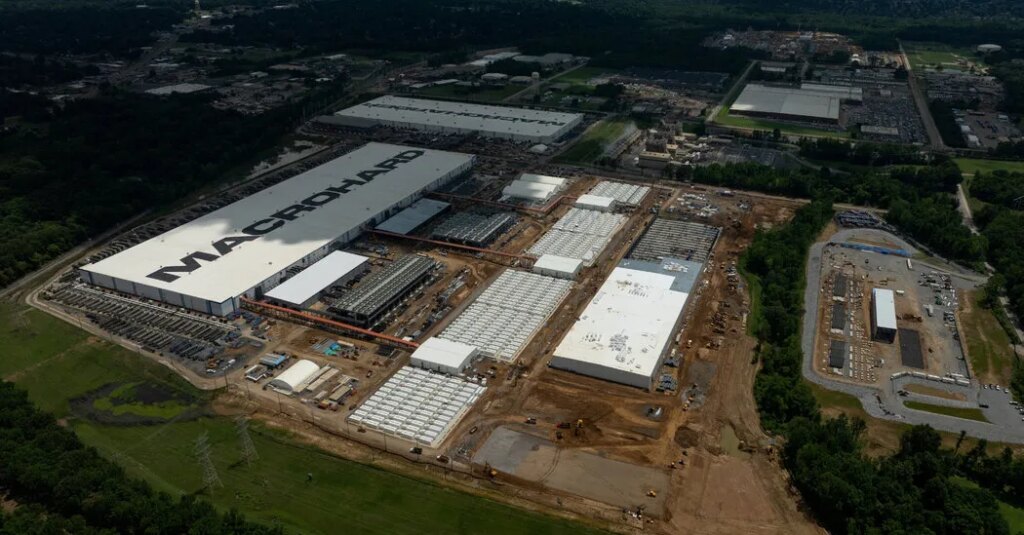
In 2024, Mr. Musk’s A.I. company built a data center in Memphis, one of the largest in the industry, in just 122 days. Since then, Mr. Musk has said the company has added more than one million of the specialized A.I. chips to power the technology. This month, SpaceX announced plans to invest $74 billion in data centers in Arizona and Texas.
“SpaceX makes way more money right now renting out compute than from Grok,” said Nicolas Owens, an analyst who covers SpaceX for Morningstar Research. “Grok is not the premier model in town, so I think it’s more doubtful that they would be able to tip the scale to where serving up A.I. off of their own servers is more lucrative than branching it out to Anthropic.”
Last year, xAI used less than half of the capacity of its first data center, Colossus, according to one person familiar with the project and internal documentation viewed by The Times.
While several xAI executives encouraged Mr. Musk at the time to rent out computing power to help recoup costs, he was adamant he would not do so, two people with knowledge of the conversations said.
Mr. Musk changed his mind by April, when he told xAI engineers that Anthropic had approached the company about leasing computing power, according to two people who attended the meeting. Shortly after, the company announced the deals with Anthropic and Google.
After SpaceX went public, the pressure ramped up in the company’s A.I. unit. Mr. Musk has used weekly meetings to press engineers to justify how much computing power they use, two people familiar with the conversations said. He has also become more focused on finding ways to charge those who use its A.I. products like Grok, the people said.
“At the end of the day, the only thing that matters for competitiveness is revenue per GPU, not benchmarks,” Mr. Musk wrote in August in the group chat with engineers that was viewed by The Times. “If you can’t pay for your GPUs, then you either go bankrupt or you become a computer rental company. Move the needle on revenue.”
As it builds out data centers for rivals, SpaceX has quietly trimmed back its own A.I. ambitions.
In September, the company shut down a pet project of Mr. Musk’s, A.I. companions. The animated avatars could do real-time voice chats and included Ani, who would undress on command.
This fall, the company shifted resources away from another one of Mr. Musk’s top initiatives. SpaceX’s A.I. unit had been working with Tesla on a project to teach Grok how to work as an A.I. white-collar worker, called Digital Optimus.
A first step in the project was teaching the A.I. system how to play video games like Diablo and League of Legends autonomously, according to three people with knowledge of the project. After the team failed to meet Mr. Musk’s expectations, Tesla engineers were moved off the project this fall to work on the main Grok A.I. model, including its coding capabilities, two of the people said. Despite this, Mr. Musk wrote on X on Friday that the product could now reach a higher level in Diablo.
This month, Mike Nicolls, the president of the A.I. unit, announced the disbanding of the 60-member team behind Grok Imagine, an image and video-generation tool that was once a top priority, according to four people with knowledge of the cuts. Already the team’s share of computing power had shrunk, according to three people with knowledge of the project.
The cuts would “better align our structure and resources with critical business priorities,” according to an internal memo from Mr. Nicolls viewed by The Times. The Information, a tech news site, earlier reported that some members of the Grok Imagine team had been laid off.
At an employee meeting this month, Mr. Nicolls, who has overseen SpaceX’s successful satellite internet service, Starlink, repeatedly emphasized that SpaceXSI was falling behind Anthropic, said two people who attended the meeting.
Still, Mr. Musk praised SpaceX’s relationship with Anthropic last Wednesday.
“When I’ve talked to Anthropic, they tell me it is extremely likely that they will continue to rent compute from SpaceX,” he said at The Times’s DealBook conference. “And in fact that they want significantly more.”
The post Elon Musk Faces an A.I. Dilemma at SpaceX appeared first on New York Times.