The primary benefit of information technology, Steve Ballmer, the former Microsoft chief executive, said in a speech 20 years ago, “is that it empowers people to do what they want to do.”
For decades, this all-American promise seemed borne out, as rapid advances in technology enabled people to create, communicate and consume with an ease that would have once been unimaginable.
But at some point on the path of inexorable progress, the promise seems to have curdled for a large swath of the population. Rather than feeling empowered by the digital tools they have come to rely on, many are now questioning how powerless they may have actually become.
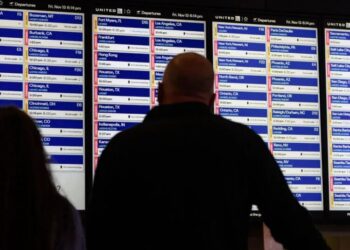
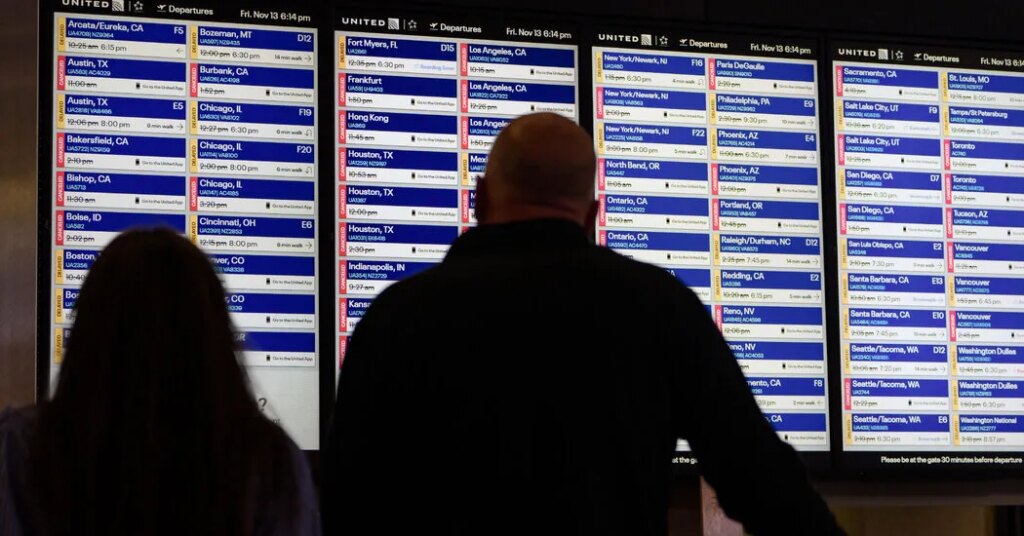
A seven-day stretch that began last week with a global Microsoft outage affecting email and video calls continued with a succession of tech meltdowns, including the grounding of thousands of flights because of problems with outdated air traffic communications equipment. It was capped by the $2 trillion dollar stock market debut of the artificial intelligence company Anthropic, which rocketed an elite few into a new stratosphere of wealth.
Anger had already been building. Well before the series of outages, communities across the country had been pressing for bans on data centers and Flock surveillance cameras, or passing pre-emptive prohibitions on certain kinds of technology, like delivery drones. Schools have banished social media and cellphones, and are facing off with Google over the company’s insistence that classrooms allow A.I.-related products. And the astronomic wealth of tech titans has triggered a ferocious populist reaction, one that partly powered the biggest electoral backlash in generations this month.
And yet the colossal disruptions of this past week have forced people to reckon with how utterly dependent they have become on worldwide computer networks, even before the prospect of the complete A.I. takeover that Silicon Valley power brokers insist is imminent.
As with the period leading up to New Year’s Eve 1999, when experts warned of a potential catastrophic Y2K computing meltdown, Americans in recent days could do little but hope that tech professionals were on top of the problems that could have upended their lives. But even as technology has become far more omnipresent, the techno-optimism at the turn of the new millennium has long faded.
“With Y2K there was this fear that computers are going to become broken,” said Zachary Loeb, a historian of technological disaster at Purdue University who is working on a book on the Y2K scare. “I think in the present there is more of a sense that computers have broken everything.”
The backlash has swelled even as fast-evolving computer technology brings promise along with peril.
Some of the recent outages were triggered when new A.I. tools discovered vulnerabilities and companies rushed to patch them, valuable fixes that brought chaotic side effects. A.I. is making potentially life-changing advances in cancer treatment, while some leading A.I. engineers speak fatalistically of the impending prospect of worldwide unemployment. This week, as fears over computer failures prompted some to start disaster-prepping, others flocked online to try out the blockbuster cultural product of the fall, the video game Grand Theft Auto IV.
As Rabbi Elliott Tepperman sees it, what may have at one point been an intentional bargain — people ceding some control over their daily tasks in return for opportunity and convenience — has become a trap.
“I think we’re way past that bargain,” said Rabbi Tepperman, who in his 2025 Yom Kippur sermon at Bnai Keshet, a synagogue in Montclair, N.J., smashed a smartphone with a hammer. “We’re either addicted or mindlessly giving away our attention for hardly any convenience at all.”
Sixty-nine percent of Americans feel overwhelmed by the number of passwords they have to keep track of, according to the Pew Research Center. Workers at some Fortune 500 companies spend roughly four hours a week — or 5 working weeks a year — toggling between tabs and applications and then having to refocus the brain, according to a 2022 analysis in the Harvard Business Review.
When the trade-off of control for convenience falls short, the problem is more than mere inconvenience. It may be easier to handle personal banking without having to deposit a paycheck at the local branch, but when the bank’s online services fail, the customer discovers that he or she is all but helpless.
“Now that those things are in some ways not working as we’re used to, then we realize how much our agency has sort of been surrendered,” said Bishop Daniel E. Flores of Brownsville, Texas., who was in Baltimore this week for an annual meeting of Catholic bishops, where everyone had to take an early lunch because the digital voting system crashed. “It’s a wake-up moment to re-evaluate how much we — how much do I — want to be dependent.”
Often, the opposition is not to tech itself, but to the sense that it is being foisted on people and communities. In hearing rooms and high school cafeterias around the country, local residents have made the same vociferous objections to data center projects: They are being built not for them, but in the interest of faraway corporations.
“New technology is great,” said Whittney Wood, a D.J. and single mother in central Ohio who narrowly lost a race for state legislature this year in a campaign powered in part by the furious resistance to a local data center. “What I firmly stand against is the big tech people that are shoving these things down our throats, just to make sure that they can get as much profit as possible.”
The sense of futility that runs through these hearings is in some ways belied by the outcomes. Data centers have been successfully blocked in county after county. More than 20 states have introduced or passed bills restricting social media usage among children, though some of these have been challenged in court. And multiple candidates in this year’s midterm elections ran explicitly on platforms of resistance to the power and wealth of big tech — and won.
“A lot of people are feeling like A.I. is just happening to them, and that decisions about this are being made by a fairly small circle of people — and they are responding,” said Kim Daniels, director of the Initiative on Catholic Social Thought and Public Life at Georgetown University. “Workers and families and communities need a much bigger place in the conversation.”
In Silicon Valley, there is a growing awareness of the backlash. Technology leaders are offering defenses of their products, even as their companies are defining the new American economy.
Anthropic’s initial public offering prospectus makes the case that artificial intelligence can positively transform society, from potentially curing cancer to already “helping to shorten the lines at the DMV.” It argues that people who buy Anthropic stock should see themselves as “part of something greater,” not simply as making a “transactional” purchase.
Yet there is broad talk in A.I. circles of the “gradual disempowerment of humans,” said Ruxandra Teslo, a science writer who recently posted a much-discussed essay about “handoverism,” the idea circulating in Silicon Valley that humanity should — or will soon be forced to — cede control of civilization to a benevolent A.I.
“For the first time in Silicon Valley, increasing human agency doesn’t seem to even be the stated goal,” she said.
Not everyone in the tech world is enthusiastic about this, she said, but many are resigned to it. The way some discuss the scenario suggests that they, too, feel powerless, unable to curb the development of a technology that they believe is leading in a very grim direction.
“I’ve seen some people even welcome the fact that there is a backlash,” Ms. Teslo said. “They want someone to stop them from making these systems. Because they feel like they cannot stop themselves.”
Yair Rosenberg contributed reporting.
The post Technology Promised Ease. Now It’s Making Many Americans Uneasy. appeared first on New York Times.