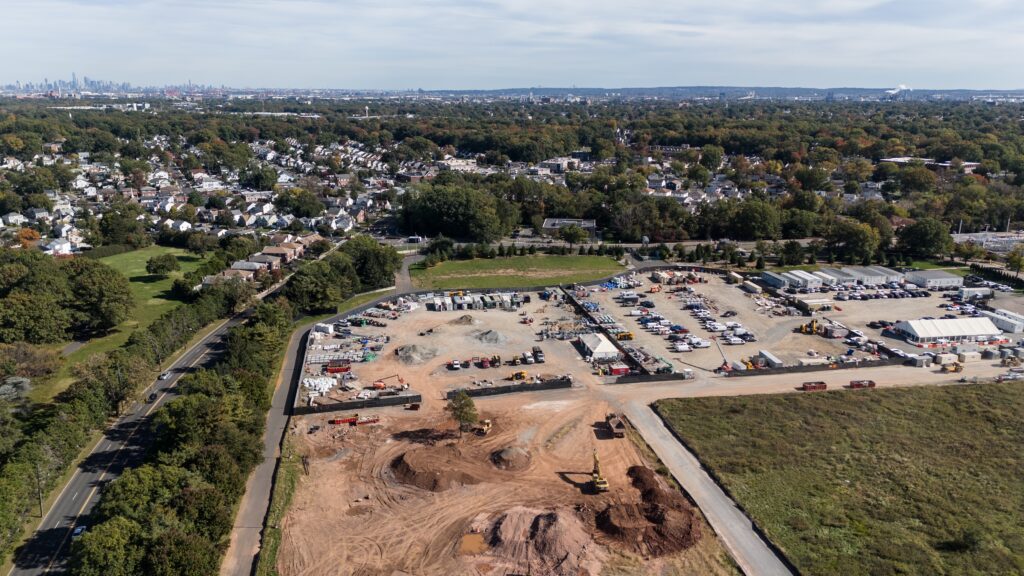
The artificial intelligence build-out could be described as a great public good that comes at an unfortunate public cost. Private development on data centers is exceeding public outlays on transportation-related initiatives. The increased electricity demand this year is estimated to raise monthly electricity bills by $18 for Western Marylanders and $16 for Ohioans. A team of California researchers has estimated that data centers’ demand for water could require between $10 billion and $58 billion in new infrastructure.
The good news is that municipalities have a tool to mitigate the strain. Impact fees are levies that local governments can place on developers to help defray the costs of construction on public services. They allow cities to grow with developments — say, by building new road lanes to accommodate more traffic or additional fire stations to account for extra demand. Properly negotiated deals can align municipal and developer incentives to finance the infrastructure required to support growth.
Sidney, Ohio, for example, will bill Amazon Web Services for water capacity it reserves but doesn’t use. (Amazon Executive Chairman Jeff Bezos owns The Washington Post.) Van Buren Township, Michigan, will receive $15.4 million from Google for local infrastructure in exchange for an estimated $125 million in tax breaks. Minnesota imposes an annual fee of $2 million to $5 million on large data centers based on their peak electricity demand.
The bad news is that municipalities often flub the specifics. Disproportionately high levies can deter otherwise productive investment. Some city councils treat impact fees — which functionally discriminate against low-cost development that aims to provide housing and services at an affordable price — as if they were taxes. Many lack transparency, resulting in unexpected charges that discourage investment.
Frederick County, Maryland, for example, charges $20,111 for each new single-family home to help pay for development impacts on “public schools and libraries.” Osceola County, Florida, likewise charged new single-family homes $21,710 for a road-related “mobility” fee in 2025, a 117 percent increase from the charge the previous year. Prices that high can make even modest homes too costly to build, limiting the accessibility of homeownership.
George Sheetz is familiar with that dynamic. In 2016 he was charged $23,420 for a permit to build a prefabricated home on his rural land in California. The El Dorado County Board of Supervisors imposed the levy ostensibly to mitigate the traffic congestion his project would cause. The sum, however, was determined by a general rate schedule, not the cost “specifically attributable” to his planned development.
Sheetz agreed to pay the fee anyway, but later challenged it in court and won. In 2024, in Sheetz v. County of El Dorado, the justices unanimously ruled that such permit conditions must have “‘rough proportionality’ to the development’s impact on the land-use interest.” They can’t, moreover, mandate that a landowner pay for more than is necessary to mitigate any harms that flow from his new development.
That’s economically and legally sensible, and yet other cities seem not to have gotten the message. Colorado Springs, Colorado, charged each individually metered multifamily unit $7,029 in water fees last year compared with the national average of $1,680 in multifamily water impact fees according to a 2019 study. California’s development fees are some of the highest in the nation. Under Palo Alto’s current schedule, a developer constructing a new 1,000-square foot multifamily apartment faces more than $75,000 in combined impact fees, which include $44,000 for parks alone. San Diego imposes more than $35,000 for a new single-family home larger than 2,500 square-feet. These add tremendous costs upfront, before any construction has begun.
None of this is to say that cities ought to eliminate impact fees outright. The American Society of Civil Engineers last year gave the state of U.S. infrastructure a C rating and found a $3.7 trillion investment gap “between current planned infrastructure investments and what must be done to have the nation’s infrastructure in good working order.” Municipalities no doubt need smarter ways to receive funds as their economies develop.
Thus the case for reforming impact fees. Local legislatures might ensure, for example, that levies are directly tied to additional capacity needs so as to not discourage investment. They could require existing residents and ratepayers to finance existing infrastructure through property taxes and marginal utility use. They could also grant exemptions for low-impact projects like adaptive reuse — which converts existing buildings into housing — and small residential units that will help the community without squashing growth.
Underlying the economics of the AI era ought to be two main principles: Data centers should pay for the demands they place on electrical grids and water systems, as should every home and business. And public services that serve everyone should be paid for by the people who use them, not only by those who want to invest in the given community.
Cities that get their impact fees right will get the growth. Those that don’t will get neither the growth nor the roads.
The post The right way to make data centers pay their own way appeared first on Washington Post.