This month, fed-up, stressed-out Americans headed to the ballot box and tacked hard to the left, supporting the party that is promising to restore billions of dollars in federal spending and billions of dollars in federal tax revenue. Democrats won in blue states. They won in purple states, such as Georgia, Michigan, Maine, and North Carolina. They flipped seats in Trump-hat-red Nebraska, Indiana, Kentucky, Texas, Iowa, and Montana. Voters in South Carolina sent a Democrat to the Senate for the first time since 1998; in Mississippi, since 1982.
At the same time, fed-up, stressed-out Americans headed to the ballot box and curved to the right, supporting a bevy of measures to restrain government spending. Some revenue-raising initiatives won; Coloradans created a graduated state income tax, for instance. But in Florida, voters gutted the property-tax system. In Louisiana, they sheltered seniors from taxation. In Arizona, they limited levies on groceries and banned them on vehicle-miles traveled. In progressive California, they turned down a onetime wealth tax on billionaires and made it harder for the state to impose one in the future.
The midterm landslide was another instance of the electorate rejecting incumbents and revolting against the establishment. It was another example of American voters raging against the country’s brutal cost-of-living crisis. It was also a triumph of what I have come to think of as “no take, only throw” politics, a reference to an old Tumblr meme, itself a reference to a common experience among dog people: Fido demands that his human servant throw the ball, but won’t drop it. That’s politics today, more or less. Voters want big-government budgets and small-government taxes. Politicians act like they can give it to them.
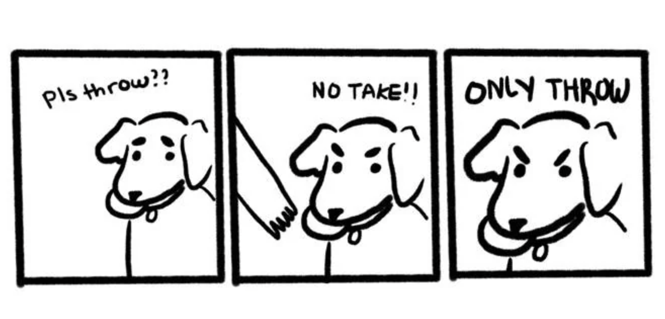
But you can’t throw without taking unless you have a pocket full of tennis balls, which the United States Treasury, at the moment, does not. Americans can turn the tax code into Swiss cheese and keep levies on middle-class and upper-middle-class families low. They can spend trillions on initiatives to bolster the spending power of working households. They cannot do both of those things while keeping politically and societally destabilizing inflation in check.
Inflation hasn’t been in check since the arrival of the coronavirus pandemic. Prices are increasing nearly twice as fast as the Federal Reserve wants them to, and the costs of many essential goods and services are spiking even faster. Gas prices shot up nearly 60 percent from January to May. Employer-sponsored insurance premiums jumped 5 percent this year and are expected to increase another 8 percent to 11 percent next year. (The premiums on marketplace plans will rise as much as 13 percent come 2027.) The price of electricity has risen 11 percent year over year in Idaho, 14 percent in Maine, and 23 percent in Hawaii. The price of home insurance is up 9 percent around the country. Even coffee costs 41 percent more than it did two years ago, if you buy ground beans to brew at home.
These isolated bumps add up, compound, and bleed families dry. If prices had increased at the central bank’s target rate since Donald Trump was reelected, the typical middle-class family would have $1,800 more in its bank account than it does right now—cash to spend on Christmas presents or invest in a retirement fund. If inflation had been subdued since Joe Biden’s election, that same family would have saved more than $36,000 on everyday expenses. That’s enough to buy a used car. It’s a big chunk of a down payment on a typical apartment.
The post-COVID bout of inflation is not in and of itself responsible for the country’s cost-of-living crisis, which has been decades in the making. Land-use restrictions have throttled the housing supply, pushing up prices in dense cities and remote towns. A surfeit of subsidies, lack of cost controls, and consolidation in the health-care market has spurred insurers to jack up the price of coverage.
Still, not only has Washington failed to fix the housing shortage and rationalize the health-care system; it has stoked price increases across the whole economy. This year, it is spending $2 trillion more than it is receiving in revenue, a budget deficit equivalent to 6.2 percent of GDP. That’s almost as big a stimulus as the government was running in 2012, during the miserable jobless recovery from the Great Recession. Back then, the country desperately needed the deficit spending: The unemployment rate was four percentage points higher and the GDP growth rate markedly lower. Now Washington’s largesse is pumping up prices, forcing up interest rates, and making the rich richer. Indeed, Trump’s signature tax bill slashed federal tax revenue by $460 billion this year alone, with much of the relief going to wealthy households and wealthy corporations. (I should be fair: He did soak up some of the red ink by defunding HIV-prevention programs and taking food stamps away from kids.)
On top of that, Trump has engaged in a foolish trade war, driving up the cost of imported goods. He has engaged in a foolish war on immigration, shrinking the labor pool and increasing the cost of child care and construction. He has engaged in a foolish actual war, pushing up the cost of oil and gas. He has also promoted the AI build-out, which has pumped up borrowing costs and utility bills.
Democrats have regained power promising to undo Trump’s policies, in particular his cuts to Medicaid, SNAP, and health-insurance subsidies. It’s a priority for affordability reasons and moral reasons as well. The SNAP cuts are already stoking widespread food insecurity in Arizona, Florida, Georgia, and Nevada, among other states. The Medicaid-coverage losses are expected to spur dozens of safety-net hospitals to close and are projected to cause 51,000 unnecessary deaths. If Democrats regain the White House, they want to do a lot more: universal child care, prescription-drug-price controls, lowering the Medicare-eligibility age, maybe even Medicare for All.
These policies come with costs: $90 billion a year for restoring Medicaid, $20 billion for SNAP, $35 billion for the Obamacare subsidies. To cover them, Democrats are planning on reversing Trump’s tax cuts for rich families and corporations. Yet they are torn on whether and how to pay for new proposals going forward. (Lowering the Medicare-eligibility age to 60 would cost something like $25 billion annually; universal child care, $80 billion; single-payer health care, $2 trillion, offset by the evaporation of private-insurance premiums.) They are also torn on whether to make winnowing the deficit a goal unto itself. In an interview with The Wall Street Journal,Brian Schatz, a Democratic senator from Hawaii, objected to the idea that Democrats should have to worry about the budget when Republicans didn’t: “I don’t think we should play this game where the things we want have to be paid for and the things they want can be put on a credit card.”
On the revenue side, Democrats have vowed not to raise taxes on the 97 percent of American households earning less than $400,000 a year. (Trump’s tax cuts have made that vow a lot more expensive.) Democrats are considering further reducing the burden on working-class and middle-income households by expanding the earned-income and child tax credits. They’re also joining in the American public’s rollicking tax revolt, pushing carve-outs for seniors, tipped workers, hourly workers, police officers, public-school teachers, and homeowners.
Democrats are promising a whole lot of throw and not asking for a lot of take, in other words. This kind of budgetary posture would have worked when the economy was limping out of the global financial crisis in 2012, or when it screeched to a halt in 2020 because of COVID. It doesn’t really work now that deficits are contributing to excess inflation—as voters let Joe Biden and Kamala Harris know in 2024, and as they informed 132 Republican incumbents earlier this month.
Still, Democrats are not totally out of tennis balls. Ending the Iran war, easing immigration restrictions, and eliminating tariffs would blunt price increases or even lower prices without running up the debt, as would requiring the AI hyperscalers to pay for their own water and electricity and land, as would implementing cost controls for utilities, as would continuing to fast-track homebuilding in high-priced communities, as would breaking up corporate monopolies, as would having Washington negotiate prescription-drug prices for the American consumer market. (Heck, why not have it set payment rates for medical procedures and doctor visits too?) Getting the IRS to collect the taxes it is statutorily owed would reduce the deficit without harming the 97 percent. Pulling shut loopholes for and raising marginal tax rates on millionaires and billionaires would do the same.
In time, borrowing costs would ease, inflation would cool down, and the affordability crisis would let up, as Americans so desperately want. Maybe then we could finally have the conversation about how important drop it is to fetch.
The post ‘No Take, Only Throw’ Politics appeared first on The Atlantic.