Brett Goldstein is a Vanderbilt University professor specializing in cybersecurity and artificial intelligence and a former Pentagon official.
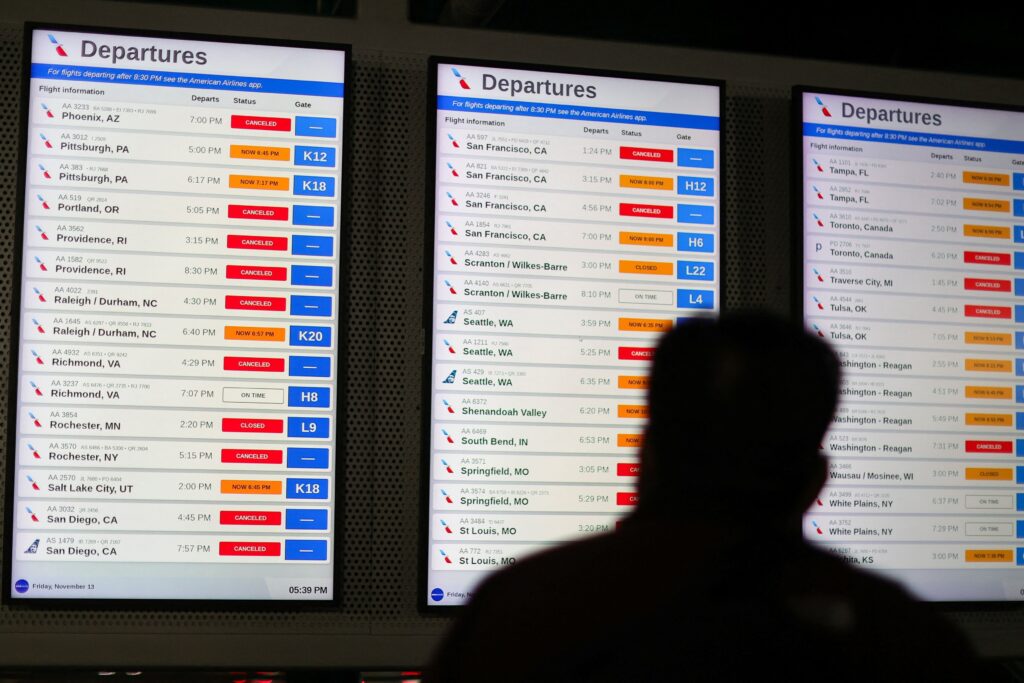
Last Thursday, The Post published my op-ed arguing that the internet would not go dark all at once. It would flicker. Hours later, Microsoft had one of its worst outages ever, crippling businesses across the globe and even sending some users back to fax machines. After that outage was resolved on Friday, America had a brief respite — until the Federal Aviation Administration halted flights nationwide, citing communications issues and leaving travelers stranded across the country. And on Monday, United Airlines and Chase Bank had disruptions of their own that left passengers waiting for flights and customers struggling to access banking services.
In the past week, fragility has rapidly become real. The internet is starting to flicker.
None of these failures appear to have resulted from an attack or intentional disruption, but each one showed how a small piece can bring down a large system. That is cause for deep concern, because what a contractor did by accident, an adversary will certainly try to do on purpose.
Microsoft’s outage was epic in its speed and impact. The company upgraded its network, and a follow-on change exposed a hidden flaw that knocked servers offline. The result was a cascade of failures and an outage that lasted about 24 hours. Therein lies the friction: Software is living and breathing and will change on a daily basis, yet one change took down Microsoft services for millions of people worldwide. We’ve been here before — in July 2024, an outage caused by CrowdStrike briefly crippled airports around the world. Companies cannot stop changing their software, but they do have to get much better at changing it safely.
Friday brought the nationwide ground stop to the U.S. air system — only the second time this has happened since the Sept. 11, 2001, attacks. A contractor replacing aging copper wire with fiber appears to have flooded the FAA’s network with data, destabilizing communications at control centers across the country. By the transportation secretary’s account, a router was trying to log on 1,000 times every four to five seconds. Again, the trigger was a routine change. But for more than four hours, thousands of airplanes sat on the ground.
While these points of fragility may appear to have nothing to do with artificial intelligence, this story is in fact all about AI. In the past, when the technology sector thought about digital weakness and fragility, it often decided to hide in the noise and roll the dice, hoping things wouldn’t break. There were too many systems and too few people who understood them for anyone to find the one vulnerability that would matter.
That protection is gone. AI has the tremendous ability to consume all information and find the holes, those needles in the haystack where systems are most vulnerable. To borrow a phrase from an old movie, there will be “no more secrets.”
For all the danger that AI has introduced, this is where it can bring tremendous value. The same tools that find the holes for an attacker can find them for the defenders first. Rethinking how to approach fragile critical systems is essential, as is understanding how best to deploy talent and money.
The federal government should task U.S. national labs with working alongside frontier AI labs to make America resilient again. Start with aviation, power and payments. Use AI to identify the potential points of failure — the one router or one line of code that can take down everything — rank them and, in the American way, fix them fast. A 10-year plan would be worse than useless. What’s needed are 30-day results: Rank the vulnerabilities discovered and start repairs on the worst entries immediately.
Investors should consider investing less in sexy technologies and more in boring ones. I have lived this. As chief information officer for Chicago, I watched old systems stay up year after year because they still worked and the money always went somewhere more exciting. The copper line, the aging router, the software nobody has touched in a decade: This is where the next failure is waiting to happen, and this is where more investment has to go.
Government and the private sector need to invest immediately, intelligently and directly in stability and resilience. Companies: Take a step back from announcing that new feature and instead make an announcement about stability. Shareholders will probably reward you. Congress and government agencies need to sprint to make core services stable and resilient, and to fund the unglamorous work now, not in the next budget cycle.
Last week was a warning, and although it felt seismic in the moment, in reality it was a gentle one. Every failure was an accident, and every system came back. One day, they will not — if people keep doing business the way they always have, operating on long timelines and focusing on features rather than foundations. The flickers in systems reveal their weaknesses. These and others can be fixed using the power of AI. Better that than risk someone else finding them first.
The post I said the internet would stop working. Then came the outages. appeared first on Washington Post.