Two massive boring machines are now chewing in tandem through some of the hardest rock on earth to create a modern rail tunnel under the Hudson River to New York City, more than 15 years after it was first proposed.
Last week, the second of two German-made tunnel borers began inching into the western face of a solid stone ridge at the work site, and is now advancing about four feet per day, officials said.
Digging side-by-side, the twin machines are cutting parallel passages about 25 feet in diameter and nearly a mile long that will eventually become segments of the long-awaited Hudson Tunnel.
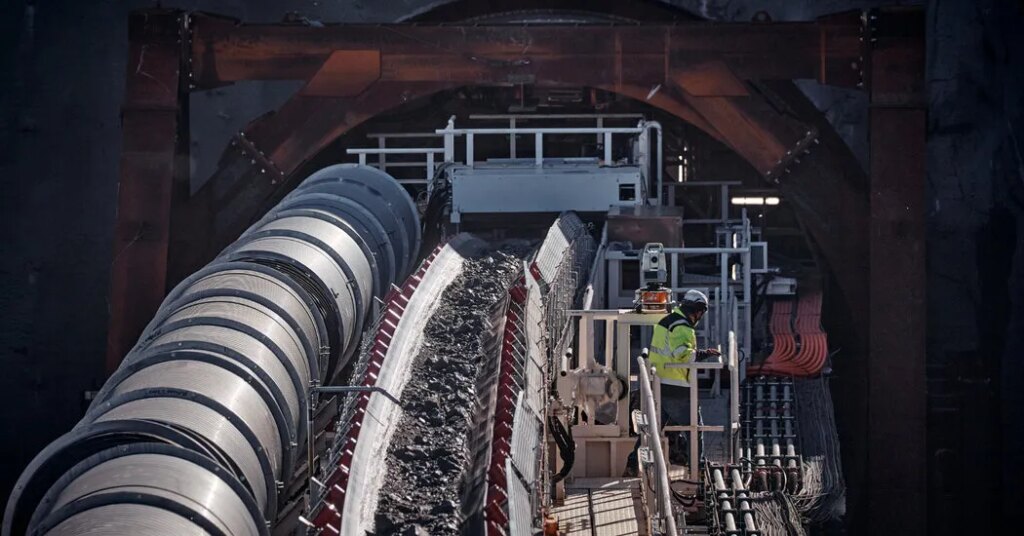
“This is the second-hardest rock on the planet,” said Travis Brennan, a spokesman for SPC Construction, one of the contractors on the project. He was standing above a pit in North Bergen, N.J., where chunks of dark extracted rock moved along a conveyor belt toward waiting trucks.
Down below, about two dozen workers operated each of the 500-foot-long machines, which install the tunnel’s precast concrete lining as they dig. The first of the pair started boring in early October and has so far advanced about 450 feet, Mr. Brennan said
Work on the $16 billion Hudson Tunnel project has proceeded uninterrupted since a federal judge ordered the Trump administration in late June to cease its efforts to cut off funding. Construction had ground to a halt in February and about 1,000 union workers were laid off after the administration withheld payments to the project’s manager, the Gateway Development Commission.
The judge, Jeannette A. Vargas of the Southern District of New York, noted in her ruling that President Trump had indicated in interviews that he was punishing Senator Chuck Schumer, the Democratic majority leader from New York, who had shepherded federal funding through for Gateway.
“We’re cutting a $20 billion project that Schumer fought for 15 years to get, and I’m cutting the project,” Mr. Trump said in October 2025, according to the judge.
The development commission is now negotiating a settlement with the federal Department of Transportation to recover the costs of the shutdown, a commission spokeswoman said.
The Gateway project has been on the drawing boards since early 2011 and has traveled a rocky path. Two Democratic senators from New Jersey, Frank Lautenberg and Robert Menendez, pressed for Gateway as a spinoff from a different plan, known as the ARC tunnel, that their state’s Republican governor, Chris Christie, had canceled just before digging began.
Senator Lautenberg died in 2013. Senator Menendez began serving an 11-year sentence in federal prison for political corruption last year.
The project received strong support from the Obama and Biden administrations. But Mr. Trump slowed its progress to a crawl during his first term, using it as leverage to gain support from Mr. Schumer for a wall along the Mexican border.
The digging that is underway in North Bergen is just one segment of the Hudson Tunnel Project. The boring machines will take about a year just to reach the west bank of the Hudson in Weehawken, where they will be replaced by a pair of machines designed to plow through the softer river bottom en route to 12th Avenue, in Manhattan.
“Launching the second tunnel boring machine marks another significant step toward delivering the most urgent passenger rail infrastructure project in America,” said Tom Prendergast, the Gateway Commission’s chief executive, in a statement released on Wednesday.
If all goes according to plan, trains eventually will run through the new, single-track tubes between Pennsylvania Station in Midtown and New Jersey. The Gateway commission estimates that could happen in 2035, providing an alternative to the existing pair of single-track tunnels, which are 126 years old.
“Every foot that these machines bore brings us closer to delivering the modern, reliable rail system our region needs,” the commission’s board members, Alicia Glen, Balpreet Grewal-Virk and Tony Coscia, said in a joint statement.
The post Foot by Rocky Foot, New Hudson River Rail Tunnel Begins to Take Shape appeared first on New York Times.