U.S. lawmakers are closer to an agreement on an aviation safety bill following the deadly 2025 plane and helicopter crash near Reagan National Airport, two senators said Tuesday. But one main hurdle remains regarding how the legislation would apply to the U.S. military.
For months, the House and Senate have been in a stalemate over two bills proposed after 67 people were killed in the January 2025 collision between an Army helicopter and an American Airlines regional jet over the Potomac River, the deadliest domestic plane crash in over two decades.
Slow legislative action has drawn criticism from relatives of people killed in the crash and aviation officials.
One of the measures, the Rotor Act, unanimously passed the Senate but failed in the House by one vote. It would mandate that all aircraft, including those for the military, be equipped with technology that allows planes to receive information from other aircraft to identify their locations in the sky.
A second bill, the Alert Act, has more lax requirements for that technology, known as Automatic Dependent Surveillance-Broadcast In (ADS-B In).
The National Transportation Safety Board has said ADS-B In would have prevented the 2025 collision.
At a Tuesday news briefing, Sen. Maria Cantwell (D-Washington) said the House and Senate reached a preliminary agreement last week to require the technology on all civilian aircraft but had not yet reached a deal on mandating the technology for military aircraft.
“The military must be a willing partner with the Department of Transportation and the FAA to make sure that what happened that January never, ever happens again,” said Cantwell, the top Democrat on the Senate Commerce, Science and Transportation Committee.
An Army report on the collision, released in October, detailed several shortcomings in Army procedures and policy that investigators said contributed to the crash. The report said leaders had failed to train pilots of the unique dangers of Washington’s congested airspace, and it cited the Army for not resolving flaws in instruments that were known to give inaccurate altitude readings on older Black Hawk models — including the helicopter involved in the collision.
Sen. Ted Cruz (R-Texas), who chairs the Senate Commerce Committee, said a couple of legislative details were still being negotiated with the House Armed Services Committee but that his objective was for Congress to pass a bill before the end of the year.
“In an age of dysfunction in government, in an age of partisan disagreement, we should be able to come together and get this done,” Cruz said at Tuesday’s briefing.
House Armed Services Committee majority spokesperson Heather Vaughan said in a statement that while the legislation hasn’t been finalized, “it’s a priority for our committee and we’re close to getting it done.”
The Defense Department said it does not comment on pending legislation.
The Rotor Act failed in the House earlier this year after the Pentagon pulled its support, citing national security concerns, House Armed Services Committee Chairman Mike Rogers (R-Alabama) said in February.
The NTSB has issued 52 recommendations aimed at making aviation safer following the 2025 crash, but only five have been marked as closed.
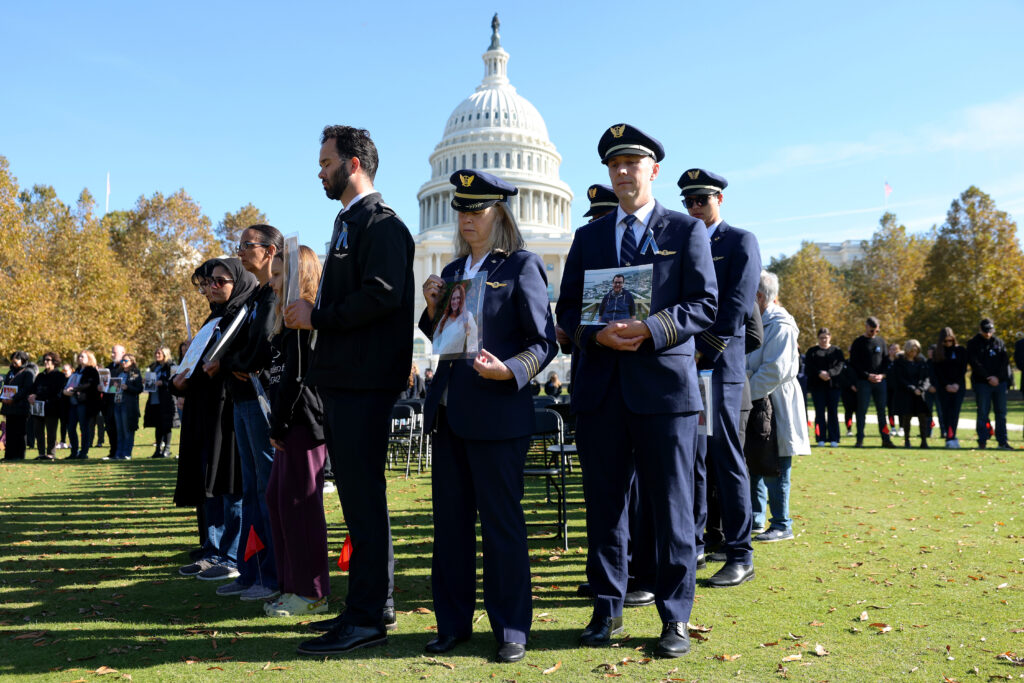
“Every day we delay is another day we accept unnecessary risk, and every day we accept unnecessary risk is a day we fail to honor the lives we’re remembering here today,” NTSB Chairwoman Jennifer Homendy said at the briefing.
“Remembrance must be more than reflection. Remembrance must inspire responsibility. Remembrance must inspire action,” Homendy added. “And remembrance must inspire us to save lives.”
The post Congress closer to DCA crash bill, but military hurdle remains, lawmakers say appeared first on Washington Post.