When Democratic senators gathered for a weekend conference call not even two weeks after winning a decisive new majority, the messy leadership fight that was dividing their ranks was not supposed to be on the agenda.
But when it was her turn to speak, Senator-elect Annie Andrews, the pediatrician who flipped a seat in South Carolina, brought up the subject that was weighing on everyone’s mind. Drawing on her medical background, she expressed dismay that a public battle over who should lead Democrats’ new majority was threatening to overshadow their enormous victory and sow discord at an inopportune time.
“It’s like, if there was a patient bleeding out in the trauma bay and the cardiothoracic surgeon and trauma surgeon were standing outside the trauma bay arguing about who was going to take the lead,” Ms. Andrews said on Tuesday, confirming remarks she made during the private call on Saturday. “When really what we need is someone just to stop the bleeding.”
The lament — coming from a Democrat who has called for generational change in leadership — underscored how the contest between Senators Chuck Schumer of New York, the party’s current leader, and Chris Van Hollen of Maryland, who hopes to replace him, has injected an unwelcome note of division into an otherwise triumphant moment for the party.
At a time when senators would rather focus on plans for their new majority, they are instead facing pressure from colleagues, constituents, activists and interest groups to weigh in publicly on an internal matter that is to be decided by secret ballot, and which many would prefer be waged entirely in private.
“We’re getting a lot of calls, listening to people,” Senator Tim Kaine, Democrat of Virginia, said on Tuesday. “I’m certainly talking to a lot of folks, you know, out on the road. But they’re all frustrated when I tell them I save my conversations about this with members of the caucus.”
Most Democratic senators declined to comment on the leadership fight as they left their weekly caucus luncheon meeting at the Capitol on Tuesday. Mr. Kaine and several others said that the battle between Mr. Schumer and Mr. Van Hollen had not been discussed at the gathering, and that senators instead spoke about funding for the Iran war.
But senators and their aides acknowledged that their offices had been besieged by calls about the leadership election, an issue that burst into public view after Mr. Van Hollen declared in a television interview his intention to unseat Mr. Schumer.
“Leave it to the Democrats,” Senator John Hickenlooper of Colorado said on Monday. “We flip nine seats, and the person who actually helps put it all together and do all that, and all of a sudden, there’s a revolt.”
While House Democrats will choose their leaders this week, senators are not scheduled to select the next majority leader until December. The winner will need a simple majority of the caucus, or at least 28 votes out of the at least 55 the Democrats will hold in the Senate next year, including the two independents who align with them.
So far, Mr. Van Hollen has locked up the public support of at least four other senators, all of them from the party’s left flank. At least fourteen Democrats have said they will back Mr. Schumer’s continued leadership.
But with the election conducted by secret ballot, commitments can be hard to nail down, and many senators are resisting the pressure to take a public position.
A number of senators-elect have expressed skepticism of or opposition to Mr. Schumer’s leadership, but have not yet publicly committed to backing Mr. Van Hollen.
And as a number of progressive groups and Democratic activists have campaigned for Mr. Van Hollen, many senators, including Ms. Andrews and Mr. Kaine, have said they are still weighing their options.
Josh Turek, the incoming senator from Iowa, told reporters on Monday that he continued to have conversations with both candidates and would support “whoever provides those answers to me that most closely align with my common-sense, prairie-populist agenda.”
Mr. Schumer, 75, has been in charge of the caucus since 2017. Even as he helped plot Democrats’ successful effort to retake the Senate, he has been the target of many left-leaning Democrats who believe he is too moderate and of younger Democrats who say their party needs new leadership.
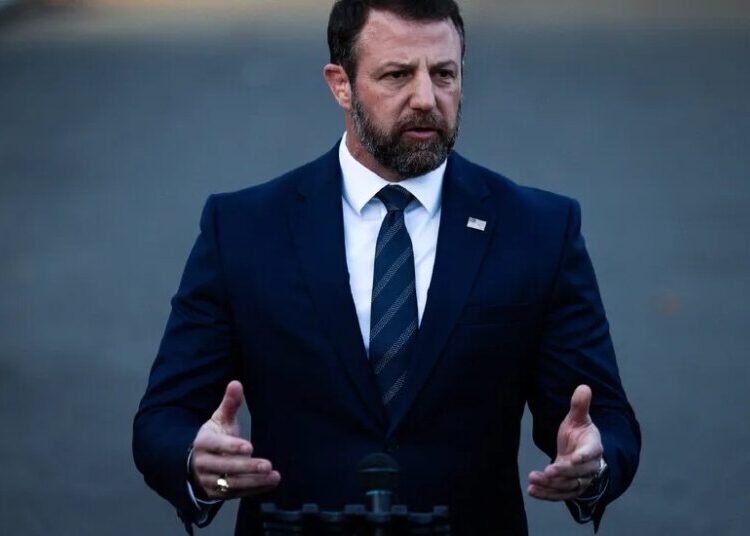
Mr. Van Hollen, 67, a left-leaning lawmaker who has been a senator since 2017, has been conducting a strikingly public campaign for Mr. Schumer’s job. After announcing his interest in the position on MS NOW, he took part in a number of cable news interviews on Sunday. His team also created a website where they are encouraging people to sign a petition supporting him and collecting campaign donations.
So far, he has drawn backing from a handful of progressive lawmakers, some of whom have embraced his tactics. Abdul El-Sayed, the incoming senator from Michigan, said it was “healthy” for Democrats to hold their leadership discussions in public view.
“We have not seen an open Senate fight for leadership for a very long time,” Mr. El-Sayed said at an event hosted by The Atlantic. “It’s good to have these conversations as a caucus out in public.”
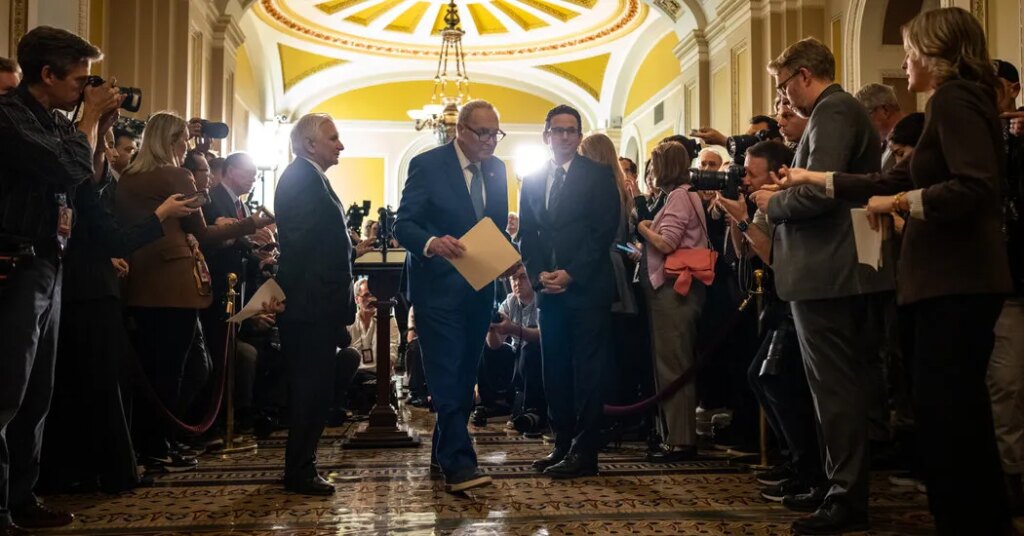
Still, Mr. Schumer said on Tuesday that he had already locked up the support he needed to continue in his post. “I have the votes,” he said at a news conference. “And we’re all going to roll up our sleeves and we’re going to focus on lowering costs, ending corruption.”
Some of Mr. Schumer’s backers say privately that they hope he does not “misread the message” and see their support as a signal that he can continue indefinitely. They say that Mr. Schumer could ease some internal hesitation by making it clear that these two years would be his last term as leader, even if he should decide to seek re-election in 2028.
They compare the situation to 2018, when Representative Nancy Pelosi of California quelled opposition to her continued leadership of House Democrats by announcing that she would limit herself to four more years as speaker.
But Mr. Schumer’s allies view such an announcement as a drastic move that would create a lame-duck aura around him and undermine his leadership. They also remain confident enough of their support that they do not see a need to make such a commitment at this point.
Multiple Democrats also say that Mr. Schumer needs to “step back” from being the primary spokesman for the party, allowing the newly elected freshman class to occupy the limelight as a symbol of fresh Democratic thinking and expanding the leadership team to bring in new voices. Allies of Mr. Schumer have said he seems open to all of those suggestions.
While Senate Republicans have had some recent leadership battles, Democrats have avoided them for more than three decades. The last was in 1994, when Tom Daschle of South Dakota defeated Christopher J. Dodd of Connecticut by one vote for leader.
Harry Reid, the Nevada Democrat who was Mr. Daschle’s lieutenant, quickly rounded up the votes to succeed him when Mr. Daschle lost his seat in 2004. Mr. Schumer then succeeded Mr. Reid upon his retirement and has held the post since.
The post For Democrats, a Leadership Fight Is Marring an Electoral Triumph appeared first on New York Times.