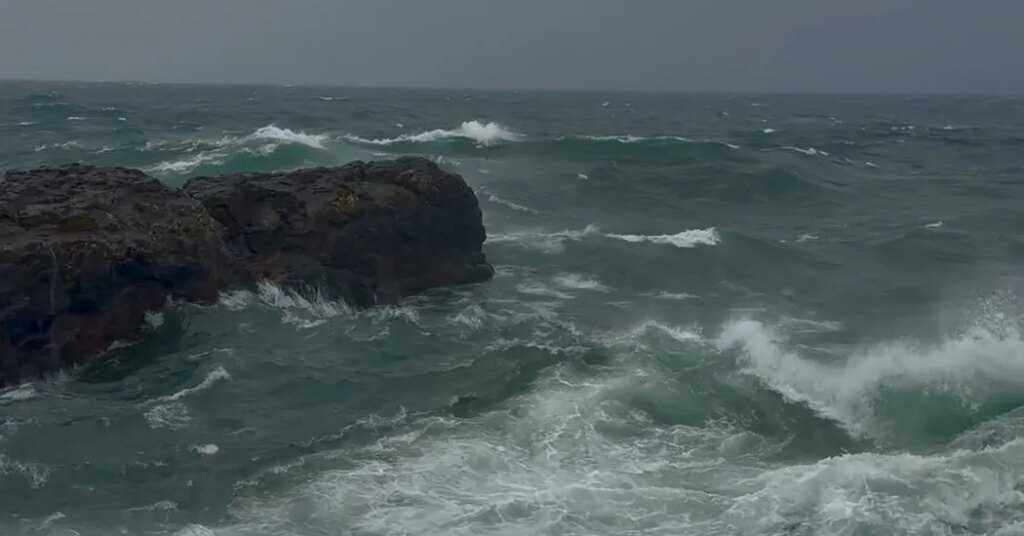
On the morning of Nov. 6, something was moving in the surf along the Upper Peninsula of Michigan.
A man walking his dog along the beach looked more closely: It was a body.
Lake Superior had just given up its latest casualty.
The shores of the largest of the Great Lakes are scenic. They are also blustery, and the danger they pose to human life becomes pronounced during each year’s 11th month. Lake Superior’s shoreline communities commemorate the grim toll of shipwrecks and lives claimed by its waters, which become a cauldron of wild and deadly storms during the fall season, known in folklore — and a Gordon Lightfoot song — as “the gales of November.”
Winds barrel across the surface of Lake Superior at speeds that conjure the gusts of a hurricane. Waves two dozen feet high or more roll through open water, or crash over shoreline cliffs.
The body found near the shores of Harvey, Mich., was identified by the police as a 62-year-old man from Calumet, a village about 70 miles away. The man’s survivors requested that he not be identified. The Marquette Police Department, working from witness reports, believed he had been seized by the waves a day before when Superior’s powerful currents pounded Black Rocks, an outcropping of volcanic basalt where he had gone to take photographs.
Snatched from the surface, like too many before him, on decades of windy November days.
Storms and Wrecks
Lake Superior is the deepest of the Great Lakes, and is typically considered the largest body of freshwater in the world, with a surface area of more than 31,000 square miles. Depending on the season, its edges lap or pummel the shores of Michigan, Minnesota, Wisconsin and Ontario.
Its cliffs, forests and rugged shores are striking, and it is a major artery for the workhorses of maritime shipping that move cargo through interlocking waterways to the ocean and ports thousands of miles away.
But the tempests of Lake Superior have overtaken hundreds of ships. Its routes and shoreline points have earned reputations as maritime graveyards.
The lake earned its most fearsome legacy on Nov. 10, 1975, when a 729-foot freighter, the Edmund Fitzgerald, sank in a calamitous storm that was enshrined in Mr. Lightfoot’s ballad “The Wreck of the Edmund Fitzgerald.”
Twenty-nine crew members and the ship vanished beneath the waves.
The tragedy has become a touchstone for lake communities every November, when the gales descend. The recent drowning death fell days before annual commemorations for the ship’s crew.
In Paradise, Mich., the Great Lakes Shipwreck Museum livestreamed a memorial for the descendants of the Fitzgerald’s crew.
In Detroit, the Rev. Todd Meyer of the Mariners’ Church pulled the rope on the church bell 29 times, once for each crew member.
“We have been doing this for 51 years,” he said.
In Minnesota, the fate of the 62-year-old man was incorporated into the ceremony for the ship’s crew at the Split Rock Lighthouse, where the names of the crew members were read aloud.
Hayes Scriven, the site manager of the lighthouse, said in a speech that the death, along with those from other shipwrecks and rescues, was “a sobering reminder of the power of the lake.”
“A lot of us around the lake, involved in the Fitz memorials, talk about how the Fitz crew itself can stand as a memorial for all of the people that are lost on Lake Superior and the Great Lakes,” he said in an interview.
High Winds and Waves
The Marquette Fire Department called the latest drowning “a sad, harsh reminder of Lake Superior’s power.”
Its crosscurrents, massive waves and turbulent waters can render its name misleading, said the fire chief, Ian Davis.
“It is really not a lake,” Chief Davis said in an interview. “It is an inland sea.”
Lake Superior becomes “more of a tempest” when large, low-pressure systems form in October and November, said Ketzel Levens, a forecaster with the National Weather Service in Duluth, Minn.
The season is often described by meteorologists as unstable when the summer water temperature is warmer on average compared with the arrival of the cold air, she said.
Those factors “create these really, really strong winds,” Ms. Levens said. “And depending on what direction they are coming, they might run across Lake Superior for potentially hundreds of miles.”
Waves propelled to shallower depths rear up to break along the shore, sometimes swamping high cliffs.
“As tall as the wave is, it is about as deep,” she said.
On the day the Calumet man went missing, the lake had been living up to its seasonal reputation of battering winds and bullying waves.
The National Weather Service in Marquette had issued a gale warning. Winds picked up by 1 p.m., with a buoy registering waves of 15.5 feet, Ben Warren, a Weather Service meteorologist in Marquette, said.
Those waves were some of the highest recorded since Oct. 24, 2017, when they measured almost 30 feet, he said.
On that day, two friends, Robert Anderson, 53, and Sarah Hall, 37, went to Black Rocks to take photographs.
Like others before them and since, they were swept away.
Mr. Anderson’s body washed up about a month later in a nearby harbor.
Ms. Hall’s body has never been found.
Unruly conditions, including on the day of the latest death, can keep divers, helicopters and boats grounded.
Still, Capt. Ryan Grim, the police chief in Marquette, said witnesses told rescuers that some people tried to help the man who was claimed by the lake.
“They actually tried to throw a jacket out to him,” he said.
The post A Death Along Lake Superior Revives Memories of ‘the Gales of November’ appeared first on New York Times.