Free speech isn’t so simple when you own a printing press. It’s even more complicated when no one will work it for you. Hachette UK learned this lesson in 2020 when staff walked out over its decision to publish Woody Allen’s memoir, “Apropos of Nothing.” After days of listening to employees, the company decided that moving forward with the book “would not be feasible.” Months later, it came to a different conclusion when staff protested publishing J.K. Rowling’s children’s book “The Ickabog.” As the company said at the time: “We fundamentally believe that everyone has the right to express their own thoughts and beliefs.” Which is it?
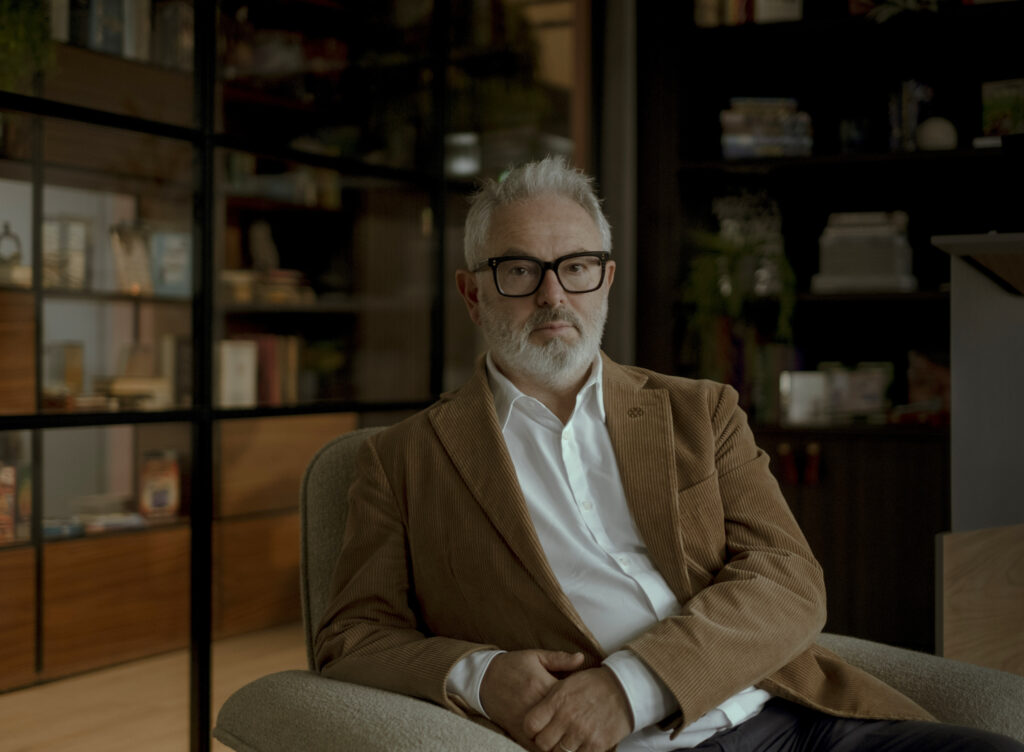
Neil Blair, 60, Rowling’s longtime literary agent, thinks that confusing mess creates an opportunity. In September, he launched High Line, a publishing house whose two imprints, Antidote Books and Odessa Editions, will cater to politically disfavored writers of nonfiction and Jewish content, respectively. He is as much a free-speech advocate as an arbitrageur. If the competition doesn’t want to bring light to challenging texts — and make money while doing so — Blair will.
This interview has been condensed and edited for clarity.
Max Raskin: I want to begin with the negative selection problem. When you start a publishing house for books that won’t find a home elsewhere, how do you avoid becoming the island of misfit toys? Just because plenty of people believe something doesn’t make it wrong.
Neil Blair: One of the silver linings of cancel culture, as it were, is that there are a lot of really good authors out there who will come our way. We’re going to meet people who haven’t yet approached a mainstream publisher or perhaps those who never intended to. In that sense, we’ll have the pick of the crop. From both my experience and instinct, I think a high percentage of the books being passed on are failing not because they’re second-rate but because of bias. Eli Sharabi’s book, “Hostage,” about being held in Gaza for 491 days, is a perfect example.
That one couldn’t find a publisher in Britain but then sold thousands of copies in the United States after HarperCollins picked it up in 2025. Why did the two publishing markets react so differently?
My assumption is either that publishers didn’t read the book or, if they did, that they were scared of how their young staff would react to publishing it. I read the text and was astonished. I thought it would be regarded as being as important as one of the Holocaust survivors’ stories. And yet not one mainstream British publisher made an offer. Everyone totally rejected it.
Who’s running the show at these big publishing houses?
They used to have editors and publishers with reputations and careers who could basically make their own choices. Now, in most cases, books have to go to an acquisitions committee, which includes sales and marketing people and the wider team. That’s where the younger staff become part of the mix.
Anecdotally, the people I’ve spoken to have told me the same thing: Since Oct. 7, 2023, the forbidden authors and subjects are Israelis and Jews. For five or six years before that, it was gender-critical writers, and for probably even longer before that, right-of-center writers. A lot of editors and publishers are either scared or anxious about pursuing a book they know their young employees will dislike. Or, simply for a quiet life, they’ll decline to entertain anything potentially in that territory. That’s one of the motivations that led me to set up High Line.
Is there a through line between the people you’ve hired?
The starting point — which should be standard for everyone in publishing — is that you have to believe in freedom of speech. You have to believe that really good writing and really good voices have a right to be published and deserve to be, not just the ones whose views you agree with.
Then we’re looking for people who are bold and brave, who are looking for something a bit different, and who have a good sense of what the market wants. The proof will be in the pudding, but look at the sales of books from, say, Eli Sharabi, Douglas Murray and Jordan Peterson. There is a market for these books if they’re given a chance to be published properly. Mainstream publishers are missing a trick.
There’s the famous quote that’s misattributed to Voltaire: “I disapprove of what you say, but I will defend to the death your right to say it.” Have you ever represented something with which you really disagreed?
Yes, all the time. We have a rule about the clients we take on: They can’t be bad people. Well, we don’t use the word “bad” — we use a different word, which you can probably imagine.
But where do you draw the line? A really sweetheart guy comes in, who seems like he’d be a pleasure to work with, but his book is about why we should kill all right-handed people.
Something that’s truly offensive, that calls for violence, that’s just hatred — no. The example I use is an extreme one, but it sets the tone: If a young man called Adolf Hitler came through the door with a book called “Mein Kampf,” we wouldn’t represent that. But points of view that could be considerably away from the center, one way or the other? Absolutely.
I want to talk about children’s books. Have they gotten better or worse?
I’m biased, but Harry Potter and Jo Rowling changed children’s publishing. It was in the doldrums, and she transformed it into something tremendously vibrant and successful. That’s continued. There have been some good writers with successful books that have turned into franchises.
What has happened of late is that it’s become one of the more — for want of a better phrase — toxic areas of publishing. I think that’s primarily because it’s attracted more people who have this prejudiced point of view that they think should apply to the books they work on. I’ve had a number of people come to me after they’ve pitched a book where a publisher said, “Yeah, it’s great, it’s really good. Love it. Could you just introduce a couple of positive nonbinary characters, or a transitioning character?” If ever there was pushback, the book would be killed. That happens more often than you’d like to think.
Was this always going on behind the scenes? Was Bugs Bunny a Bolshevik and we never noticed?
If it was happening before, it was subtle. There’s a generational difference. When I started work, I was told: “Don’t bring your whole self to work. Bring your work self to work and get on and do your job.” The people starting in this line of work today have been told: “Bring your whole self to work, and we’ll understand everyone’s identity and we’ll reflect on that, et cetera.”
I don’t think either is correct. But the effect of the latter, for certain people, is that they believe their point of view is the right one and that, because it’s right, alternative points of view are by definition wrong and shouldn’t be allowed. The senior people, in the main, don’t feel that way, but they don’t want to fight with their staff. They don’t want to see them going on strike, and they don’t want to endure a social media pile-on. And so given that they’ve probably got three or four other really good titles they could buy instead, they tend to allow it.
The result is a chilling effect. A lot of really good books don’t ever get the chance, and most of the time, unless the editors are as explicit as asking for a particular type of character, they’ll simply say, “It’s not for me” or “My list is full,” and you’ll never know. Again, there’s an opportunity there, because I don’t believe the vast majority of kids, or the parents and grandparents buying books for them, share that point of view.
You were involved with Harry Potter before Rowling became a sensation, working at Warner Brothers to buy film rights to books. Do you remember the first time you read it?
Absolutely. I was about 30 years old, at home, and hadn’t read a children’s book in a long time. I loved it. The majority, if not all, of the books I had bought for the company were for adults. I think that was the first and only children’s book, so it was a unique request, and I remember being incredibly impressed. “Wow, a children’s book that’s so well written, so compelling, so rich. The themes are so strong,” I thought to myself.
Then I found out quickly that it was intended to be the first of a seven-book series and that the characters would age with each book. Anyone with any brains realized that was significant.
Has anyone ever asked you who your favorite Harry Potter character is?
No. Prior to launching High Line, I’d never really done an interview. I’m a private person, and I’ve always thought that my job is to get my clients into the newspaper, not to be in it myself. The answer, though: My favorite human is Dumbledore. He’s fascinating. I also love the creature Scabbers.
If your house were burning down and you had to save one book, what would you choose?
My “Philosopher’s Stone” first edition. [full title of first edition is “Harry Potter and the Philosopher’s Stone” but think it’s fine/jd]
Five years from now, how do you measure success? Books sold? Prizes? What if the big houses start publishing these authors again and make you irrelevant?
Obviously we’ve got investors, and we want to deliver a return to them. It could mean we’re so successful that the mainstream publishers realize they’ve made a mistake and want to make us the bold imprint within their house.
But it would also be a success if mainstream publishers realize they need to grow a backbone. Maybe they change their recruiting so that in interviews they make clear: If you come here, you have to be prepared for this company to work on books you don’t agree with. Your prejudiced views won’t dictate the only books published in the English-speaking world.
What advice do you have for a young writer?
Work hard. My experience has been that many people think they can be successful, but when they get helpful notes for a draft, or when they’re asked to adapt a story, they fall by the wayside. They thought they were finished, and so they’ll stop.
I’m constantly having conversations consistent with Malcolm Gladwell’s “Outliers”: Be lucky, have the talent, but also put in the 10,000 hours. I say to people: “If you want this to be your living and you want to be successful, you’ve got to put in the hours.”
The post J.K. Rowling’s agent is betting on the books that publishers won’t touch appeared first on Washington Post.