Months after more than 30,000 gallons of jet fuel spilled from Joint Base Andrews in Maryland, state regulators, lawmakers and environmentalists say they remain worried about the slow response to the incident and the potential lingering impact to the surrounding environment.
They’re pressing the base to take more steps to contain any leaks, saying signs of fuel have continued to be seen in Piscataway Creek, a vulnerable nearby tributary.
Serena McIlwain, secretary of the Maryland Department of the Environment, wrote in an Oct. 28 letter to officials at Andrews that she had serious concerns about the pace of the investigation and cleanup efforts. McIlwain also said she was “troubled that fundamental questions about the source” of the leaks and “actions necessary to prevent further contamination remain unanswered.”
“The pace of that progress has not matched the urgency of the situation,” McIlwain said.
She gave specific actions she wanted the base to take and deadlines to do so and said if they were not met she would consult with the state’s Office of the Attorney General to figure out “appropriate next steps.”
Officials at Joint Base Andrews said an investigation is ongoing to determine the exact location and cause of the leak. They said the leak has been contained but cleanup and remediation of the surrounding area is still underway.
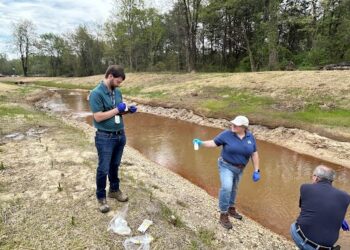
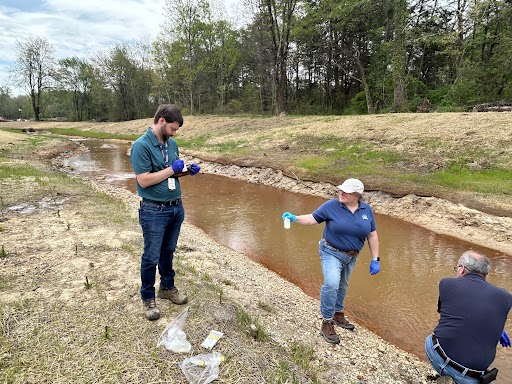
The leak problems happened in December and March, with fuel spilling from multiple locations. It was discovered in late March after reports of odors and “a visible fuel sheen” on Piscataway Creek, a roughly 19-mile-long tributary of the Potomac River in Prince George’s County that is part of the Chesapeake Bay watershed.
The discovery came on the heels of a separate pipeline break this year that caused more than 240 million gallons of raw human sewage to spill into the Potomac, which officials called one of the worst environmental disasters in modern times.
No drinking water in the Washington area has been affected by either incident, Maryland officials said.
Still, there’s frustration about how the base has dealt with the situation and growing worry about the ecological impact to Piscataway Creek, which has long had pollution troubles, and the Potomac, which tops a national list of most endangered rivers.
“The Air Force has failed to fully contain the fuel spill at Joint Base Andrews,” Sen. Chris Van Hollen (D-Maryland) said in a statement. He demanded that the base “provide long-overdue transparency” on the issue.
The incident involved an estimated 32,000 gallons of jet fuel that leaked over multiple days and locations, according to Maryland environmental officials.
Of that, an estimated 10,000 gallons were “reportedly contained” within the base’s fuel system, according to letters from lawmakers and Maryland regulators. Another 22,000 gallons of jet fuel, however, were later “discharged into the environment, contaminating soils and nearby Piscataway Creek,” lawmakers said in a May 5 letter.
David Flores, vice president and general counsel for the Potomac Riverkeeper Network, said state testing of surface water at Piscataway Creek showed there are “still significant levels of contamination” coming into the waterway that could have toxic effects on the wildlife.
“It has not been abated,” Flores said. “We’re not getting assurances and seeing the progress.”
Andrews is a sprawling campus of more than 7,400 acres in Camp Springs, Maryland, about 15 miles from downtown Washington. It has about 17,500 personnel and is home to Air Force One. An underground fuel distribution system allows crews to refuel about 4,500 aircraft annually, according to Joint Base Andrews officials.
Andrews sits at the headwaters of Piscataway Creek, which has long suffered from pollution, partly from the base’s storage of firefighting foam that contains PFAS, commonly called “forever chemicals,” environmentalists said. Maryland’s Department of the Environment has long had in place advisories that recommend the public eat limited quantities of fish caught in the creek and in some cases avoid certain species.
In a statement, the environmental agency said it continues to “observe signs of jet fuel coming from the site, with fuel continuing to flush into Piscataway Creek, particularly after heavy rain events.”
“Until those questions are resolved and the problem is fixed, we cannot verify that the releases have ceased or that additional fuel is not entering the environment,” the agency said.
To deal with the jet fuel leak, Joint Base Andrews officials said in an email that it was taking on several efforts, including trying to figure out the cause and exact amount of fuel leaked and testing soil.
Andrews officials said about 800,000 gallons of impacted water and 1,000 gallons of jet fuel have been recovered from Piscataway Creek. The base said the leak happened along a pipeline that runs underneath taxiways. Ground-penetrating radar of the pipe and the area around it will be used to figure out the specific issues.
The leak, Andrews officials said, created “subsurface soil and groundwater contamination, with heavy rains flushing residual fluid into the creek.” To deal with that runoff, Andrews said it has set up containment sites along parts of the creek and is skimming the surface for fuel sheens.
Joint Base Andrews officials said they remain “committed to continued monitoring, testing, containment, recovery, remediation, and restoration until water quality consistently meets applicable standards.”
The post Concerns remain about dangers from jet fuel leak in Maryland appeared first on Washington Post.