In today’s edition … The Jensen Huang story gets deeper … Are the electoral college’s days numbered? … but first …
The big news
The race to be the next Senate majority leader is no longer a one-person contest.
Sen. Chris Van Hollen (D-Maryland) told our colleague Erin Cox that he is challenging Sen. Chuck Schumer (D-New York) to lead Senate Democrats in the next Congress, triggering a power struggle as Democrats prepare to take the majority in weeks.
“The voters called for big change, and this is a time that we have to deliver for people across the country,” Van Hollen said in an interview.
You can read Erin’s full piece with Theodoric Meyer here.
Democrats can use their new power to try to get around the electoral college. Will they?
After years of calling for its end, the electoral college’s opponents think now may be their moment.
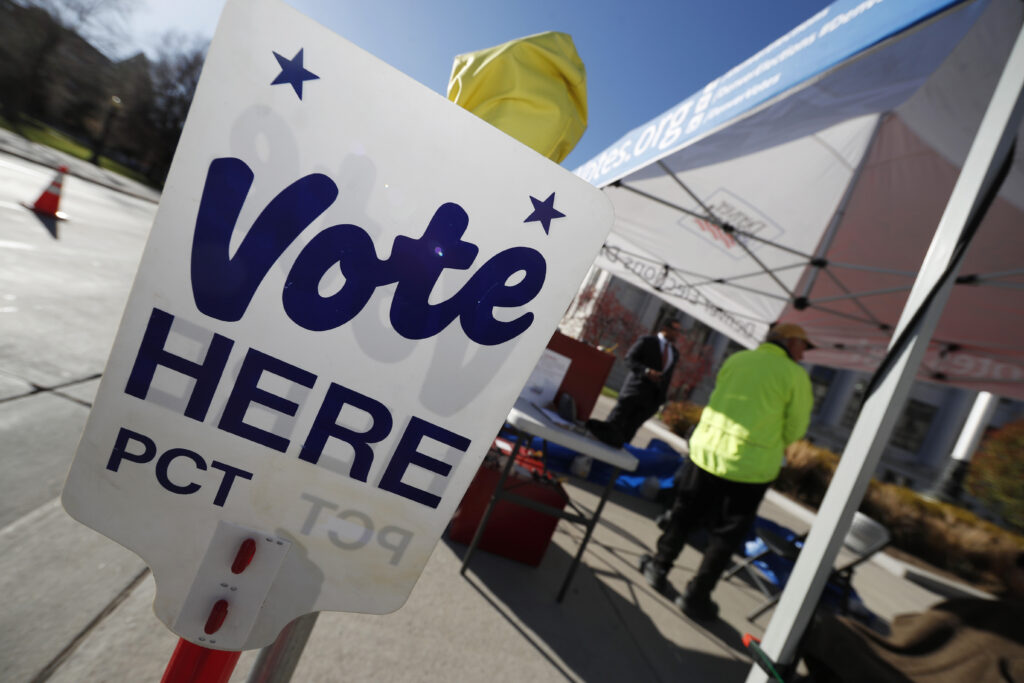
These activists have long argued that the electoral college is anti-democratic, and that presidential elections should be decided by the popular vote, like every other American election. They say the solution is the National Popular Vote Interstate Compact, which says states should promise to give their electoral college votes to the candidate who wins the popular vote.
Eighteen states (and Washington, D.C.) have signed on to the compact, leaving its members 48 votes short of the 270 votes needed to nullify the college.
But, as our colleagues Patrick Marley and Maegan Vazquez reported this morning, Democrats’ midterm success at the state level means those final votes might now be in play.
Generally, Democratic-led states have been willing to join the compact, especially after Donald Trump became president despite losing the popular vote in 2016, while Republicans have spurned it. With Democrats soon to be in full control of states like Arizona and Pennsylvania, the party likely could get rid of the electoral college. But there remains debate about whether it should.
Pennsylvania Gov. Josh Shapiro is the most prominent Democratic state leader to come out in favor of joining the National Popular Vote Interstate Compact, telling Pod Save America on Saturday that “the national popular vote makes sense” and that he will “work with lawmakers to figure out what the right mechanism is for moving forward on that.”
State Sen. Priya Sundareshan, who will lead Arizona’s senate in the new majority, told Patrick and Maegan that she supports a national popular vote too.
But Shapiro and Sundareshan’s vocal support for the national popular vote has made them outliers. I reached out to governors-elect and legislative body leaders in the states where Democrats won new trifectas and asked their thoughts on the electoral college and if they’ll push for their state to join the National Popular Vote Interstate Compact. Most didn’t respond, and those who did were reluctant to wade into the debate.
Nevada Gov.-elect Aaron Ford’s “main focus is making life more affordable and putting money back into Nevadans’ pockets,” said a spokesperson, though “there will be a time to talk about presidential elections.”
And when contacted by The Washington Post, a spokesperson for Wisconsin Gov.-elect David Crowley seemed to walk back Crowley’s expression of support for abolishing the electoral college in an interview with the AP earlier this week.
Crowley is focused on advancing “shared priorities that deliver results for Wisconsinites,” said spokesperson Brandon Weathersby, and “assembling a strong transition team and preparing his administration to deliver for the people of Wisconsin from day one.”
Arizona Gov. Katie Hobbs similarly demurred when asked about the topic during an interview with “Good Morning Arizona” despite previously co-sponsoring a bill supporting a national popular vote when she was a state legislator.
A majority of Americans support ending the electoral college, a 2024 Gallup poll found, with 58 percent of U.S. adults saying they support amending the Constitution so the president is elected by popular vote. But far more Democrats (82 percent) than Republicans (32 percent) support the change.
“In recent years, Republicans have felt they have a stake in the electoral college, because they’ve been able to elect two candidates this century who didn’t get the most votes,” said George C. Edwards III, author of “Why the Electoral College Is Bad for America,” referring to Trump’s 2016 victory and President George W. Bush’s win in 2000. “So there’s been more partisanship involved in the responses, [and in] evaluations of the electoral college.”
This divide between Democrats and Republicans may not matter as much in deep blue states like California or New York — both of which signed on to the compact years ago — but in a state like Nevada, where Ford won just over 51 percent of the vote, it’s a thornier question.
While Democrats are undoubtedly interested in wielding the power that comes with state trifectas, they are also interested in maintaining the in-roads they made with historically Republican voters, hoping to achieve long-term success in red and purple states.
Republicans are very much aware of this dynamic, and are already going after Democrats who’ve said they would sign their states onto the National Popular Vote Interstate Compact.
“Barely a week after the midterms, Democrats are focused on rigging the rules for 2028 instead of lowering costs and delivering for American families,” said Ally Triolo, the communications director of the Republican National Committee’s Election Integrity team. “Democrats know they’re on borrowed time. … They’re trying to cheat the system to cling to power.”
Patrick Rosenstiel, a Republican and a senior consultant for an advocacy group for the National Popular Vote Interstate Compact, remains optimistic and says he believes more purple states, such as Alaska, Georgia and North Carolina, could also potentially join the compact in addition to the five new states Democrats now fully control.
“I have never been more confident in my life that that’s possible,” Rosenstiel said. “The political and legislative environment exists for the National Popular Vote Interstate Compact to be enacted and in place for the 2028 presidential election.”
Want this in your inbox?
Start your day with The Washington Post’s flagship political newsletter. Sign up here.
From across the newsroom
- Trump says no deal needed with Iran, closes down Vance negotiations, from Michael Birnbaum and Rachel Chason.
- JD Vance still likely to run for president as GOP rivals circle, from Natalie Allison.
- Most top Fed officials blame AI for fueling inflation. Not Trump’s Fed chief, from Steve Thompson.
- Before he was Pope Leo, he was their bishop. Now he’s coming home, from Samantha Schmidt and Víctor Zea Díaz.
- After meeting Putin, U.S. envoys say Europe to join talks on ending Ukraine war, from Mary Ilyushina and Ellen Francis.
What we’re watching
Nvidia CEO Jensen Huang resigned yesterday, done in by reports of multiple affairs, including one with a woman suspected of being a Chinese spy.
As my colleagues Miriam Waldvogel, Nancy Cook and Ian Duncan put it: The resignation is “a stunning downfall for one of the world’s most powerful executives.”
This story is nowhere near over.
Fears around artificial intelligence and anger towards data centers, the engine room of the AI boom, defined the 2026 election. Voters want accountability for the burgeoning technology, and Democrats, who now control both houses of Congress, are eager to haul tech leaders before their newly empowered congressional panels. And they still want to talk to Huang.
Huang’s “decision to resign does not absolve him, other executives, or the company as a whole of responsibility for putting our national security at risk or for any potential violations of our laws,” said Sen. Elizabeth Warren (Massachusetts), the top Democrat on the Senate Banking Committee.
Warren, who is known for her tough, direct questioning in committees, said Huang and other Nvidia leaders “owe Congress answers about the company’s compliance with U.S. export controls.
It’s not just Democrats making these calls.
Rep. Brian Mast, a Florida Republican, told reporters that Congress is “currently in ongoing negotiations with Jensen and NVIDIA.”
And the ire isn’t only focused on Huang. Democrats and Republicans are both calling on Commerce Secretary Howard Lutnick to explain how and why he reportedly allowed Nvidia to keep selling advanced AI chips to companies with connections to China.
The federal government has restrictions on what chips Chinese companies can buy. But many companies — including one led by Alice Huang, one of the women Huang allegedly had an affair with, and who is suspected of being a spy — have been accused of smuggling advanced chips into China.
Sen. John Kennedy, a Louisiana Republican, told our colleague Jarrell Dillard that he wants to ask Lutnick why he didn’t use his powers over tech exports to block Alice Huang’s company from buying $4 billion in advanced Nvidia chips. And Kennedy said he wants to ask whether Lutnick knew what happened to the chips “after you gave them to the Chinese spy.”
“He’s going to have to answer those questions. If I were he, I would have already answered him. But Congress is not going to let this go,” Kennedy said.
And Sen. Jim Banks, an Indiana Republican, called out Lutnick on Fox News, the president’s preferred news outlet, accusing him of using “loopholes” to let questionable chip sales go through and calling for the secretary to come to Congress “ASAP.”
And late Thursday, Sen. Tim Scott, a South Carolina Republican and chair of the Senate Committee on Banking, Housing and Urban Affairs, sent Huang a letter requesting he appear before the committee and said he was requiring the former CEO and Lutnick to testify.
The politics here are clear. Democrats are looking for oversight targets that let them check the administration while also showing they take the concerns of voters angry about affordability and AI seriously, while Republicans want the party to counter China’s influence in the area. Targeting Jensen Huang and Lutnick seems tailor-made for both.
In your local paper
Georgia Recorder: Democratic wins this year have revived conversations around Georgia’s Medicaid expansion, with a health policy adviser to retiring Republican Gov. Brian Kemp telling an audience recently that it’s almost a guarantee.
Nevada Current: Corrections officials in Nevada are trying to bar inmates from receiving physical mail, a response to drugs flowing into prisons. Prison advocacy groups are asking Nevada lawmakers to block the planned rules.
Stateline: Collections on $234 billion in student loan payments could come due as early as next year after years of delays, creating a looming reckoning for Americans who took out loans to pay for school.
Send a reply
Our colleague Scott Clement has a great newsletter on why pollsters think surveys undershot Democrats’ midterm strength. We asked you about polls ahead of the election. And we want to check back in now: How do you feel about polls after these midterms? Have your views changed? Let me and your fellow Early Brief readers know at [email protected].
Thanks for reading. You can follow me on X at @merica.
The post Will Democrats pursue a national popular vote? appeared first on Washington Post.