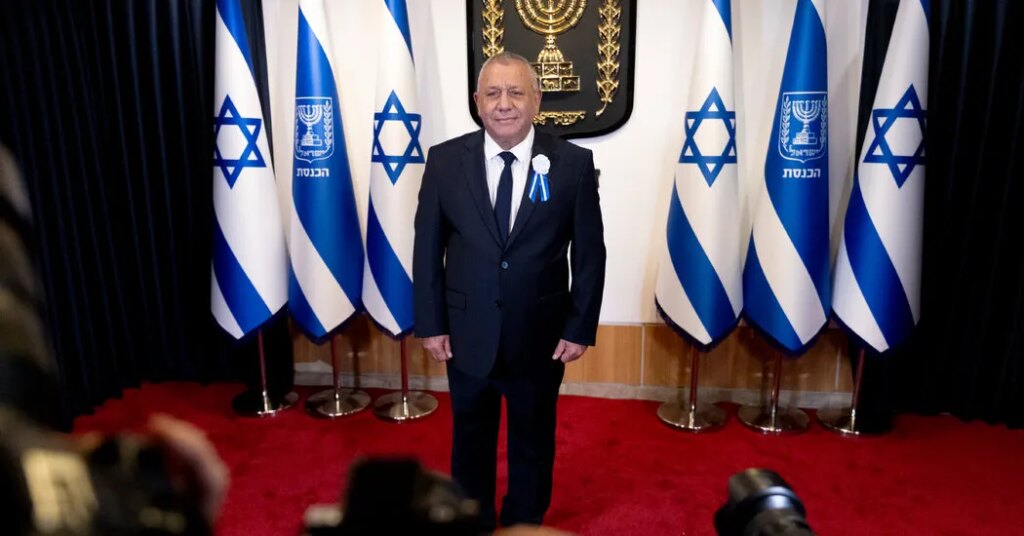
Gadi Eisenkot, the former military chief who has been given a chance to form Israel’s new governing coalition and replace Prime Minister Benjamin Netanyahu, is by no means assured of success.
But if he does take power, another hugely daunting challenge would immediately confront him: how to undo the vast damage done to Israel’s relationship with the United States, its closest and most important ally.
It’s hard to imagine things getting much worse.
Many Americans have turned against Israel over its devastating military campaign in Gaza, and even more so over its role in pressing for war with Iran, which led to soaring gas prices.
President Trump announced this month that he would cut off billions of dollars in annual U.S. military aid to Israel by the end of the year and blamed Israel in part for Republican losses in the midterm elections. Democratic control of Congress could quickly lead to sanctions on violent Israeli settlers and on new settlement construction in the occupied West Bank, as well as to new conditions on arms sales.
In the past, Israel could always turn to Congress for support in clashes with the White House, said Michael Oren, a former Israeli ambassador to Washington and deputy prime minister under Mr. Netanyahu. But no longer.
“For the first time in the history of our relationship with the United States, we have no recourse,” he said. “We have to start from scratch. We have a lot of fence mending to do and with no guarantee of success. Zero.”
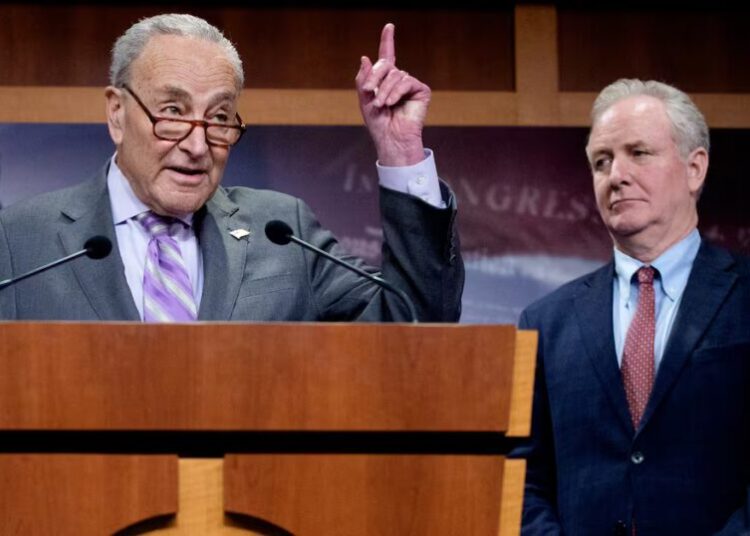
Mr. Eisenkot is also unlikely to enjoy much of a grace period in Washington, Senator Chris Coons, the Delaware Democrat expected to become chairman of the Senate Foreign Relations Committee in January, said in an interview. Asked how much time a new Israeli government would be given to make substantive moves toward repairing ties, he replied: “Not much. Not years.”
“I’m going to work to try and restore and sustain bipartisan support for Israel,” Senator Coons said. “But that support is more likely to be possible if we see Israel making changes in policy that move in the direction of our shared values.”
Interviews with more than a dozen former Israeli and U.S. ambassadors, lawmakers, analysts and other experts on U.S.-Israeli ties — nearly all of whom were rooting for Mr. Eisenkot to succeed — reveal a broad consensus on steps he could take in the short term to demonstrate his desire to fix things.
But each of those moves carries risks.
First, Keep His Promises
Particularly outrageous to many Americans and damaging to Israel’s image, experts in both countries say, is what Mr. Eisenkot has called “Jewish terrorism.” By this he has meant the mounting wave of often lethal attacks against unarmed Palestinians across the West Bank by extremist Israeli settlers, acting with virtual impunity.
Alon Pinkas, a former Israeli consul general in New York, said Mr. Eisenkot had to begin by keeping a campaign promise to crack down on settler violence — and with “zero tolerance.”
Avishay Ben Sasson-Gordis, a senior researcher at the Institute for National Security Studies in Tel Aviv, said that stopping settler violence was merely the “table stakes” needed to “start a conversation” in Washington.
Experts said Mr. Eisenkot also would need to keep his promises to uproot Israeli settlements in parts of the West Bank designated to be under Palestinian control and to halt the development of a tract of land outside Jerusalem known as E1. Critics say that building there would make a contiguous Palestine state in the West Bank impossible.
As for the Gaza Strip, Shira Efron, an Israeli analyst at RAND, said Mr. Eisenkot needed to “flood the zone with aid” and put a priority on providing Gazans, most of whom have been displaced by the war, with shelter. “The images from Gaza have to stop,” she said. “We have to show we have no interest in hurting the civilians of Gaza.”
Senator Coons, too, said Israel’s next government needed to allow tents and tent poles into Gaza, “particularly as winter is setting in.”
Mr. Pinkas suggested going further. “I’d instruct the military to build three field hospitals to treat Palestinian children,” he said. “It’s cheap, it’s the right thing to do, it’s the humane thing to do, and it’d win praise from both Trump and the new Congress.”
Any of these moves would mark a striking U-turn from Israel’s current policy. All of them would provide fresh talking points to Israel’s defenders in the United States, who say they are desperate for some.
But they all carry political risks for Mr. Eisenkot. Mr. Netanyahu and his right-wing allies would most likely use any concessions — like lifting Israel’s economic chokehold on the Palestinian Authority, another Eisenkot campaign promise — to denounce Mr. Eisenkot for caving in to international pressure, Ms. Efron said.
“The low-hanging fruit is settler violence,” she said. “Most of the Israeli public is opposed to that.” But if government efforts to arrest extremist settlers or uproot West Bank settlements led to violence, “that would be more controversial,” she said.
Reframing the Approach to Peace
A new government should frame its actions as a sharp change in direction, experts said, reversing Mr. Netanyahu’s drive toward annexation of the West Bank and reviving the possibility of a Palestinian state beside Israel one day.
Even if the government’s initiatives encountered domestic resistance in Israel, that would help elicit good will, and buy time, in Washington, experts said.
“It would not be difficult for the incoming Israeli government to show that it’s taking courageous steps and needs the support of Americans, and not their sanctions,” said Ted Sasson, a scholar of U.S.-Israel ties who divides his time between Tel Aviv and Middlebury, Vt.
The Israeli government also needs to change the way it talks about its future, experts said. Rather than arguing why peace can’t be achieved, officials should describe the peace they yearn for.
“Eisenkot has to get up there and say we’re devoted to peace,” said Mr. Oren, the former ambassador. “We haven’t sung that music in a long, long time, and music is important here.”
Daniel Shapiro, who was President Obama’s ambassador to Israel, said Mr. Eisenkot could quickly make clear that Israel — while still recovering from the trauma of the Hamas-led attacks of Oct. 7, 2023, and determined to defend itself — was willing to pursue peace and “understands that trauma was also visited on the Palestinians.”
“Those are notes we haven’t heard,” Mr. Shapiro said. “It wouldn’t take a weekly Fox News appearance to establish that that’s the idiom of the new Israeli government and the face it’s presenting to the American public.”
At the same time, experts said that Mr. Eisenkot would need to prepare Israelis for stark policy shifts. Tal Becker, a former chief legal adviser at Israel’s Ministry of Foreign Affairs, warned that moving too fast could provoke significant opposition from the Israeli right.
“Before you realize your dreams,” he said, “you need to reassure your opponents that you’re not planning on realizing their nightmares.”
Come to Washington Bearing Gifts
Rebooting the U.S.-Israel alliance would require face time for Mr. Eisenkot in Washington. But Daniel Kurtzer, a former U.S. ambassador to Israel in the George W. Bush administration, urged an earlier trip — to the Arab capitals of Cairo, Amman and Abu Dhabi.
“Get them on board with the idea that change has really happened,” he said of leaders there. “And then you come to Washington reflecting not just parochial Israeli interests” but having galvanized a coalition that could help Mr. Trump across the region.
Other moves could be seen as gifts to Mr. Trump, experts said. These could include negotiating a possible Israeli pullback from territory held in Lebanon and Syria. Or they could include acquiescing to a U.S. deal with Iran that restores calm and reopens the Strait of Hormuz, without Israel dropping its insistence that Iran’s nuclear program be addressed.
Mr. Eisenkot also could begin cooperating with Mr. Trump’s Gaza peace plan unveiled last year, experts said, for instance by easing Israel’s insistence that Hamas fully disarm before the Israeli military begins to withdraw.
Mr. Kurtzer said that Mr. Eisenkot could take a symbolic first step by pulling Israeli troops back slightly inside Gaza and then rely on Mr. Trump to force Hamas to begin decommissioning its weapons.
Mr. Eisenkot has even more ground to make up with Democrats in Congress than with the White House, after more than a decade during which Mr. Netanyahu aligned himself with Mr. Trump and the G.O.P., experts said. (Mr. Coons, unprompted, recalled how offended he had been by Mr. Netanyahu’s 2015 address to Congress in opposition to President Barack Obama’s Iran nuclear deal.)
“He’s got to make a convincing case to mainstream Democrats that Israel no longer votes Republican, that it’s bipartisan,” Mr. Kurtzer said.
The Long Term May Not Be Far Away
Mr. Eisenkot tried to reassure right-wing Israeli voters that he didn’t see the creation of a Palestinian state on the horizon. But that will not play so well in Washington.
Leaders of J Street — the liberal pro-Israel lobby that has gained influence with Democrats — have made clear they will not wait around. The group says it will continue to press for Israel to accede to the creation of a Palestinian state.
“The world wants it tomorrow,” said Nadav Tamir, the group’s top official in Israel. “The train has left the station. And the expectation that America has to give Israel time and a grace period is not connected to reality.”
It remains uncertain whether Mr. Eisenkot will be able to build a governing coalition; and if he does, whether his cabinet would include ministers opposed to policy changes desired in Washington.
Tzipi Livni, a former Israeli foreign minister, said she hoped that Americans would give a new government the benefit of the doubt.
“Clearly, we need to be quick,” Ms. Livni said. “I hope we will be given a chance, a period of time. But I’m not sure that we have that much time.”
The post The U.S.-Israel Relationship Is Broken. Here’s How Eisenkot Could Fix It. appeared first on New York Times.