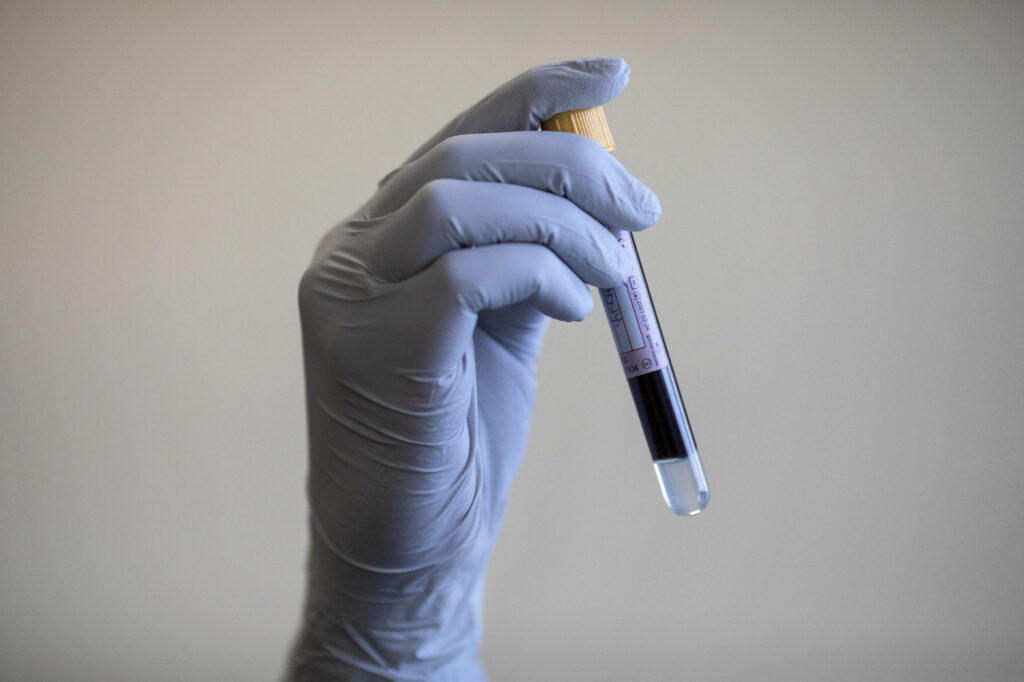
Most men between the ages of 50 and 69 should take a blood test to check for prostate cancer every two years, the American Cancer Society said Thursday, in its first update to screening guidelines for the disease in more than a decade.
Black men and men with a family history of prostate cancer, who are at higher risk for the disease, should take the test annually between the ages of 45 and 69, according to the organization.
Previously the group did not recommend routine testing for men of any age, instead saying patients should first discuss the potential risks and benefits of prostate cancer screening with their doctors.
Prostate cancer is one of the most common cancers for men in the United States. It can be screened for using a prostate-specific antigen (PSA) blood test, which tests for a protein in the blood elevated in prostate cancer patients.
The test does not diagnose prostate cancer — PSA levels naturally increase with age and can be abnormal for other reasons — but men with elevated PSA should have follow-up testing via an MRI to determine whether a prostate biopsy is needed, the American Cancer Society said.
The update is a break from most guidance on prostate cancer screening, including from the influential U.S. Preventive Services Task Force, whose recommendations can influence what health care insurance covers. Until now, many guidelines have been hesitant to recommend PSA testing outright because of concerns of overtreatment.
“In 2010 … there was a concern at that point that it was unclear if the potential harms of screening outweighed the benefits,” said William Dahut, chief scientific officer at the American Cancer Society. “Now, we’re actually recommending screening.”
Why this test is controversial
The change reflects shifting practices for treating prostate cancer and a better understanding of the disease, experts said. It was previously more common for doctors to order prostate biopsies immediately after spotting abnormal PSA levels and to treat the cancer aggressively with radiation therapy, Dahut said.
Advisory groups tamped down their recommendations for screening amid concerns that some patients were receiving unnecessary treatment. The American Cancer Society previously recommended that men “make an informed decision” after weighing “the possible benefits, risks, and uncertainties of prostate cancer screening.”
There is greater awareness now that PSA tests require follow-up testing, and some forms of prostate cancer aren’t as aggressive and can be monitored without the need for immediate treatment, experts said.
“I’m happy to see that the urology community has been actively committed to … more judicious biopsy and treatment, and I’m happy that the American Cancer Society has recognized that evolution and revised their recommendations,” said Herbert Lepor, a professor of urology at the NYU Grossman School of Medicine.
The American Cancer Society also noted new data that has backed the effectiveness of PSA testing, Dahut said. A decades-long European study of about 160,000 men found that PSA testing reduced prostate cancer mortality by 13 percent, according to results published last year. The tests are also quick to perform and process, Dahut said.
“It’s a test that can be done essentially as part of other bloodwork you’re doing,” Dahut said.
Signs of prostate cancer and guidance for men older than 75
The new American Cancer Society guidance breaks from that of the U.S. Preventive Services Task Force (USPSTF), which currently recommends that men should decide individually on PSA testing and that “clinicians should not screen men who do not express a preference for screening.”
The USPSTF’s guidance dates to 2018, and it is in the process of updating its advice on prostate cancer. The Department of Health and Human Services, which convenes the group, did not respond to a request for comment.
Prostate cancer has a high survival rate if caught early. Symptoms of the cancer can include blood in the urine or semen, needing to urinate more often and trouble urinating.
The American Cancer Society’s new recommendations state that men with elevated PSA levels after an initial test should undergo repeat PSA testing between two weeks and three months. If the result is confirmed, they should receive further testing with an MRI to determine whether they have prostate cancer.
It also emphasizes that Black men and men with either a first-degree relative diagnosed with prostate cancer before age 65, or multiple first-degree relatives diagnosed at any age, are at higher risk of prostate cancer and should begin screening at age 45.
The American Cancer Society still does not recommend screening for men 75 or older, or for men “who are not expected to live another ten years.” Men in their 70s who are in good health may choose to continue PSA testing but should discuss it with their doctors first.
Martin Sanda, director of the Prostate Cancer Program at Winship Cancer Institute of Emory University, called the updated guidelines a “welcome change.”
“I think that the ambiguity about just simply not stating that screening should be done has left it as a lower priority for many primary care physicians,” Sanda said. The update “empowers primary care doctors to do screening and then to help focus … the discussion of what the screening means if the patient’s screening test is abnormal.”
The post What new prostate cancer recommendations say about who should get blood tests appeared first on Washington Post.