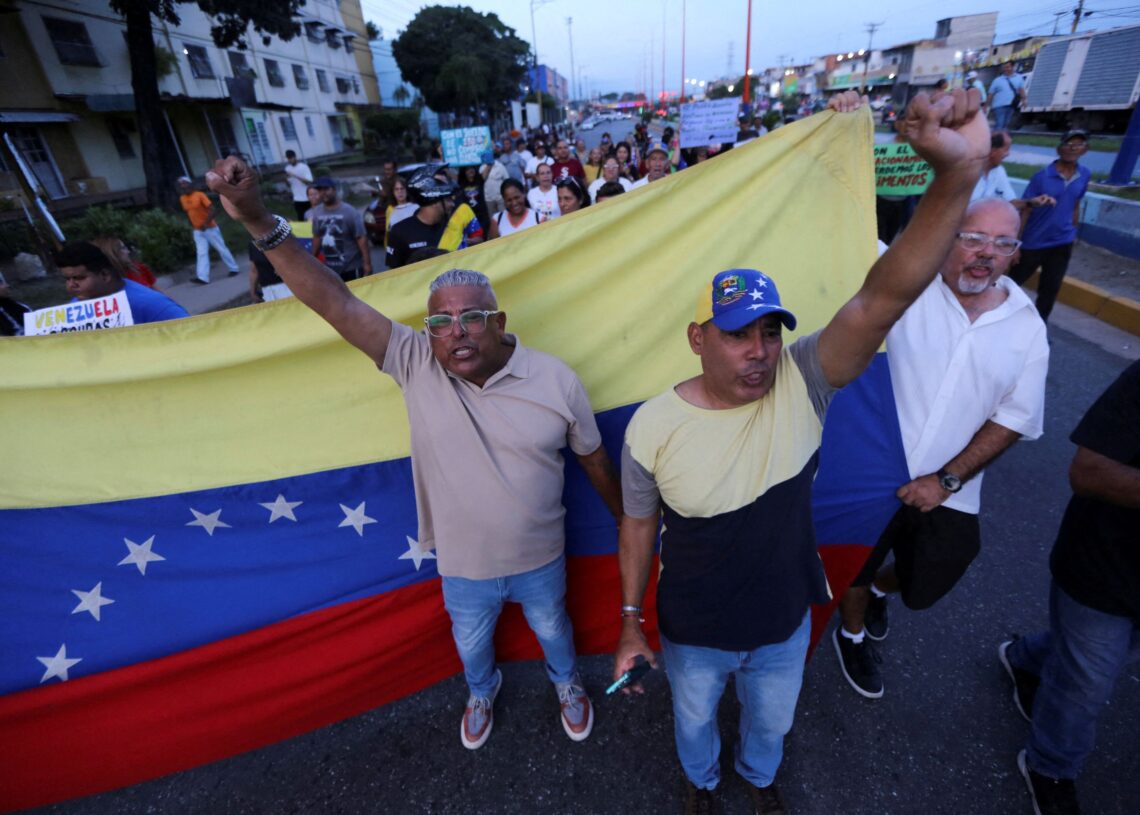
CARACAS, Venezuela — Under the authoritarian rule of Nicolás Maduro, Venezuelans feared nighttime darkness, which protected the masked, black-uniformed security forces that crushed dissent. Now, with the country effectively under U.S. control, darkness itself is a grievance and Venezuelans are taking to the streets, often at night, to protest chronic blackouts, electricity shortages and inflation.
Ten months after the U.S. military seized Maduro, Venezuelans are protesting at a pace not seen in years and their biggest complaint is the failing power grid.
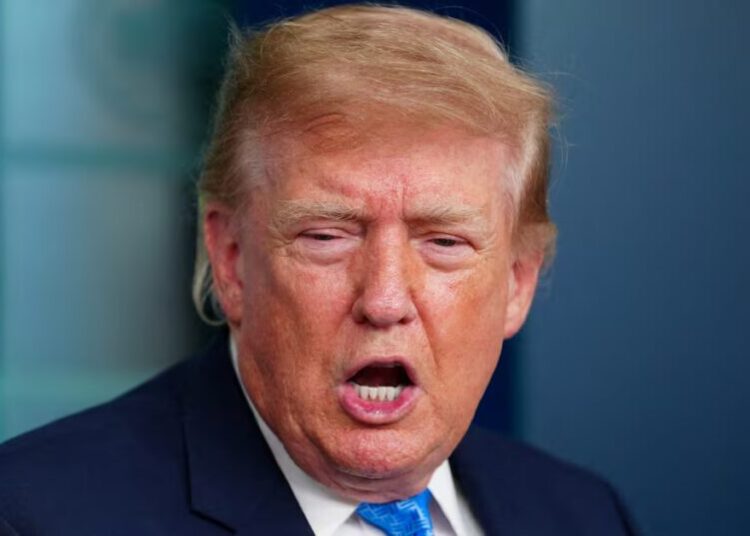
As the Trump administration works with interim president Delcy Rodríguez to tap Venezuela’s oil wealth, analysts say there isn’t enough power to supply both the reviving extraction industry and households. Daily outages now last up to 16 hours in some regions.
Idolinda Guerrero, 61, an economist in Maracay, Venezuela’s industrial center and fifth-largest city, said blackouts strip away other basic services. “As light fades, so does phone reception and the internet,” Guerrero said.
Neighborhood water pumps also stop working. “Light, water and connectivity: That’s three basic services failing at the same time and that causes disappointment, anger, rage. … Feelings build up.”
But it’s not just electricity. Life in Venezuela is increasingly miserable in myriad ways and under Rodríguez, Venezuelans say they are less afraid to complain.
According to the country’s leading protest monitor, more than 1,100 protests broke out across Venezuela in September, or an average of 37 protests a day, the most for that month since the Venezuelan Observatory of Social Conflict (OVCS) began counting in 2008.
In a bid to lighten “the mood” of the public and spur economic activity, Rodríguez declared in a speech on Oct. 8 that Venezuela’s official Christmas season would begin early, on Nov. 1. So far it hasn’t seemed to help.
While President Donald Trump boasts that the United States is benefiting from the “spoils” of Venezuela’s oil industry, the country’s inflation, which ranks the highest in the world, has left many Venezuelans unable to afford food.
“You can find everything now. What we don’t have is money to buy it,” said Beatriz Coronado, 62, a retired teacher in Valera, Trujillo state. After 29 years in the classroom, her pension is 391 bolívares every two weeks — about 43 cents.
Like many public employees, Coronado lives mostly on government stipends paid through the Patria System, a digital benefits platform that opposition politicians and human rights groups denounce as a tool of social control. She uses most of the money to pay for internet, utilities and her son’s bus fare. Whatever is left goes to food.
Half of September’s protests were about blackouts, and, following the new trend, many demonstrations are now taking place at night.
“People decide to protest at night out of desperation, when they get home from work, after many hours without electricity, even in places where it’s hot and they have no way to turn on an air conditioner or a fan,” said Marco Antonio Ponce, general coordinator of the social conflict observatory.
The protesters are different, too. “We are seeing entire families, from children to the elderly, protesting until very late at night, demanding an answer from public institutions,” Ponce said. Protests are organized by communities rather than political parties, he said.
“People see an opportunity to demand that their human rights be guaranteed, especially given the tutelage of the U.S. government,” he added. “People feel there are more possibilities that things will change.”
In January, after Maduro’s capture, 88 percent of the protests OVCS recorded were about civil and political rights: vigils for political prisoners and rallies by government supporters demanding Maduro’s return.
By March, as the government stopped mobilizing its base, the focus of the protests had shifted to failing services and living conditions. The hope Venezuelans placed in the U.S. intervention has collided with the realization that life is not getting better, residents say. Some things are worse.
In Maracay, Guerrero said she has daily eight-hour blackouts and has stopped weekly grocery shopping. She now buys only what she will eat that day, especially food that doesn’t need refrigeration. Meat is usually out of the question. Her team has had to adapt to occasionally working past midnight, whenever light arrives.
The spikes and drops in power broke Coronado’s only fan and refrigerator. Her pension is not enough to repair or buy new ones. She now relies on a neighbor to freeze the only protein she can afford: assorted chopped chicken and occasional ground beef. Often, she and her husband give up their share of protein for her son, a mechanical engineering student.
Blackouts are not new in Venezuela, but residents and analysts say the outages are worse than ever.
“In 2023, outages would reach two or three hours a day. Now they can last eight to 16 hours every day,” said Juan Carlos Rodriguez, an electrical engineer, energy consultant and member of the former Venezuelan Observatory of Public Services.
Electricity Minister Rolando Alcalá attributes the rise in outages to higher demand, high temperatures and damage from earthquakes in June, while experts and the opposition blame more than a decade of poor maintenance, corruption and mismanagement.
The grid has been declining for decades. Hugo Chavez’s government nationalized the electric sector in 2007, transferring all power generation to the state. By 2019, a national blackout lasted over a week in some regions.
In the 1980s, Venezuela ran an energy surplus. Now there is a deficit. Out of 35 gigawatts of installed capacity, only about 12 are available, said Oswaldo Felizzola, head of the Energy Institute at the Institute of Advanced Studies in Administration in Caracas.
“National demand is estimated at 16 gigawatts, so we are missing four,” Felizzola said. “That’s why we say that in Venezuela we don’t manage electricity; we manage its scarcity, deciding who will have power and when.”
“The electricity sector is Venezuela’s straitjacket,” he said. The grid’s ongoing collapse is why outages are getting worse, he said, and “in fact, we aren’t producing more oil because of it.”
Protests remain mostly peaceful, but they are intensifying.
People are burning tires and blocking roads to draw attention. In Punto Fijo, a city of 280,000 near one of the world’s largest refining complexes, dozens of protesters blocked the main roads last month after some families spent four days without power.
Relief has been slow to arrive. GE Vernova, which signed a deal in September to repair the grid alongside the U.S.-backed oil agreements, said it won’t begin field work until Venezuela makes its first payment. “This is not a market environment where we’re going to act without getting paid,” CEO Scott Strazik told Bloomberg News.
Guerrero’s neighborhood WhatsApp group has more than 400 members. They use it to trade spare parts to repair the local grid, often themselves, to call for help when surges cause short circuits or fires, and to organize protests.
Coronado’s group had dissolved after a crackdown by authorities that followed Maduro’s false claim of victory in the 2024 presidential election, despite vote tallies that showed the opposition had won. Police pulled people off buses to search their phones, and about 2,000 were detained. Residents deleted messages, groups and photos. Such chat groups now have been rebuilt.
In late October, the political party of opposition leader and Nobel Peace Prize laureate María Corina Machado and other opposition groups called nationwide protests to press Rodríguez, the interim president, and the U.S. to set a date for presidential elections. It was the first organized nationwide protest since 2024.
At a rally in Valera, Coronado said she ran into people she hadn’t seen in years. The crowd chanted for elections, a change of government and Machado’s safe return to Venezuela from Panama, where she had been living. “Something is going to happen here. I can feel it,” Coronado said.
Three days late, Machado returned home.
Last week, residents in the states of Cojedes and Aragua, in central Venezuela, reported outages lasting up to 24 hours.
To comply with Rodríguez’s decree on early Christmas, Corpoelec, the state power company, lit up holiday displays in several cities at the start of this month. Residents say that in some towns, the decorations are the only lights on at night.
The post As Venezuelans protest blackouts, U.S.-backed leader declares early Christmas appeared first on Washington Post.