From the start of the year, Senate Democrats knew they were unlikely to catch up to the Republican Party’s significant cash advantage.
So they devised a way to make their money go further, by investing heavily in a digital advertising program that strategists now say became one of the building blocks of their sweeping success in last week’s elections.
The Senate Majority PAC, the political arm of Senate Democrats, spent $215 million on its digital program this cycle, a 60 percent increase from such spending in 2024, Lauren French, the group’s communications director, said in an interview.
Buying ad time on streaming services and smart TVs is not only cheaper than doing so on broadcast or cable, but it also allows advertisers to more precisely target the voters they are trying to influence, whose fractured viewing habits limit the reach of traditional ads.
One of the key groups they reached this way, Ms. French said, was younger voters. Indeed, voters between the ages of 18 and 29 shifted toward the Democrats by 34 points, a New York Times analysis found, the most dramatic swing of any demographic.
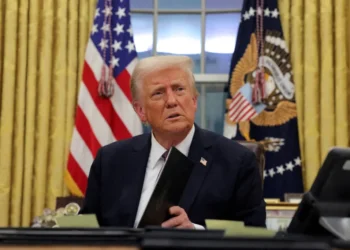
The emphasis on digital spending marks a full circle moment for the party, which had been playing catch up to the Republicans’ online presence for nearly a decade, but now has a moment to show off its progress. In 2024, when Democrats had the financial upper hand, President Trump’s super PAC invested significantly in ads on streaming services and smart TVs.
While the Democrats’ new majorities in the House and Senate were driven by a number of causes — including widespread dissatisfaction over President Trump’s war in Iran and persistently high prices — Ms. French attributed some of the victory to the digital program. In general elections this cycle, Republicans spent about $250 million more on ads than Democrats in Senate races. Of 14 battleground contests, they lost all but two.
“They are going to beat us on money,” she said of the Republican Party apparatus this year. “But we are going to beat them on strategy, efficiency, creativity and effort.”
Republicans invested online, too. The Senate Republicans’ top super PAC, the Senate Leadership Fund, spent more than $200 million on streaming and social media this cycle, Axios reported last week. Mr. Trump’s political operation also flooded Facebook and Instagram with ads in the final days of the election as part of its digital push.
One of the front lines of the battle for voters’ attention this cycle was YouTube, where the Senate Majority PAC spent more than $75 million, the most of any Democratic spender this cycle, Ms French said. The super PAC also continued to invest in the network of online influencers it began building through its nonprofit in 2020.
The Democratic National Committee, too, saw an opportunity not only to focus on turning out its loyal base, but also to persuade fence-sitters to break its way. The organization said it worked with more than 500 influencers and set up unbranded accounts to focus specifically on such persuasion tactics.
The Democratic Governors Association spent seven figures on its influencer program, said Olivia Davis, the group’s spokeswoman. That spending involved hiring and setting up infrastructure to work with influencers across the country,
“It paid off, with Democrats now holding the majority of the nation’s governorships for the first time since 2010,” she said.
To work with influencers, the Senate Majority PAC created “clip libraries” of opposition research and other information on marquee races, then distributed them to hundreds of progressive content creators, said Amanda Ach, the super PAC’s digital director.
Some of those creators were paid to work with the party. The super PAC treated others more like mainstream reporters, leaking them information to aid the party’s candidates and hurt its opposition.
The super PAC also worked with what it deemed “lifestyle creators,” or online influencers who post less than a quarter of the time about politics.
Early in Alaska’s Senate race, the super PAC conducted a study that showed exposure to just one of its creators increased negative feelings about Senator Dan Sullivan, the Republican incumbent, by 11 percent, Ms. Ach said.
Ms. French and Ms. Ach both declined to identify the influencers they paid to amplify the Democratic Party’s message. Such paid advocacy is difficult to track. The Federal Election Commission’s rules governing disclosure of traditional political advertising do not apply to social media, and the Federal Trade Commission’s rules requiring disclosure of paid commercial posts on social media do not apply to political content.
By the end of the cycle, the super PAC had worked with more than 800 influencers to generate 750 million views, Ms. French said. In the final week of the cycle alone, the program was generating more than 10 million views a day.
“You want people to see great exchanges from Democratic politicians and not so great comments by Republican politicians in the format that they’re consuming all other media,” Ms. Ach said. “Because then it doesn’t feel like an ad and it doesn’t feel like spin.”
The post How Democrats Invested Online to Overcome Their Cash Disadvantage appeared first on New York Times.