Being a fan of Prime Video’s “The Lord of the Rings: The Rings of Power” is a messy experience. At its best, the show delivers an unparalleled level of high fantasy spectacle on TV, with some of the most grand vistas and thrilling battle scenes at a massive scale while doing some fascinating things with the iconic characters of J. R. R. Tolkien’s Legendarium.
And yet, the show has been plagued by the addition of unnecessary and distracting mysteries regarding character identities, as well as an often poorly-paced narrative that simultaneously drags and rushes through its millennia-spanning epic tale.
Season 3 fixes some of the show’s biggest issues with a more focused outing that fully understands the focus of the show is none other than Sauron. There are no Harfoots, no more guessing who a character is. The season wastes no time to reveal the identity of the Dark Wizard from last season, to show and name the Nazgnagôl. Though we still follow multiple storylines and “Rings of Power” suffers a bit from trying to cram too much story in a limited number of episodes, the narrative is much stronger because it focuses every storyline on the rings. Jumping forward in time to five years into the War of Elves and Sauron, there is a singular thread that binds every element of the show — even the ones that appear unconnected at first — and that is Sauron’s quest to forge the One Ring and his impending conquest of Middle-earth.
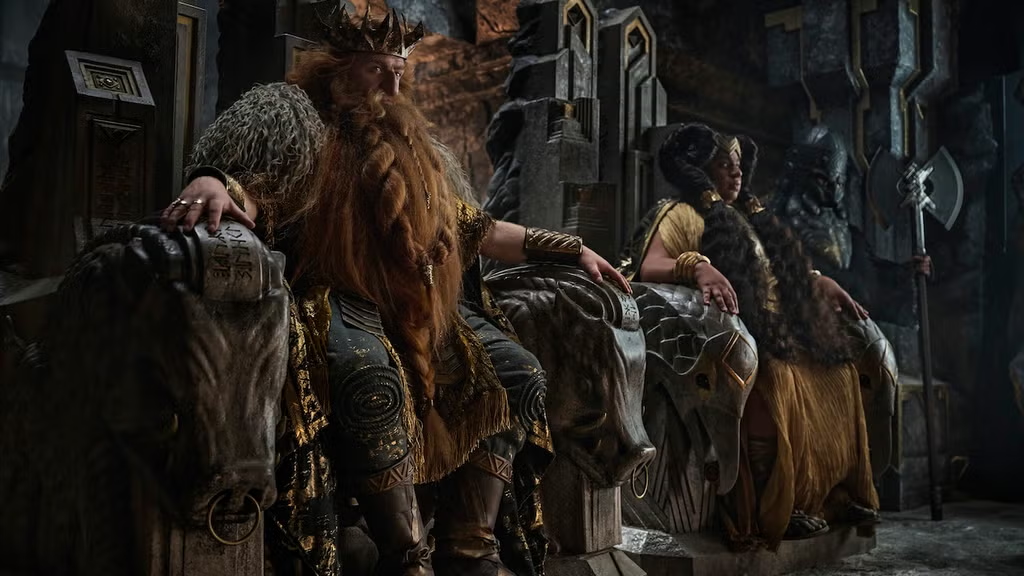
There is one notable exception, and it is here that Season 3 falters: the dwarves of Khazad-dûm. Since the first season, Khazad-dûm has been all about power disputes, but this time we get the weakest of the bunch, with the lazy addition of a show-original brother for king Durin IV who has a complicated history with Durin’s wife, Disa. This domestic dispute feels out of place with the rest of the show, and disrupts the flow of the story for the first half of the season. It especially plays out as unnecessary when the season already introduces a rather compelling story of marital issues in Galadriel and Celeborn.
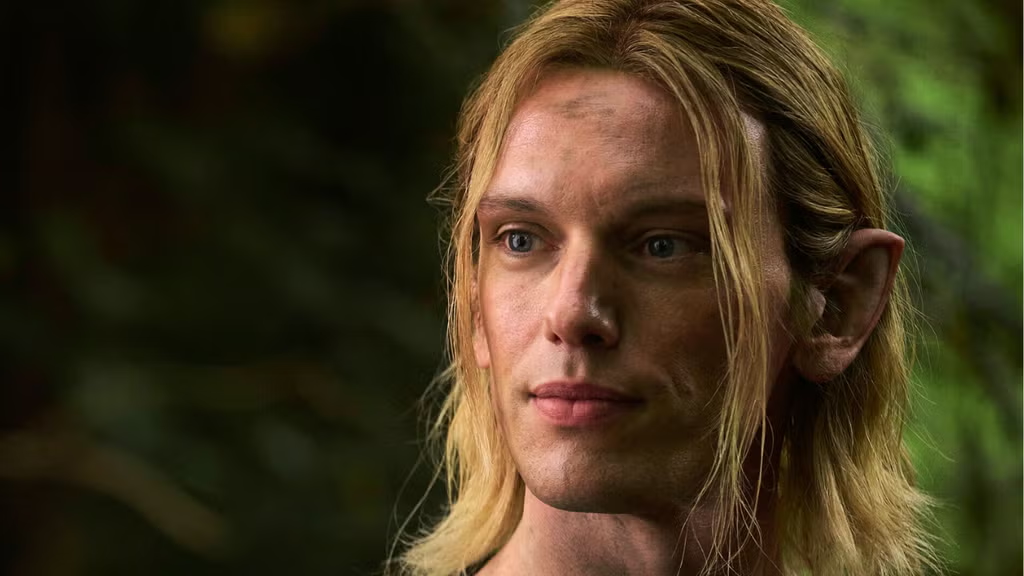
After terrorizing kids in “Stranger Things,” Jamie Campbell Bower brings big golden retriever energy to “The Rings of Power” as Celeborn, the husband of Galadriel who has been presumed dead for centuries. The moment he appears on screen, Bower immediately feels like he’s always been a part of the show, matching the energy of Morfydd Clark’s take on Galadriel and the melodrama she brings to the character. Bower’s Celeborn is not only an adept fighter, he is the ultimate wife guy. Taking inspiration from professor Tolkien’s own relationship with his wife Edith (a courtship that became the basis of the feature film “Tolkien”), and echoing the history of great couples in Middle-earth, Celeborn’s much-anticipated reunion with Galadriel is full of yearning, sorrow, grief and also hope. Indeed, Bower brings a deep melancholy to the role that sells the centuries of torture and loneliness, while also displaying an optimism and hopefulness that stands in stark contrast with this rather dark season of “The Rings of Power.”
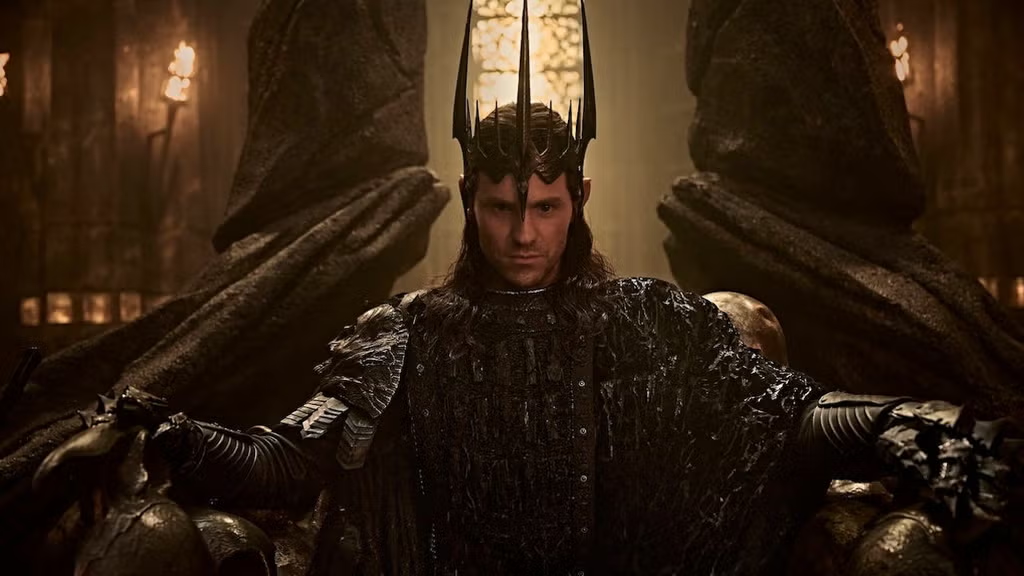
Even before Sauron forges the One Ring, it is clear from the start this is the darkest season of “The Rings of Power” yet. The season plays with audiences’ knowledge of where the story goes (even if all you know is that Sauron eventually loses his ring and becomes a disembodied fiery eye) in order to build dread for the horrors that await the characters. A big reason this all works is because the season makes it clear that Sauron is the real protagonist of this story, his rise to power being the force that finds the different storylines and in the darkness binds them. Charlie Vickers continues to excel at playing the Dark Lord, reinventing the character with each season while maintaining a clear throughline in each version of Sauron that we see, revealing new layers about the character while keeping at arm’s length his true motives and feelings.
Vickers is in full Dark Lord mode here, no longer pretending to be anything but the enemy of the free peoples of Middle-earth, and he cherishes every mustache-twirling moment of delicious evil. From physically torturing prisoners, to bending the minds and wills of men to his, Vickers plays absolute evil with gusto. And yet, some of the most entertaining moments of the season are when we see beyond the cartoonishly evil Lord of the Rings, but rather when we see a more vulnerable Sauron — one facing the day-to-day realities of ruling a kingdom. Though he wants nothing more than to be alone in his forge trying to make his Master Ring, seeing Sauron continuously getting interrupted by the arrival of diplomatic delegations from the kingdoms he wants to subjugate is hilarious. By now, Vickers knows how to play every aspect of Sauron, and seeing him go from prideful superpowered devil to an insecure fallen angel tormented by the ghost of Celebrimbor, humiliated by a condescending Balrog, or seemingly competing with Celeborn to prove who Galadriel loves most, is endlessly entertaining and a testament of how “The Rings of Power” has crafted actual characters of what were previously archetypes in the source material.
Speaking of crafting, it’s not entirely surprising that the highlight of Season 3 of the “Lord of the Rings” prequel is the climactic creation of the One Ring. It is simply a spectacular sequence, with the aspect ratio changing to fill the entire screen with the fires of Mount Doom, a moment that finally transforms what has been an insecure would-be supervillain that’s failed several times to the being that will haunt Middle-Earth for two ages.
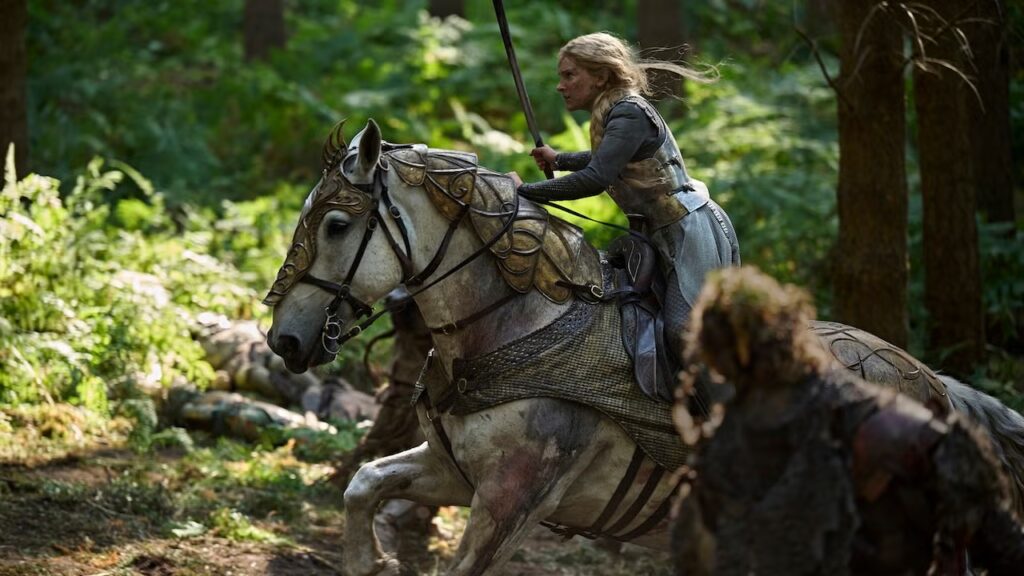
But it’s not just Sauron that gets the cool visuals, when the entire season of “The Rings of Power” feels like a step-up in scale and visual splendor. This is most notable in Númenor, which finally looks like an imposing continent rather than just a few streets and a courtroom. There is no other fantasy show with the sense of scale that this prequel has, and it is in full display here, with grand vistas, epic battles, and massive practical sets housing impeccably designed characters. Particularly impressive are the show’s proto-Nazgûl, who not only look imposing, but are genuinely terrifying to see in action.
This season also amps up the connections to the First Age of Middle-earth, greatly expanding the show’s lore by connecting this story to a much larger one, which makes the world of “The Rings of Power” feel richer. Whether it’s Sauron meeting a Balrog and talking about their shared history serving under Melkor, or a flashback showing Elros helping create Númenor, it’s clear the writers care not only about adapting the text from the books, but using that as a springboard to bring their own unique and clear vision of Middle-earth to the screen.
Sure, purists may scoff at some of the changes, such as the addition of an orc with murky loyalties, but it is these additions that show that “The Rings of Power” understands Tolkien’s world beyond just wanting to copy it, but rather make it grow in ways that fit Tolkien’s intent. Like “Andor” or “The Clone Wars,” this is a prequel that asks, what if we could see a bunch of cool stuff you always dreamed could theoretically happen in this world? The result is at times messy, but it is certainly ambitious, and thoroughly entertaining.
This might be Middle-earth’s darkest hour, but it is the brightest “The Rings of Power” has ever been.
“The Lord of the Rings: The Rings of Power” Season 3 premieres Wednesday on Prime Video.
The post ‘The Lord of the Rings: The Rings of Power’ Season 3 Review: Show Hits Its Stride in Darkest Season Yet appeared first on TheWrap.