content=”https://www.washingtonpost.com/wp-apps/imrs.php?src=https%3A%2F%2Fcloudfront-us-east-1.images.arcpublishing.com%2Fwapo%2FKEQZWKZHOEY4NZATVUGUVWFUPE.JPG&w=1200″
Investigators said Monday they recovered the cockpit voice recorder of a business jet that crashed in West Palm Beach, Florida, earlier this month.
The National Transportation Safety Board said on X the recorder was found at the site where the Bahamas-bound plane crashed on Nov. 1, killing all nine people on board.
The NTSB did not describe the condition of the device but said it was being evaluated at a laboratory in Washington.
NTSB investigators have recovered the cockpit voice recorder (CVR) of the Learjet 60 that crashed on Nov. 1 near Greenacres, Florida. The CVR was located at the site of initial impact. The CVR is being evaluated in the NTSB Vehicle Recorders Laboratory in Washington, D.C. The… pic.twitter.com/F6SO4SEhW6
— NTSB Newsroom (@NTSB_Newsroom) November 9, 2026
The Learjet 60 left Austin at 10:37 a.m. on Nov. 1 for North Eleuthera Airport in the Bahamas, the NTSB said last week. Shortly before the crash at around 12:50 p.m., the pilot reported rain, ice and moderate turbulence and declared an emergency, according to archived radio communications.
Investigators said previously that they were examining whether the weather played a role in the crash. They were also looking at whether the jet began breaking apart before it crashed.
From images shared by the NTSB, aviation safety expert Jeff Guzzetti told the Associated Press the device appeared to be in good shape.
“It’s very plausible that any info on the recorder survived,” Guzzetti said. “If they can recover it … that will be a huge help to investigators.”
A federal judge on Monday night refused to pause an order barring the Trump administration from cutting down more trees at East Potomac Golf Links, saying the government’s own planning documents confirmed that the tree removals were part of the president’s plan to replace the historic public course with a newly designed championship layout.
The administration had requested U.S. District Judge Ana C. Reyes stay her preliminary injunction while it appeals her ruling to the U.S. Court of Appeals for the D.C. Circuit, arguing that the tree removals were routine maintenance. Reyes said the record showed Interior had been planning “not to manage, but to destroy the historic East Potomac Golf Course,” replacing it with a new 18-hole track designed by Tom Fazio.
Reyes wrote that the Interior Department’s recent proposal to the National Capital Planning Commission “confirmed” her finding that the tree cutting was tied to a plan to create a new course. She said the timing of the work “evidences bad faith” and “strongly suggests that the agency patterned its behavior to avoid judicial review.”
The ruling leaves in place an injunction barring the government from cutting trees at East Potomac, except to address an imminent public-safety threat; the government must notify the court within 24 hours of taking such action.
The decision comes as Reyes is scheduled to hear arguments Friday on a separate request by preservation groups to block the planned Sunday closure of East Potomac Golf Links and surrounding parkland.
A security agent for Defense Secretary Pete Hegseth warned reporters awaiting the start of his first news briefing in six months on Tuesday that they will be physically removed if they do not maintain decorum and act professionally.
The unusual warning was a first in recent memory, members of the Pentagon press corps said. Reporters, including from The Washington Post, requested clarification and whether that meant shouting questions would result in removal, but the security agent provided no answer and a Defense Department civilian staffer did not elaborate.
Joel Valdez, one of Hegseth’s political staffers, later offered to explain the rules but said that he would do so only off the record. When several reporters objected, Valdez walked off.
Hegseth, who offered a fiery defense of his record as he faces an impeachment vote in Congress, spoke to reporters for about 30 minutes and answered a few questions toward the end. Ultimately, no one was removed from the briefing.
The U.S. Military Academy at West Point will appeal a judge’s ruling that declared its policy limiting faculty speech unconstitutional and forbid the school from enforcing it.
West Point last year adopted a rule barring professors from writing or speaking externally, whether at a conference or on a podcast, without seeking permission from higher-ups. The academy debuted the guidelines shortly after President Donald Trump issued an executive order barring military service academies from teaching ideas his administration deemed “un-American.”
The longest-serving law professor at the school, civilian Tim Bakken, sued over the policy last September, alleging it violated the First Amendment. This fall, federal judge Cathy Seibel sided with Bakken, enjoining the school from enforcing its faculty speech guidelines for civilian professors. West Point has since continued to require approval for military and civilian professors’ appearances, The Washington Post reported.
On Nov. 5, the academy filed a notice indicating it plans to appeal Seibel’s ruling. Bakken wrote in a statement that he will continue the legal battle: “I will do all I can for as long as necessary to vindicate the constitutional right of academic freedom.”
West Point referred questions to the Justice Department, which declined to comment.
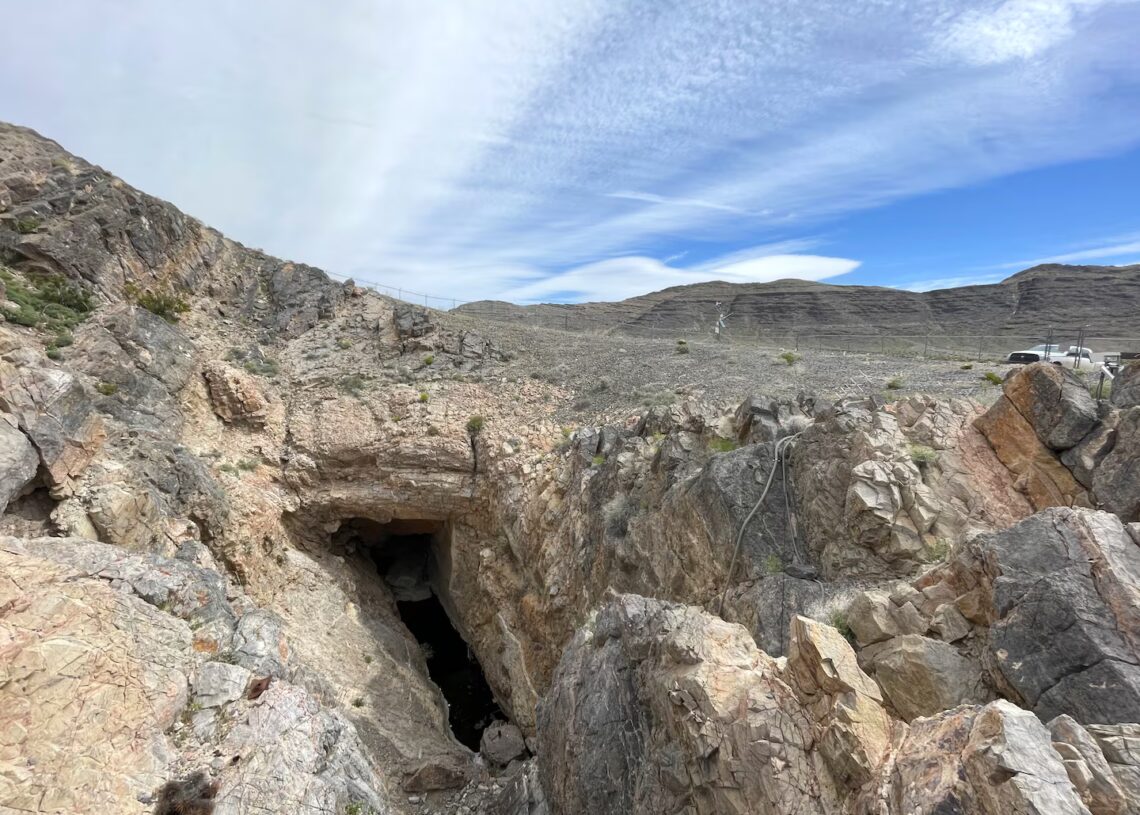
Hidden inside a deep pool in a limestone cavern in America’s hottest and driest national park, one of the world’s rarest fish is making a comeback from near extinction.
Up until a mysterious decline in the 1990s, biologists counted between 300 to 500 Devils Hole pupfish each spring. The tiny iridescent blue and olive-green fish survive off algae on a shallow shelf above a deep 92-degree geothermal pool in Devils Hole, an outcrop of Death Valley National Park in southwest Nevada.
Their population had dropped to just 20 in March 2025. In the months prior, their habitat was disrupted by two earthquakes, according to U.S. Fish and Wildlife, which caused six-foot waves inside the cavern, like “water in a washing machine,” pushing algae and fish eggs off their shelf into the pool, an abyss so deep no one has found the bottom. (Divers have reached 436 feet with no sign of it.)
Conservation efforts, including transferring fish bred in captivity, brought their population to 77 by this spring. And now, the National Park Service says the fish population has nearly doubled to 137.

“While challenges remain,” Death Valley National Park Superintendent Mike Reynolds says in a statement, “we’re encouraged by this progress and committed to its long-term survival.”
The pupfish came to Devils Hole through a connection to the Colorado River during a wetter climactic period 2 million years ago. As the region became more arid over the last 10,000 to 20,000 years, the hole was cut off from other water sources and fish populations. The Devils Hole pupfish adapted to their unique low nutrient conditions and became one of the most inbred animals known to science.
Today, the cavern is surrounded by locked fences and is under video surveillance to protect the fish from beer-drinking vandals and other threats.
The national average price of gas fell to $3.97 a gallon Tuesday, dropping below $4 for the first time since July, according to AAA data.
It comes as the price of Brent crude oil, the international benchmark, fell to $89 a barrel, extending a slide since late October amid hopes of an end to the Iran war given Trump’s recent comments and Democratic success in the midterm elections.
On Monday, President Donald Trump indicated he was unlikely to restart major military operations against Iran, saying the United States would be keeping “the status quo.”
The drop in prices also comes as retailers switch from summer-blend gasoline to winter-blend, which typically happens in September or October and is designed to help cars run better during colder weather.
The different formulation is cheaper to produce than summer-blend gas and, when combined with lower demand during winter, often leads to a seasonal price drop, according to AAA.
While falling prices will bring some relief for consumers, the gas prices remains elevated from this time last year, when the national average was $3.07.
The price of diesel also remains high, averaging $6.16 across the country, significantly higher than $3.74 from 12 months ago.
Good morning. It’s Tuesday, Nov. 10, and the days are getting darker. If you struggle to enjoy these months, psychologist Kari Leibowitz recommends a few small changes.
The impeachment effort against Pete Hegseth leads today’s edition of The 7 briefing. Yesterday, Rep. Thomas Massie (R-Kentucky) introduced articles of impeachment against the defense secretary. We look at what happens next, starting with a Hegseth news conference scheduled for this morning.
The briefing also includes a Post exclusive. Last month, activists hacked a DHS database and released information on about 1,500 ICE recruits. Our reporters carried out some background checks.
Further down, the briefing looks at the increasingly crowded National Mall, how chatbots may be changing how you think and the extraordinary story of a Doberman named Saraya.
Read today’s edition of The 7 briefing here.
The post Cockpit voice recorder recovered from Florida jet crash that killed 9 appeared first on Washington Post.