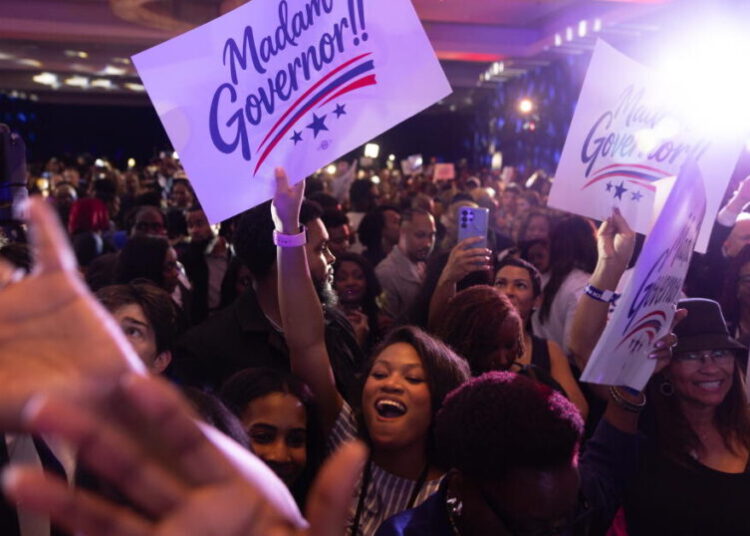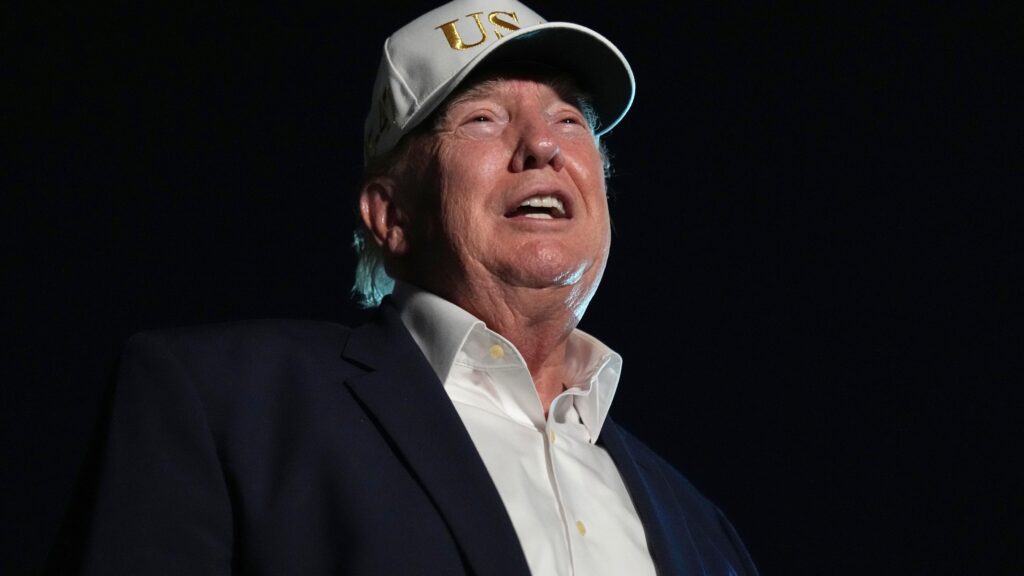
President Donald Trump questioned the integrity of the midterm elections on Monday, less than a week after the Republican Party suffered historic defeats in both swing states and former GOP strongholds.
“Does anybody really believe that this ‘Election’ was honest,” Trump asked in a Truth Social post early Monday. “How could the Polls be so wrong???”
“Some early voting ‘dumps’ were so large that it was impossible to win, no matter how many people went to vote,” he continued, before claiming without elaboration: “It’s all about the machines, which are far more important than the voter!”
Read more: Welcome to Trump’s Lame-Duck Era
Trump’s unsubstantiated fraud claims come nearly two weeks after he told reporters on Oct. 27 that he would respect the election results “if they’re honest elections.”
As results came in throughout Nov. 3 and into Nov. 4, Trump seemed to accept the outcome.
“My message is, congratulations to the Democrats, and I look forward to working with you for the good of our country,” Trump told CBS News in an election-night phone call.
It was a sentiment he repeated in an interview that aired Sunday on 60 Minutes, when he said he would be willing to work with Democrats on immigration, addressing an issue that had been top-of-mind for voters ahead of Election Day. “I think that’s something that’s actually doable,” he said.
By Monday morning, however, Trump was casting doubt on the results. The comment harkens back to Trump’s unsubstantiated claims of election interference and ensuing lawsuits after he lost the presidency to Joe Biden in 2020.
Trump’s history of election denial
Trump was sowing doubt on the 2020 election before voting began, telling the public that August that “the only way we’re going to lose this election is if the election is rigged.”
Following his loss, Trump refused to concede to Biden. Instead, he began to spread conspiracy theories about widespread election fraud, without evidence.
On Nov. 7, 2020, shortly before news organizations projected Biden’s victory, Trump falsely declared on Twitter that he had “WON THIS ELECTION, BY A LOT!”
Echoing Trump’s false claims also became a test of loyalty within the Republican Party, with House Speaker Mike Johnson, Ohio Rep. Jim Jordan, and former Georgia Rep. Marjorie Taylor Greene among those who espoused the false view.
Trump and his allies filed 62 lawsuits challenging or seeking to overturn the results between Nov. 4, 2020, and Jan. 6, 2021, according to the House Jan. 6 committee. Only one produced a victory—a narrow Pennsylvania ruling that didn’t establish fraud or change the outcome. Some cases were dismissed on procedural grounds; others failed on the merits.
The legal defeats did not stop Trump from repeating his false claims.
On Dec. 22, 2020, he alleged on social media that Democrats had “DUMPED HUNDREDS OF THOUSANDS OF BALLOTS IN THE SWING STATES LATE IN THE EVENING.”
The claims escalated on Jan. 5, 2021, when Trump tweeted: “Washington is being inundated with people who don’t want to see an election victory stolen by emboldened Radical Left Democrats.”
This followed repeated calls for his supporters to descend upon Washington D.C. and protest the results.
As Congress met to count and certify the Electoral College votes on Jan. 6, 2021, a mob of Trump supporters stormed the U.S. Capitol.
His efforts to overturn his 2020 defeat also led to criminal charges. In August 2023, Special Counsel Jack Smith brought four federal charges against Trump, alleging efforts to subvert the results through pressure on officials, fraudulent elector slates, and interference with certification. Trump pleaded not guilty.
On the campaign trail in 2024, he doubled down on his allegations of election interference by urging voters to deliver a victory that was “too big to rig.”
The case was dismissed in November that year, after his reelection, because of Justice Department policy against prosecuting a sitting President.
The post Trump Casts Doubt on Midterm Election Results appeared first on TIME.