Americans are expected to take advantage of steep Black Friday discounts to buy everyday household items as higher costs have eroded their discretionary budgets.
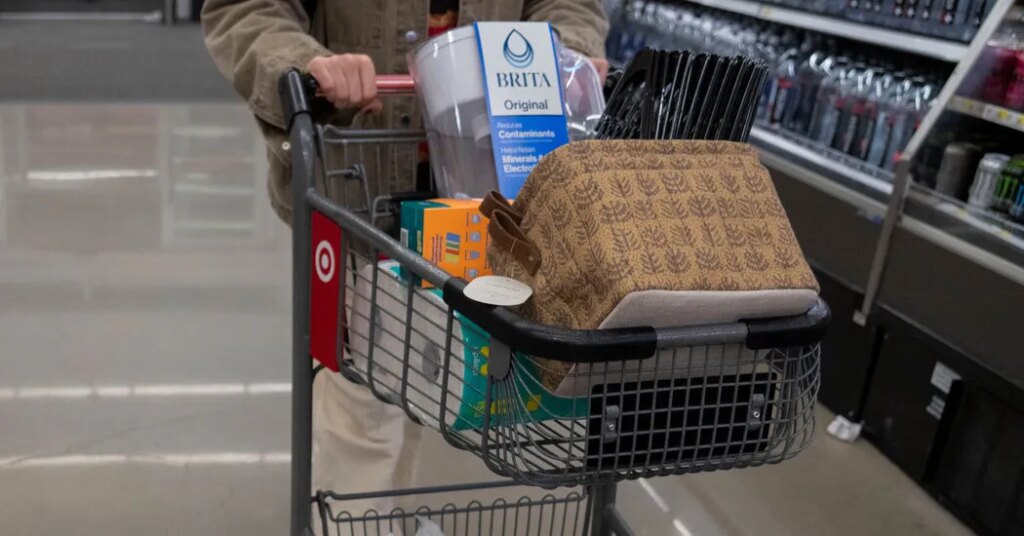
Shoppers will still buy gifts. But, according to a report from Adobe Research, they’ll also stock up on basics, such as self-care products, pet supplies, baby essentials and cleaning goods.
The firm predicted that online sales of basic clothing would surge 210 percent from last year, and personal hygiene products 150 percent, during the five days from Thanksgiving to Cyber Monday, Nov. 30.
“Consumers, especially the value-seeking ones, have become very savvy and know that these promotional windows are great times to get even better deals than they may find throughout the rest of the year,” said Brian McCarthy, a principal of retail strategy at Deloitte, an advisory firm.
It is the latest sign of how people are finding ways to cope with stubbornly high inflation, which has been accelerating for months as the war with Iran continues to push up prices.
Holiday retail sales in the United States are expected to rise 4.5 percent from last year, according to Visa Business and Economics Insights. Adjusted for inflation, however, the growth in holiday sales is expected to be only 1.1 percent.
“It’s a good number, but I think it masks some of the underlying trends,” said Michael Brown, the principal U.S. economist at Visa.
The cost of living is higher and Americans are paying more for groceries and gas. Annual inflation rose to 3.7 percent in September.
Consumer spending has remained resilient over the past year, and retailers across the United States have worked to lower and stabilize prices to keep shoppers coming back. But in September, U.S. retail sales rose just 0.8 percent, down from a 1.3 percent jump the previous month. That’s why top executives at Walmart, Costco and Target have stressed that it’s crucial to provide shoppers with value in this economic environment.
“We’re investing heavily in price because customers need us to and because we believe it drives market share gains over time,” John Furner, the chief executive of Walmart, said on a conference call with analysts and investors in August.
Retailers have already begun holding pre-Black Friday sales. They expect gift boxes to be particularly popular, because shoppers see more value in bundled items. Kohl’s has raised the number of gift sets that it offers across the store’s departments and will sell more than 400 types of beauty boxes through its partnership with Sephora.
“It’s a unique moment, where the customer is,” said Arianne Parisi, the chief customer officer of Kohl’s. “We’re thinking about how pinched consumers are.”
Consumers are expected to be more aggressive when comparison shopping. They’re looking for deals, redeeming rewards points and buying more private labels. About a third of consumers who earn less than $100,000 a year said they would trade down to cheaper brands or stores this holiday season, according to Visa.
Shoppers have more tools now to find the lowest price, with artificial intelligence able to parse several websites simultaneously, make purchase recommendations and ease checkout.
To pay for gifts, about a third of American households are taking steps to cut costs elsewhere, according to the National Retail Federation. Even double-digit percentages of households with incomes of about $150,000 plan to cut back on spending on themselves, open more credit cards or use “buy now, pay later” services to ensure they get their holiday shopping done, the group said.
“Once you’ve finished paying off your utility bills and you can’t shave off any more money on your grocery bill, then you are going to go into the store to look for deep discounts,” said Priya Raghubir, a professor of marketing at New York University. “At that stage, just stock up.”
The post Americans Hunt for Holiday Deals That Stay in Their Own Closet appeared first on New York Times.