At my 62-year-old husband David’s funeral in 2023, a friend who had lost his wife six years earlier promised things would get better. “Give yourself a year,” he said. When your world has just imploded, though, a year feels like forever.
I kept busy by moving through a to-do list 91 items deep, filing paperwork, canceling credit cards and donating medical supplies. I survived the “firsts” — such as the “first anniversary alone” — and I navigated emotional milestones like taking off my wedding ring.
As the one-year mark approached, I envisioned graduating into a life that felt normal again. But when my widow odometer rolled onto Day 365, I felt anything but. The vision I’d had of my future had died along with my husband.
The second year of widowhood is often considered the hardest, according to Litsa Williams, a grief therapist and co-founder of the online grief organization What’s Your Grief. “You’re out of survival mode and looking at forever,” she says. “You have to figure out how to rebuild an entire life, and that can feel overwhelming.”
For the past three decades, my identity had centered on my family. Now, my two adult sons were living in different states, and no one needed me. I had to create a life from scratch and had no idea where to start.
“In year two, you have a little more breathing room to explore,” says Megan Devine, the author of “It’s OK That You’re Not OK.” “What are the things that helped you survive the first year that you can carry into year two?”
In my case, the to-do list had given me something to focus on; incidentally, I had already created another one. The December before he died, David suggested we each make a list of goals. Finally empty-nesters, the exercise was designed to give us structure and things to look forward to during the ensuing year. David had framed our lists and set them on our nightstands. But then, two weeks later, he was diagnosed with Stage 4 pancreatic cancer.
I had put them in a drawer right after he died, not wanting to be reminded of the fun we had writing them and the future I thought I would have, so I dug mine out and placed it back on my nightstand.
While my to-do list in the first year was about surviving, this list was about living. David had unknowingly given me a blueprint for life without him — a road map for what I called my “widow gap year.”
Just like students take time to explore before committing to what’s next, I gave myself permission to figure out who I was now that I was no longer someone’s wife. It wasn’t a sabbatical, it was an invitation to gather new experiences and decide what fit.
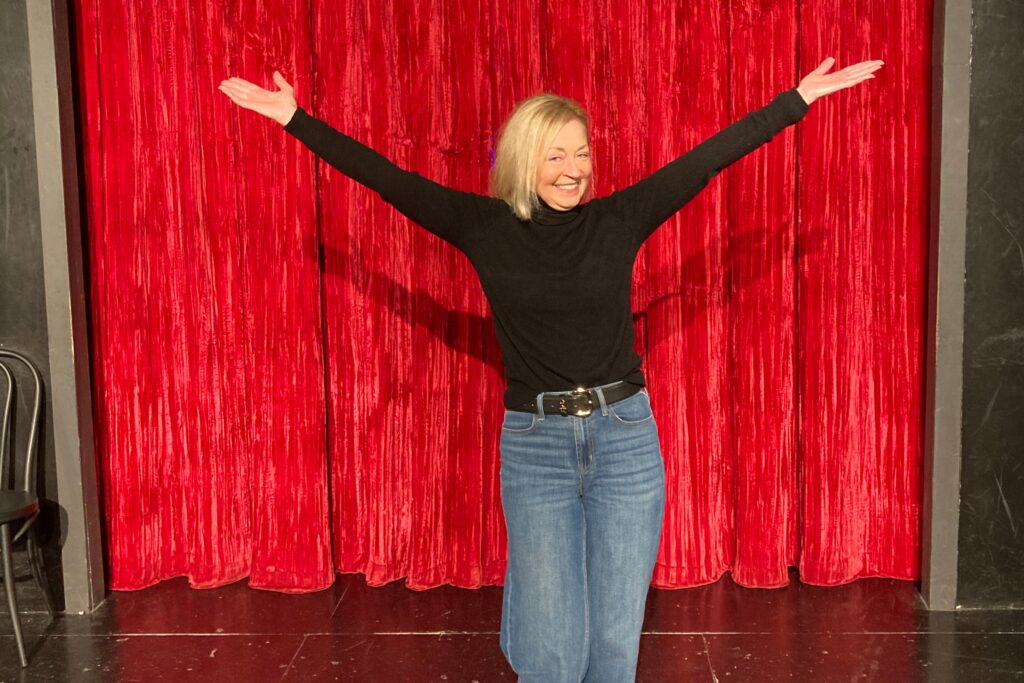
The first thing I tackled on the list was taking an improv class, something I had always wanted to do. I had no idea it would also give me tools to move forward. One of the early exercises was creating a scene with a partner by taking turns adding a word. My storyline was about planning a trip to the beach. I thought I had teed up the perfect list of items to bring until my partner threw a curveball and said the word “furry.” I paused, unsure how to proceed, then tossed back an equally absurd addition: “underpants.” My classmates laughed, the instructor announced “and scene,” and I remembered that plot twists can sometimes make life more interesting.
Improv turned out to be a lifeline, teaching me that I can’t always control an outcome. Instead of just enduring uncertainty, I could find a way to participate in it.
Enjoying the class gave me confidence to try more new things, and I started saying “yes, and” to other items on my list. I signed up for baton-twirling lessons, volunteered at my town’s annual Christmas festival and saw Keith Urban in concert.
A big goal on the list was visiting Paris, though it felt out of reach at first. Before I married, I traveled for writing assignments, but embarking on a solo excursion was like engaging a muscle I hadn’t used in decades. Channeling the woman who used to walk into new places on her own, I booked a five-day solo trip to celebrate my 60th birthday.
With the exception of the Eiffel Tower, I skipped tourist attractions and let curiosity be my guide, roaming cobblestone streets without a plan. On my final day, I toasted the courageous new person I could feel bubbling up inside me with a glass of French champagne.
While having new experiences was becoming easier, finding people to do them with was not. David had always made our social plans, and our circle consisted primarily of couples. As a widow, I no longer fit in, and invitations disappeared. Out for a walk in my neighborhood on Labor Day weekend, the sound of laughter and the aroma of barbecues from backyard parties reminded me that I was alone.
“This is too hard,” I thought as I went home and ordered a burger from DoorDash.
My pity party lasted one day. Instead of waiting for someone to remember me, I joined groups that revolved around my interests, such as writing and hiking. I pushed myself out of my introverted comfort zone, asking people out for coffee. Eventually, a new social life started forming, composed of interesting people I would have never met otherwise. My life started looking very different.
Reimagining yourself is common after loss, says Erin Wehrman, a Missouri State University assistant professor who studies how identities can change during times of crisis. “When you lose an important person, especially a spouse, the narrative you have of your life is disrupted,” she explains. “You have to adjust the narrative in a way that makes sense and allows you to figure out who you are without them.”
While my friend’s words at David’s funeral were comforting, getting through the first 12 months was just the start. During my gap year, I checked 16 items off my list. Surprisingly, some of my favorite experiences from that year weren’t on the list at all, such as volunteering to wear a chicken costume during a local racetrack’s family night and taking ukulele lessons with my sister. I never would have imagined doing any of those things before I started saying “yes, and.”
The goal hadn’t been to stop grieving. It was to prove to myself that I could explore interests, cultivate friendships and imagine a future without knowing exactly what comes next. It was to learn how to start living again.
The post How taking a ‘widow gap year’ helped me start living again appeared first on Washington Post.