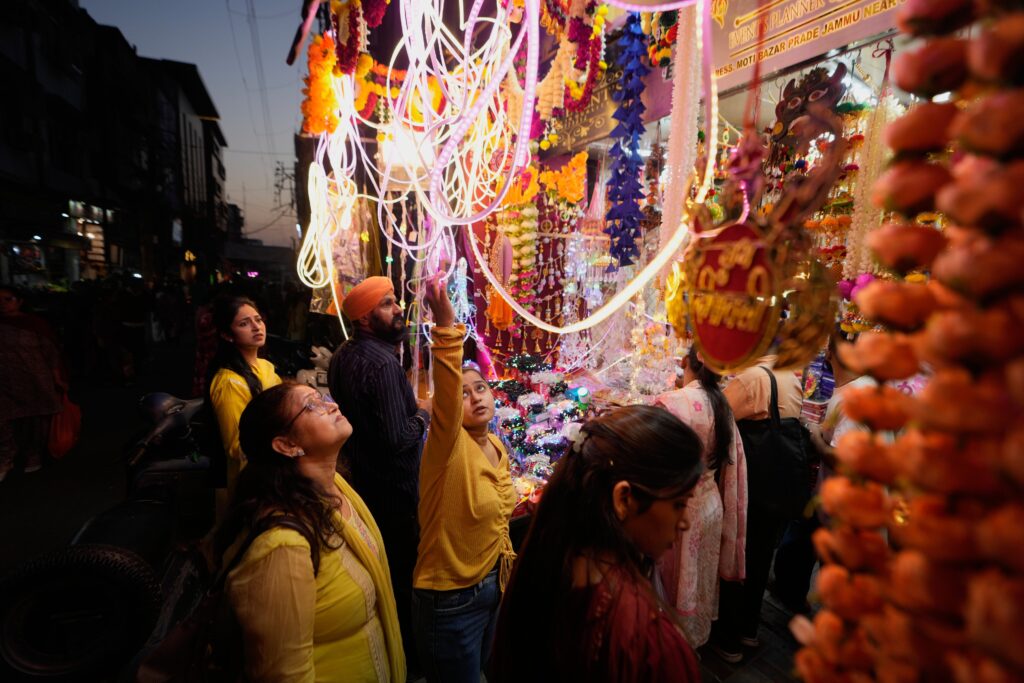
More than a billion people are celebrating Diwali on Sunday with lights, fireworks, prayers and a lot of sweet dishes.
Hindus, Jains, Sikhs and some Buddhists will be celebrating with lit candles, while others will create colorful rangoli designs showing lotus flowers, peacocks and religious symbols.
Diwali, which is also known as Deepavali, falls on the darkest night of the Hindu calendar when the moon can’t be seen in the sky. The festival signifies the triumph of light over darkness, good over evil and knowledge over ignorance.
For Hindus, the festival celebrates god Lord Krishna’s victory over the demon Narakasura, but also the return home of long-exiled Lord Rama, his wife Sita and his brother Lakshmana after they defeated Ravana, a demon you’d never want to meet in any circumstance.
For Sikhs, it’s time to mark Bandi Chhor Divas, which commemorates the release of revered sixth guru — Guru Hargobind from an unjust imprisonment. Jains see Diwali as a time to celebrate Lord Mahavira’s attainment of moksha — the path of liberation away from the cycle of reincarnation.
For all it’s a time to welcome prosperity, remove negative energy and celebrate family. We even have a beautiful illustrated guide from the archives if you want to join in all the fun.
The post A short guide to Diwali and those who celebrate it appeared first on Washington Post.