As Republicans sift through the wreckage of a historic midterm drubbing, one state has especially rankled them: South Carolina.
It was among the most conservative states to elect a Democratic senator in a sea of upsets on Tuesday, prompting some state Republicans to hunt for strategic errors beyond the difficult national environment that might have contributed to their loss of a critical seat.
In public and private, Republican operatives, aides and elected officials have torn into each other over who is at fault for the election of the state’s first Democratic senator since 1998. Annie Andrews, a pediatrician, edged out Senator Darline Graham, the Republican appointed to the seat after the death of her brother, Lindsey Graham, by roughly five percentage points.
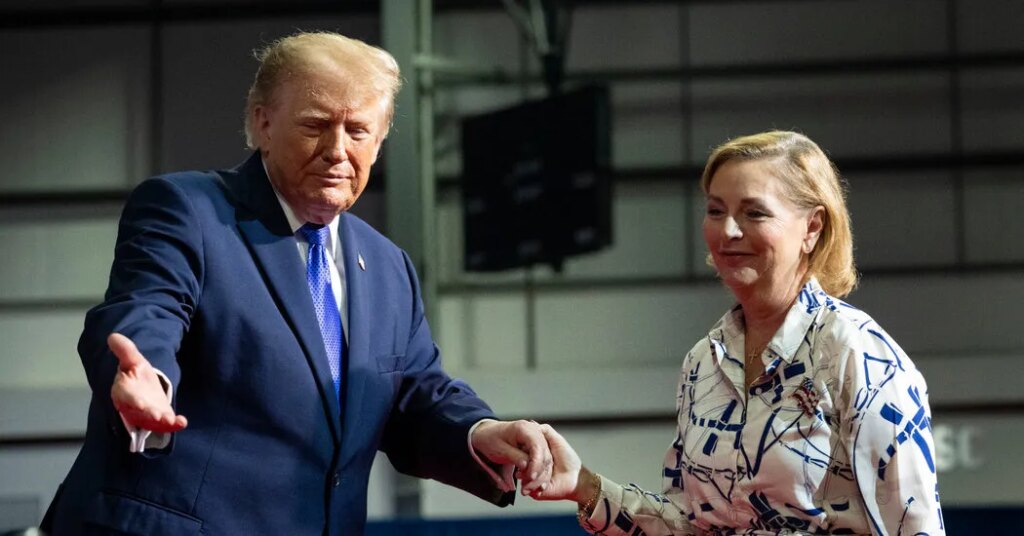
Some Republicans have pointed fingers at President Trump, who said he felt “very badly” about the outcome and thought Ms. Graham would do better, but took no responsibility for her defeat. Mr. Trump endorsed Ms. Graham in a contested primary and campaigned heavily on her behalf.
In doing so, he snubbed Representative Russell Fry, a White House ally, and set up a bitter intraparty feud with Representative Ralph Norman, an ultraconservative congressman and frequent Trump foil who faced Ms. Graham in a runoff.
“The president should not have gotten involved,” Mr. Norman said in an interview with The New York Times this week. “You can’t force a person on South Carolina, and that’s pretty evident now.”
Others directly involved in the race blamed Ms. Graham’s staff, accusing them of persuading the political newcomer to run and failing to be honest with her about the rigors of a statewide campaign. Making the infighting especially toxic is the fact that it involves accusations of betrayal within a team that recently worked together for Mr. Graham, but split after his death.
“Darline Graham’s core team showed incredibly little concern for her,” Matt Moore, a senior adviser for Mr. Graham’s last primary campaign who went on to consult for Mr. Fry, said in an interview with The Times. “It seemed like no one was willing to risk a paycheck by telling her the truth.”
Mark Knoop, Ms. Graham’s campaign manager, stressed that the president encouraged her to run and that she “beat two current members of Congress, a former member of Congress, a former Governor and multiple self funders” in the primary election.
“Darline felt a sense of duty to run and keep the seat in good hands,” he said. “There are always Monday morning quarterbacks and there are sour grapes from campaigns who lost in the primary.”
Mr. Graham’s staff played an outsized role in the Senate race, in part because many voters had made clear that they took comfort in backing a senator with a well-regarded team that she had inherited from her brother. Among other strengths, Mr. Graham’s Senate office was known for its constituent services.
“The people closest to Lindsey saw her as his only true family member and got emotional, and something happened that shouldn’t have,” said Rick Quinn, who worked as a general consultant for Mr. Graham’s presidential campaign in 2016.
Mr. Quinn said a compressed primary campaign had battered the novice and her team. Ms. Graham also struggled mightily to raise money. Those forces, in turn, dragged down other South Carolina candidates who typically would have relied on a marquee Senate race to improve their fortunes, Mr. Quinn said. Instead, Democrats also flipped a House seat and 10 in the state legislature.
Between grieving her brother and learning the ropes of her senatorial duties in Washington, Ms. Graham spent relatively little time campaigning. She never fully recovered from a high-profile stumble during a televised debate this summer, when she answered a question about the importance of Taiwan to U.S. interests by saying she was “not that informed on national security.”
She also inherited baggage from her brother, a foreign policy hawk and supporter of immigration reform whom some conservatives saw as not fully aligned with the MAGA movement.
Kevin Bishop, a longtime aide to Mr. Graham who also worked for his sister, defended his team’s performance and instead placed some blame on Mr. Norman, who initially encouraged voters to write in his name before backing down and reluctantly endorsing Ms. Graham.
“He probably gave the green light to some Republicans that it was OK to leave the team,” Mr. Bishop said.
Mr. Bishop acknowledged that the team struggled with fund-raising after a series of elections and needed more time to introduce its candidate to the state. He also credited Ms. Andrews with running a strong campaign.
“Sometimes you lose because the other side does a really good job, and you have to tip your cap to them,” he said. “When you win, everyone is a genius. When you lose, everyone is a dope. That is rule 101 of politics.”
Over 18 months, Ms. Andrews made a point to campaign repeatedly in Republican strongholds like Myrtle Beach. She leaned on Representative James E. Clyburn, veteran of the civil rights movement, and Christale Spain, the first Black woman to lead the South Carolina Democratic Party, to supercharge turnout among Black voters.
“We took this campaign to every single one of our 46 counties,” Ms. Andrews said during her victory speech on Tuesday. “From small towns and main streets to farms and our rural communities, from the Blue Ridge Mountains in the Upstate to the swamps, the literal swamps in the Midlands to the beaches here in the Lowcountry.”
Ms. Andrews also proved to be a formidable fund-raiser, bringing in nearly $25 million by mid October, according to Federal Election Commission filings. In the first four months of her campaign, Ms. Graham raised less than $2 million, forcing Mr. Trump’s super PAC to spend significantly on her behalf.
In retrospect, six operatives on both sides of the aisle, who requested anonymity to speak candidly about the election, said they had concluded in October that the race was not looking good for Ms. Graham.
Around then, Ms. Andrews’s campaign saw a poll that showed her three points ahead of Ms. Graham, campaign aides said. Democrats decided not to release it, wary of the donations it might attract to the other side.
Republicans were also seeing numbers that showed a tight race, according to Mr. Bishop and two others briefed on the polls. The president made two trips to South Carolina in the final month of the campaign, and his main super PAC, MAGA Inc., triaged its spending plan to help her.
It was not enough.
On Tuesday night, Ms. Graham watched the results come in from an office building across from the State Fairgrounds, where other Republicans were celebrating their victories.
She ate takeout from Chick-fil-A, just as she had three months earlier over a phone call with Mr. Trump discussing how to win the runoff election.
Michael Gold contributed reporting.
The post South Carolina Republicans Fracture Over Stunning Defeat of Darline Graham appeared first on New York Times.