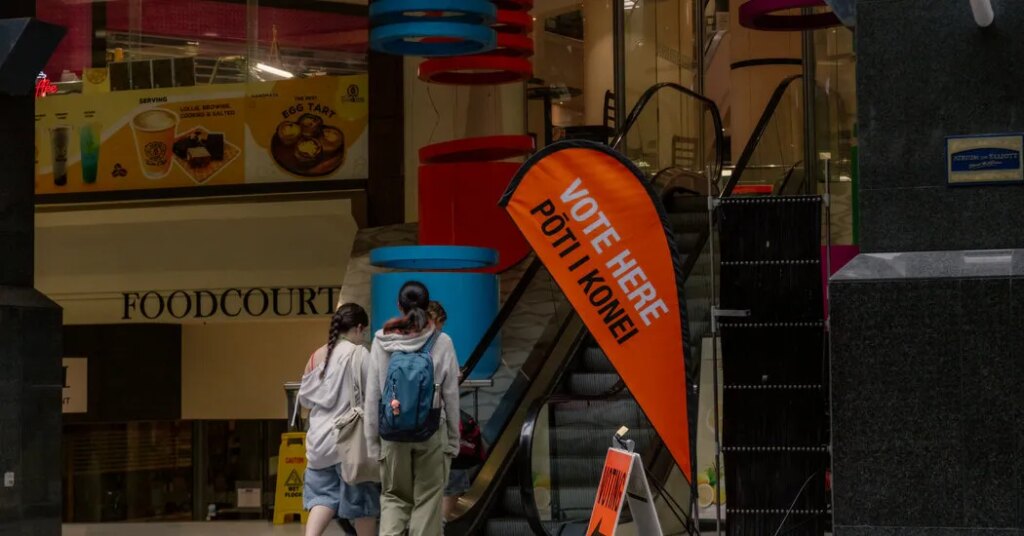
New Zealanders are heading to the polls on Saturday to decide who will lead the country at a moment of economic sluggishness and widespread political discontent.
There is no clear front-runner in the race. Both Prime Minister Christopher Luxon’s National Party, which is governing in a conservative coalition, and the main opposition center-left Labour Party have been polling at near historic lows, signaling voters’ dissatisfaction with the major parties and a lack of faith in their ability to steer the nation out of its malaise.
Whichever party manages to secure the most votes will almost certainly need to build a coalition to form a government under the country’s mixed-member proportional electoral system.
The makeup of any potential coalition will depend on the votes garnered by the libertarian ACT party and the populist New Zealand First on the right, and the Green Party and Maori Party on the left. A newly ascendant centrist Opportunity Party could end up playing the role of kingmaker if it clears the 5 percent threshold to get into Parliament for the first time.
Polls close at 7 p.m. local time Saturday. Negotiations for the formation of government could take days or weeks, and may even stretch into the new year.
Here is what to watch for:
Cost of Living Worries
The victors will have a daunting task to turn around a dire economic picture that has many New Zealanders feeling bleak about their outlook and increasingly viewing moving overseas as the only option for making a decent living.
A surging cost of living is a leading concern for most in the country, with four in 10 New Zealanders saying in a recent survey by the University of Otago they were struggling to pay for essentials. Unemployment in the most recent quarter edged up to 5.7 percent, the highest level since 2013. The country saw nearly 40,000 more citizens moving away than returning annually over the past two years.
Mr. Luxon and the National Party have sought to persuade voters to give them another chance at tackling inflation and government debt.
Chris Hipkins, who has headed the Labour Party since Jacinda Ardern’s resignation in 2023, has centered his messaging on commitments to bring down health care and transportation costs.
Both parties were polling under 30 percent across multiple election surveys in the weeks leading up to the election.
Minor Parties, Major Roles
Lackluster support for the two major players has meant increased backing for five minor parties, each with its own policy priorities, leading personalities and political strategy concerns.
All but one of the governments formed since the country adopted its current electoral system in 1996 have been a coalition of at least two parties. Even so, the smaller parties will most likely play a larger role this time, with polls indicating many of them will take a larger share of votes than in previous elections as voters look for alternatives.
One contender that has charted a steep rise in support is the Opportunity Party, headed by a Fiji-born 38-year-old former business consultant, Qiulae Wong. Ms. Wong has said Opportunity would be willing to work with either of the major parties — that are neck-and-neck in the polls — to form a government.
New Zealand First, which is led by the firebrand veteran Winston Peters and has pledged to curb immigration, and the left-leaning environmental Green Party have also seen their support increase. Voters in New Zealand cast ballots for both a local representative in Parliament, as well as a party.
‘Division and Toxicity’
With bread-and-butter issues dominating New Zealanders’ concerns, foreign policy has hardly figured into the race. As with many other countries, New Zealand is in the position of having to balance its heavy trade dependence on China, while wrestling with Beijing making its military heft increasingly felt in the region.
Mr. Luxon’s National Party was voted into power in the previous federal election vowing to solidify relationships with traditional alliance partners, the United States and Australia, and increase defense spending.
Asked in the final debate before elections about managing relations with the United States, Kieran McAnulty, Labour’s campaign chair, said his party would take a different approach to the Trump administration.
“We saw yesterday with the results in the U.S. that the American people wholeheartedly rejected the division and the toxicity that we’re seeing in their politics over there,” he said on Thursday.
The post Will New Zealand Join Voters’ Global Revolt Over Soaring Costs? appeared first on New York Times.