He was either going to come out a genius or a fool.
That’s what Benjamin Schatz, a Harvard-educated lawyer, says he told his friends two years ago when he invested more than $500,000 to buy cabins and equity in Villa Vie Residences, a start-up offering a multiyear residential cruise.
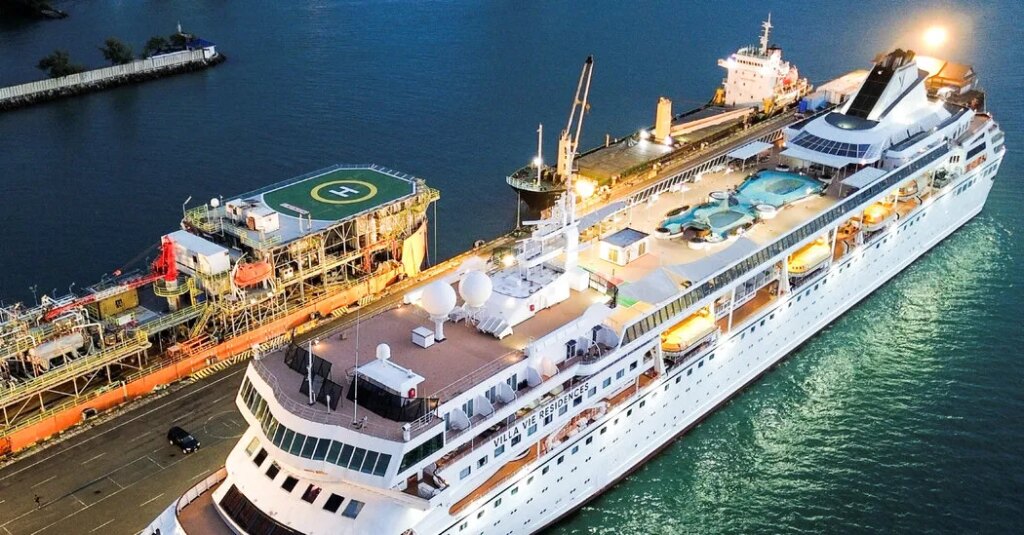
Last week, its cruise ship, called the Odyssey, ground to a sudden halt in Cambodia when the ship’s operators announced that they could no longer afford fuel. Given hours to disembark, the Odyssey’s 200 passengers, some of whom had sold their homes and used their retirement savings to live on the ship, found themselves stranded in Southeast Asia. On Wednesday, Villa Vie’s main lender took control of the ship, which was still laden with passenger belongings. The Odyssey is now headed to Singapore, where it may be auctioned off.
But Mr. Schatz, 67, a former adviser to President Bill Clinton, isn’t ready to call himself a fool. “It was a glorious experience,” he said, “and one that I’m not prepared to end.”
Unlike short-term vacation cruises, Villa Vie was marketed as an affordable “home at sea” for retirees and remote workers with extended port calls for deeper cultural immersion. Passengers were free to hop on and off at different ports, or to stay on board for months or years on end. The cruise offered several residency programs, including suite ownership for the life of the ship, ranging from about $120,000 to $440,000, plus fixed monthly fees of $3,500 to $11,000; a five-year ownership plan starting at about $50,000 along with monthly fees; and short-term flexible rentals.
When Mr. Schatz bought two cabins for himself and his mother, and invested even more money to become a “founder” — meaning he had also purchased equity in the company — he knew the risks of backing a start-up. But he was drawn to the slow pace of travel and the opportunity to explore countries over several days or weeks. He chose not to consult a financial adviser, fully expecting to be warned against the investment. In recent years, several residential cruise ventures have collapsed, undone by high maintenance costs and fees that failed to cover operating expenses.
Before starting Villa Vie Residences, its executive chairman, Mikael Petterson, had backed a residential cruise called Life at Sea from Miray Cruises. That program collapsed before the voyage began, mainly because it was not able to finalize the purchase of a ship. For his next venture, Mr. Petterson made sure to secure a ship. After months of delays and millions of dollars in repairs, the Odyssey finally set sail from Belfast, Northern Ireland, in October 2024, with 125 passengers.
Beyond the easy pace of the voyage, passengers were united by a shared love for travel and a quiet determination to avoid isolation in retirement. Through self-organized excursions, entertainment and late-night gatherings, the residents built a community on the water.
“It was like a traveling village of really interesting, quirky people,” Mr. Schatz said. “I used to call us the Odd-at-Sea.”
In interviews, many residents described life on the Odyssey as something that could never be replicated on land, and that was worth doing almost anything to save — even lending millions of dollars of their own money to keep the ship afloat when things began to unravel.
This account of what happened in the months leading up to the collapse of Villa Vie Residences and the seizure of its ship is based on interviews with nine founders and 16 other passengers, along with dozens of text messages and internal communications shared between passengers and the ship’s executives and reviewed by The New York Times.
Troubled Waters
When the voyage was suspended last week, Villa Vie blamed “extraordinary increases in fuel costs” caused by the war with Iran and said it was working to restructure financially. Mr. Petterson told The Times in a phone interview that before the war, sales had been strong, with the company poised to become profitable in early 2026.
In interviews, several residents with founder status painted a different picture. They said Mr. Petterson and the company’s chief executive, Kathy Villalba, called a meeting in November 2025 and announced that they were two weeks away from running out of money. Ms. Villalba did not respond to phone calls or emails.
“Founders knew surprisingly little about the state of the finances,” Mr. Schatz said. “Few, if any, understood that all the money from cabin sales was spent immediately to keep the ship afloat.” (Mr. Petterson disputes this and says he shared financial information with founders every few months.)
Shortly after the meeting in November, Mr. Petterson pitched founders of the Odyssey on a luxury sister brand called Avora Residences, with its own ship, that would operate in parallel to Villa Vie; residents of the two ships would be able to share privileges. In interviews, several founders said they agreed to invest money in the new company but declined to offer exact amounts. They hoped that Avora’s higher prices would generate enough profit to offset the Odyssey’s financial losses.
But in January, Avora debuted as a separate company, creating a competing brand with a separate ownership structure but with Mr. Petterson and Ms. Villalba still at the helm, Mr. Schatz said.
Most of the ship’s other residents were unaware of the extent of the financial troubles, as the founders had signed nondisclosure agreements and were not allowed to share any information discussed in meetings with Villa Vie executives. Once Avora was announced publicly, the messaging to Odyssey passengers from management was optimistic, with talk of improving the Odyssey’s pool and building a casino in the main dining hall. (Neither was done.)
Dana Teton, a 71-year-old retired medical equipment salesman, spent months at a time on the ship. He said that passengers suspected there were issues with the ship based on last-minute changes to itineraries, but they didn’t know how bad things were until the summer, around when the ship reached Singapore.
“For a long time the stress level on the ship was essentially zero because everything was taken care of,” he added. “No airports, no security lines, no immigration, no customs, no packing or unpacking. It was a dream.”
Desperate Calls for Cash
Within months of the Avora pitch, the Odyssey was back in crisis mode. The war with Iran was underway, and fuel costs were skyrocketing. Mr. Petterson once again asked the founders for immediate loans but was turned away. So in April, he sent a message to the rest of the passengers, seeking a $3 million emergency loan for fuel costs with the promise of 12 to 24 percent annual interest rates, according to documents shared on Circle, the ship’s internal communications app, and viewed by The Times.
Sharon Myers, a 62-year-old retired Canadian paralegal, was on a rent-to-own plan for her cabin on the Odyssey. As a solo traveler who wanted to avoid the tedium of packing, unpacking and moving between hotels, she found the continuous travel routine with like-minded people to be a seamless fit. So when the company asked passengers for help, she was tempted. But when she asked for the loan agreement, she discovered that the funds were being directed not to Villa Vie but to an umbrella company called Residential Cruise Holdings.
Ms. Myers said it felt like a scam. “There was a real divide between realistic people who could see what was coming and people who could not face reality,” she said. Several passengers who participated in the loan program said they had yet to receive any repayments.
Mr. Petterson told The Times that Residential Cruise Holdings was intended to become the future parent company of Villa Vie and Avora. Legal restrictions prevented Villa Vie from taking out additional loans, he said. Instead, the loan was made through Residential Cruise Holdings and was intended to cover fuel expenses for the Odyssey, he added. He declined to comment on the status of repayments.
In late July, while the ship was docked in Singapore, the company told the ship’s residents that it had run out of money. Mr. Petterson again asked for loans to cover fuel and operational costs and to prevent the ship from being impounded, according to messages on Circle reviewed by The Times. To save the ship, the company started the Villa Incentive Program, offering guests the chance to buy empty cabins at discounted rates.
“The residents raised almost $2 million to buy time,” Mr. Schatz said, adding that he contributed to the fund so he wouldn’t be stranded with his mother, who had turned 100 just days earlier.
One group cobbled together $400,000 and used one passenger’s personal account to send the funds directly to a fuel supplier, according to messages in a private WhatsApp group. The ship was cleared to leave Singapore and set sail on Aug. 7, but the problems weren’t over.
A Failed Buyout
By this point, Whitney Olson, 47, a onetime owner of a Montana car dealership and a Villa Vie founder, had spent more than $1.5 million on her two cabins, equity and payments to keep the vessel operational. She said she had also considered lending Mr. Petterson $2 million in April, contingent on a financial audit and assurances in the event of bankruptcy. Mr. Petterson refused to provide the information, Ms. Olson said. “He was more interested in taking the money from the residents at these exorbitant interest rates than giving me what any investor would ask for,” she said.
Mr. Petterson told The Times that he could not provide the information that Ms. Olson had requested because the company’s finances had not been audited at that time.
As the ship left Singapore, Ms. Olson devised a plan to take control of the Odyssey. Along with two other passengers, she started a resident-backed investment company. They sought to pool money from residents and pay off the vessel’s debt holders to establish a self-sustaining co-op similar to the one used by the World, the only successful residential cruise in service.
Many residents had criticized Villa Vie’s business model, saying the monthly fees set in 2023 were too low to keep up with inflation. Under the new company, they proposed adjusting fees to cover real-time fuel charges, port fees and crew wages without relying on external loans.
The buyout effort collapsed last week after investors said they had uncovered far more debt than expected and failed to reach a deal with the ship’s primary lender, NRP Maritime Asset Management AS, a Norwegian maritime fund manager. Taking over the voyage would have exposed the residents to significant legal liabilities and high costs for debt repayment and legal bills, estimated at $3 million for just the first two months, the investors said, while operating costs were too high to keep monthly fees affordable.
Staying in hotels and short-term accommodations in Sihanoukville, Cambodia, the Odyssey’s former residents have spent the past two weeks planning what might come next. Some said they would keep traveling in Asia, while others decided to stay in Cambodia while they awaited news about the ship’s future.
Ms. Olson said she planned to cross the land border to Vietnam, where she would put her belongings in storage before taking a previously booked trip to India to see the Taj Mahal and Bengal tigers with her family. But she still had her mind on the cruise.
“I’m still going to watch to see what happens with the Odyssey at auction, and see if there is a way to pick it up for cheap,” she said. “It was so special. I’m not ready to be done.”
Sun Narin contributed reporting from Sihanoukville, Cambodia.
The post They Spent Millions to Keep Their Dream Cruise Afloat. It Died Anyway. appeared first on New York Times.