A Tanzania court on Friday sentenced the country’s main opposition leader to four years in prison in a case that human rights groups say is part of a pattern of repression.
The high court in the country’s commercial capital, Dar es Salaam, said the leader, Tundu Lissu, was guilty of incitement for statements he had made ahead of a presidential election in October 2025. Mr. Lissu had urged supporters to boycott and disrupt the vote.
Mr. Lissu was arrested months before the election and charged with treason, and his party, Chadema, was disqualified from contesting the vote. The court on Friday acquitted him of treason for lack of evidence, and instead convicted him of a lesser charge.
Protests on Election Day were met with a crackdown by security forces in which hundreds of people were killed, a watershed moment in a country that for decades cultivated an image of social harmony.
The electoral commission declared the incumbent president, Samia Suluhu Hassan, the overwhelming winner, but observers from the African Union said the election had not met democratic standards.
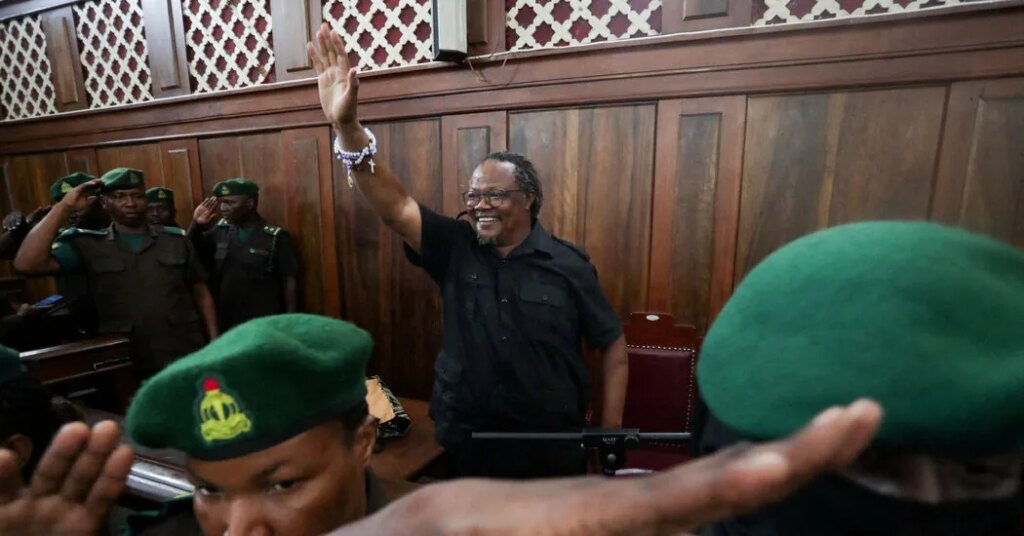
A crowd watched on Friday as Mr. Lissu was brought to court under heavy guard, according to witnesses.
“This is just a matter of political persecution,” Mr. Lissu told the court, reasserting that he was innocent and vowing to appeal. He said that the party would continue its struggle.
A government spokesman could not be reached for comment.The government has said it respects judicial independence.
Some supporters of Mr. Lissu said that, while they were heartened by his acquittal on the treason charge, they were discouraged that he was convicted of incitement, given that it was not part of the original charge.
“It’s not a victory to put someone in prison,” Brenda Rupia, a party spokeswoman, said in an interview. The sentence could disqualify Mr. Lissu from contesting the next presidential election in 2030.
Amnesty International said in a statement that the trial was a travesty of justice and the conviction should be quashed.
Political analysts see the case as part of a broader retreat from democracy in Tanzania and elsewhere in East Africa. The country of 70 million has held multiparty elections since the 1990s, but it has been ruled for nearly half a century by a single party, Chama Cha Mapinduzi, or the Party of the Revolution.
Mr. Lissu was targeted in an assassination attempt in 2017 in which he was shot more than a dozen times, and in recent years other opposition figures and activists have gone into exile, been detained or have disappeared.
A Tanzanian human rights activist, Twaha Mwaipaya, was abducted from his car last week and his whereabouts remain unknown, according to human rights reports. Mr. Mwaipaya, who lived in exile in Kenya, was a former youth leader for Chadema, which means Party for Democracy and Progress.
Ms. Hassan, who came to power in 2021 upon the death of her predecessor, said she was deeply saddened by the election violence. She called for reconciliation and established a commission led by a former chief justice to report on the events.
The report has not yet been published in full, but the commission blamed the opposition and outside influences for the violence, and said that the police had acted with restraint.
The post Tanzania’s Opposition Leader Gets a Four-Year Sentence appeared first on New York Times.