Brian O’Hara served as the Minneapolis Police Department chief from 2022 to 2026 and as public safety director of Newark.
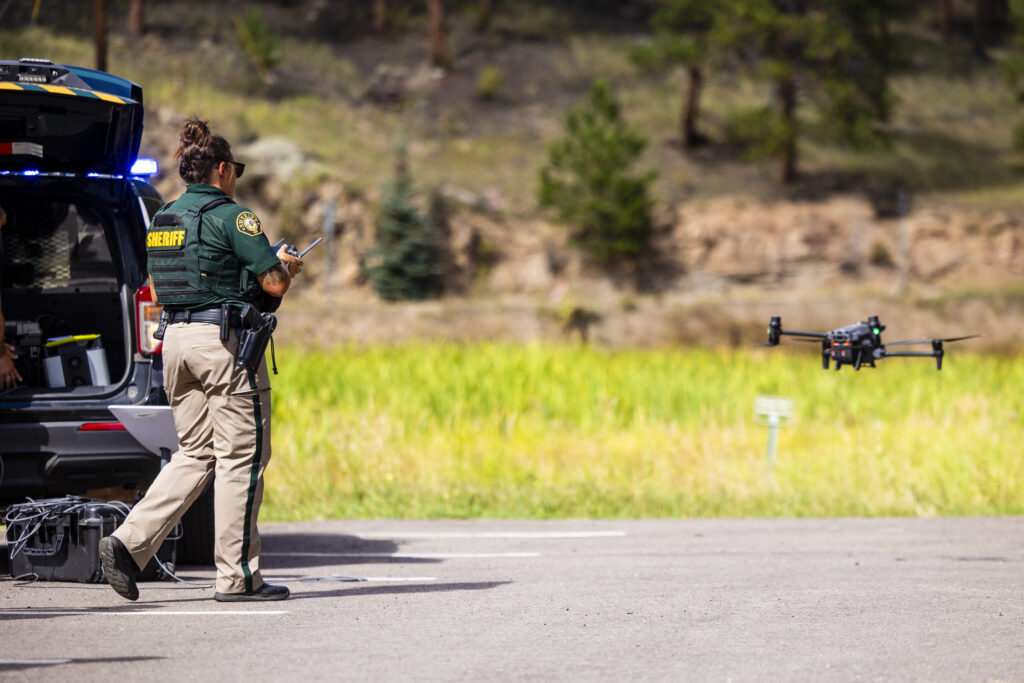
Police drones are spreading across America. So is the backlash. About 1,500 police and sheriff’s departments fly drones, according to a 2024 estimate. The next evolution is already here: drones that launch the moment a 911 call comes in and arrive before the first officer. The question now is not whether drones will be used, but how they should be governed. And cities need enforceable rules that build public trust.
The fight over police drones is a national issue. Nashville restricted drone use after police launched a pilot without council approval. Bridgeport, Connecticut, blocked a proposed program. The Detroit City Council voted against authorizing a federal grant application for drones. St. Paul, Minnesota, withdrew a grant request to expand its existing program.
The critics have a point. A camera that can be anywhere quickly can also be everywhere. Without limits, drone as first responder becomes drone as permanent patrol, with footage kept forever. That is a real danger. Chiefs who wave away this concern shouldn’t be surprised when the drones are grounded.
But the answer is not to stop using drones. It is to write the rules first. I ran police departments under court oversight in Newark and Minneapolis after investigations found a pattern or practice of unconstitutional policing in both. I know what accountability looks like when it works. And I know what it costs when it’s missing.
On Aug. 26, 2025, a drone maker held a demonstration on the North Side of Minneapolis to show my department what the technology could do — a camera overhead within two minutes of a 911 call. That afternoon, a gunman with a rifle fired about 30 rounds into a crowd outside Cristo Rey Jesuit High School while students were inside. One man died; six people were wounded. For the first few minutes, my officers did not know how many shooters there were or where they had gone. The next morning, a gunman fired through the windows of Annunciation Catholic Church during a back-to-school Mass. Two children were killed; 29 others were wounded, including 26 children.
I will not claim a drone would have saved those children. But when we did not know whether there was a second shooter or where every wounded child was, a view from above was exactly what my officers needed and did not have.
On May 30, 2024, Officer Jamal Mitchell was responding to a shooting when he saw a man who he believed was wounded. Mitchell approached while putting on medical gloves. The man was the shooter. He killed Mitchell, who was 36 and left behind a fiancée and four children. A drone launched with the first 911 call might have shown Mitchell what he was walking into before he stepped out of his car. In a crisis, the most dangerous thing an officer carries is what he doesn’t know.
Today, St. Paul and at least four other Minnesota cities fly these drones. Minneapolis came within reach of a pilot program, but politics grounded it this summer, before a single flight could generate evidence. Response times in the city had surged after 2020 brought an exodus of officers and the burning of the 3rd Precinct station, which has yet to be replaced.
But before the drones fly, the public should help shape the policy. So here are the rules.
First, drones repond to calls; they don’t do routine patrols. A drone launches when someone dials 911. Emergency launches require a documented reason and supervisory approval. Following a suspect or watching a property to build a case is investigative surveillance. Outside an emergency, that requires a warrant. No general surveillance. No loitering over neighborhoods.
Second, every flight is logged, and the log is public. A few departments already post flight logs showing each launch and the call behind it. Every department should post a log, and someone outside the agency — an auditor or civilian board — should check it against dispatch records.
Third, delete what you do not need on a firm deadline and publish the numbers. Video that is not evidence should be gone within days. Each year, report how many flights were made and under what authority, along with their outcomes. Minnesota law already requires many of these safeguards. Every state could.
Fourth, lock down the feed. This summer, researchers found live video from San Francisco police drones sitting on an unsecured link for months. Encrypt the footage, restrict who can view or share it and log every access. A department that cannot keep its own feed off the open internet gives the public another reason to ground the drones.
These rules protect the public from surveillance while preserving a potentially lifesaving tool. The rules must outlast the chief, the council and the next election.
A drone does not pull a trigger. It does not pull anyone over. It shows you what is there before you get there. Jamal Mitchell never got that chance.
The post Why police drones keep getting grounded appeared first on Washington Post.