This is an edited transcript of “The Ezra Klein Show.” You can listen to the episode wherever you get your podcasts.
The big tent is real, and the political map is fake.
That is the lesson of the Democrats’ historic midterm, the blue tsunami that we saw on Tuesday.
Democrats won in places nobody thought they even had any chance to compete a year ago: Kansas, Texas, Iowa, South Carolina.
As I record this, it’s unclear which party is going to win Mississippi. Let me say that again: It is unclear which party is going to win a Senate seat in Mississippi. That was unimaginable three months ago.
Democrats won governorships in Ohio, Texas and Iowa. This was a win that destroyed the reality of the red-blue map people had come to believe in so firmly. And so we’re entering a new era, an era when much is unsettled.
The realignment may not be what we thought it was in 2024. The realignment may be a map that is entirely up for grabs from here on out.
Democrats didn’t do this on their own, of course. To a very large extent, President Donald Trump did it for them. And what Trump and the Democrats both did wrong was the same thing: not listening.
Trump did not listen — not to the voters, not even, at times, to himself. He was elected promising to lower costs, to end wars, to bring order to the border. Instead, he raised costs through tariffs and through new wars, and he created disorder after closing the border and sending in masked ICE agents to harass and upend settled communities.
Trump at no point pivoted. He dismissed almost everything that people were angry about, and his party paid the price.
At the same time, I think the Democrats’ central political failing for years has been an unwillingness to listen. They listened to themselves — not to the voters they needed to win over.
This time around, they course corrected. In state after state, district after district, they found people who fit: Josh Turek in Iowa. Adam Hamilton in Kansas. James Talarico in Texas. They found seminarians. They found Paralympians. They found a whole new class of candidates who could put into play a whole new set of districts.
And then in some places, like North Carolina and Georgia, they had candidates of such exceptional quality, who understood their constituents so well, that they won states that should have been purple — by 20 points for Roy Cooper, 18 points for Jon Ossoff.
So there’s a tremendous amount to learn from this election and a tremendous amount that is now possible after it.
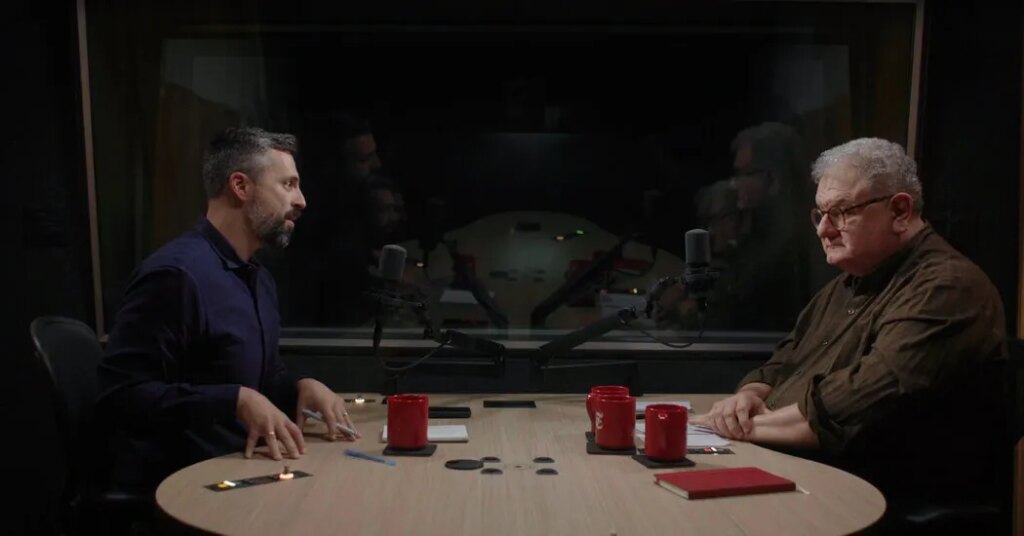
To think through both the lessons that we’re seeing already and then how Democrats, and for that matter Republicans, are going to respond to them, I’m joined here by my revered editor, one of the most beloved characters in our podcast cinematic universe, Aaron Retica, who’s going to turn the tables and interview me.
Ezra Klein: Aaron Retica, welcome back to the show.
Aaron Retica: Thank you very much for having me. Let’s start with almost a gotcha: Do you have any idea who George McGill is?
Klein: I don’t.
Retica: George McGill is the last Democratic senator in Kansas before Adam Hamilton, who won last night. McGill last won in 1932.
I was trying to think of all the different ways of expressing what happened last night, and that’s the best I could come up with.
Klein: That’s a very good way of doing it.
Retica: So everybody looking at this election, all the different constituents of the Democratic Party — they all got something. The left won some races. The center won some races. Charismatic candidates were huge. Uncharismatic candidates also did well.
Klein: The Roy Cooper juggernaut.
Retica: Roy Cooper plus 20. This has long been the dream. Was there a breakthrough for the big-tent Democratic Party last night?
Klein: Yes, but let me hold that to the side for a minute. Donald Trump asked America to vote like he was on the ballot, and it did.
Trump, of course, had, I think, the funniest possible reaction to the election.
Retica: He really did.
Klein: In the middle of the night, he posts on Truth Social:
I wasn’t on the Ballot, and if I was, we would have won IN A LANDSLIDE! Thank you for your attention to this matter. President DONALD J. TRUMP.
And people today have been remarking how he doesn’t seem very upset by the election results, and of course not. He does not mind when Republicans lose. And in fact, Republicans often lose because he intervenes in a way that is likelier to make them lose, right?
Like bringing in Ken Paxton or ensuring Ken Paxton’s victory in the Texas Republican primary.
Retica: And Darline Graham.
Klein: Pushing for Darline Graham in South Carolina. But when Republicans lose when Trump is not on the ballot, to Trump, it shows his importance. And so he, I think, doesn’t mind this at all.
It is more evidence, to him, of his essential winnerdom. What really happened here is Donald Trump has been a terrible, catastrophic president who has betrayed the mandate he was given by voters. And as he was losing — bleeding — public support, not only never changed course but never admitted what was happening at all.
And so Trump led his party to defeat, or, certainly, created the conditions for the party to go to defeat. And then there’s a question of what Democrats did with that.
Retica: So what did they do right?
Klein: The big tent is real, and the map is fake.
Democrats ran candidates who fit their states and their districts, and I think it’s just really important to center that.
Last year, I did this big essay on the show about the need for a big-tent Democratic Party. Other people have been making this argument, too — that one of the problems that has emerged over time in American politics is that the parties have become tighter in their ideological and cultural positioning.
Retica: And geographical, which is critical.
Klein: And that has made them tighter in their geographical positioning. Because they’re not willing to run candidates who differ as much from the kind of median member of the party.
What Democrats did really well here was in the way that they acted with power.
Hakeem Jeffries and Chuck Schumer kept things very focused on affordability, on the Iran war. They didn’t get distracted by a lot of other things. And then, when they ran candidates, they ran people like James Talarico, who is leading an almost religious-left revival in Texas against Ken Paxton.
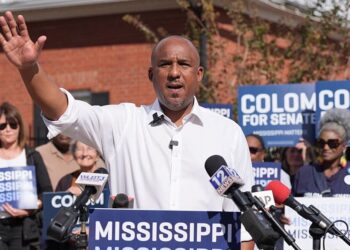
Adam Hamilton in Kansas, as you mentioned, is a Methodist megachurch pastor. Scott Colom, who’s the candidate in Mississippi, looks very much like he may win by like 100 votes or something.
Retica: Not even 100.
Klein: I mean, we’ll see where it plays out, but ——
Retica: Truly insane, though.
Klein: Both Hamilton and Colom describe themselves as pro-life Democrats.
They want to create conditions under which reproductive freedom is protected, but they ran as pro-life Democrats because of their Christian faith.
Mary Peltola — what was her slogan in Alaska? “Fish, family, freedom.”
So the Democrats did a very good job in this case of picking candidates who fit the state.
And when I say the map is fake, one of the revelations from this election is you really should not treat states as off the table.
Retica: Yeah.
Klein: People were not talking about Kansas. By the way, Adam Hamilton is not a Schumer recruiting victory. Adam Hamilton decided to run.
By the way, shout-out to my colleague at Vox and colleague here at The New York Times Sarah Kliff, whose bombshell story, bombshell investigative work, on Roger Marshall’s unbelievably brutal pursuit and persecution of people who are not able to pay his medical bills was a major, major, major part of that race. And that’s a story Sarah Kliff broke here at The New York Times.
Shout-out to Sarah.
Retica: I want to throw in a shout-out while we’re at it, and that’s Howard Dean. Because the 50-state strategy is vindicated here. This is what you’re saying.
There are two reasons. One, you might actually win some of these states. But also, there are going to be talented politicians in these places who can’t necessarily win their state but who are still worth having in your coalition.
Just being out there and not writing things off is critically important.
Klein: Yes, and doing the work to recruit the candidates and then supporting them. So I think Democrats have sort of treated Florida as not winnable. And what you saw here, Angie Nixon is only going to fall a couple of points short.
Florida is winnable if you have the right candidates in the right environment. And so you have to build that kind of party strength. You have to look for those people.
Now, there’s an interesting question here. You were saying at the beginning that everybody got some of what they wanted, and that’s at least somewhat true.
I think it’s going to be fascinating to see what lessons Democrats learn from Michigan, from Maine and from Florida, which is where they ran — in contested or contestable Senate elections — much more left-wing candidates.
Abdul El-Sayed won. It looks like he’ll win by something in the seven range as we’re taping. Maine, it’s a little harder to say because they had the whole disaster with Graham Platner. Susan Collins is actually a quite good candidate because she has a reputation for independence, not totally well deserved, from the other side. But Troy Jackson’s win there looks closer than you would expect, given the demographics of Maine. It’s not like the Jon Ossoff plus-18 win in Georgia.
And in Florida, Angie Nixon, a more direct D.S.A. candidate, lost, right? You’re not seeing in Florida what you’re seeing in South Carolina or Mississippi.
Retica: OK. I want to push back on that a little bit. Because it sometimes sounds like the progressive candidates are just a hindrance to the party. But without their imagination, without their ideas, that’s very important, and they didn’t do as well as the less left candidates, but they didn’t do terribly, either.
Klein: No, I don’t think they did terribly, and I agree with you that I don’t think, whether you’re an electoral overperformer is even correlated, really, with whether you are a good or important member of the House or Senate. A lot of, I think, the most creative members of Congress — and the most important members of Congress — are safe-seat players who are not operating under the constant threat of electoral wipeout.
Elizabeth Warren, I think, is one of the most important senators, has been for some time, and is not an incredible electoral performer by any means. But she is creative and innovative as a policy thinker in a way that very, very few of her colleagues are.
And I’ve said this on the show before, I think Abdul El-Sayed is going to be a superstar. And I agree with something that you think, which is that it’s very likely he might build margins over time. The effort to otherize him was grotesque. It’s part of why, when he was on the show, we focused a lot on his actual story.
He’s an American boy who’s a Rhodes scholar and a doctor and a captain ——
Retica: A football-playing doctor ——
Klein: Of his football team. I mean, what they tried to do to El-Sayed — and I find El-Sayed to be a very impressive person — I thought it was reprehensible.
The question of how some of these people will play out in the Senate, or in the House for that matter, is different to me than the question of: Can you extract any signal in terms of what it means for the Democratic Party to compete in places it has not competed before?
And El-Sayed winning by, you know, plus seven or eight or whatever it’s going to be, in a Democratic plus-13 environment is not an electorally impressive performance. Peggy Flanagan, in Minnesota, wins by about — looks like it will be about nine or 10 right now, 10-ish. Again, Minnesota, Democratic plus 13 — it’s not a good performance, right? You shouldn’t take a lesson that that’s what you want to run right there.
Angie Nixon, I think that there’s a world — and I think the Democratic Senatorial Campaign Committee bears some blame for this, but a stronger Florida Democratic Party that picked a candidate who is better suited to Florida, in the way that you saw in Kansas or Mississippi, and a Democratic Senatorial Campaign Committee that invested more in the state, I think that was a winnable seat.
And so who you want to blame for that — I think both sides deserve some blame. But I don’t think there’s any reason to look at the results and say it was a brilliant strategic move to run the D.S.A. candidate in Florida. That isn’t what won in Kansas. It’s not what won in Texas. It’s not what won in Georgia. It’s not what might win in Mississippi. It’s not what seems like it will win in Alaska, or Iowa, for that matter.
And so you’ve got to hold these things in tension. Sometimes people take statements about electoral performance as moral statements about the worth of a candidate, and that’s ——
Retica: Or the ideas.
Klein: Or the ideas. That’s crazy in my view. By the way, I do think we often end up too tight on this, like moderate to progressive to D.S.A. — or whatever it might be — scale. You can have candidates who have many views all at once.
So Dr. Annie Andrews, in South Carolina, who — I mean, the moment you realize the night was really turning was when, all of a sudden, the Democrats were going to win in South Carolina. Reflects a terrible candidate in Darline Graham, as well.
Retica: OK, but ——
Klein: But Dr. Annie ——
Retica: South Carolina. I mean, wow.
Klein: I know. Dr. Annie Andrews, right? Both somebody who fits South Carolina but has, I think, if you were grading it on a scale, quite progressive views on health care, and progressive views on health care are very popular. That’s also a good issue for Abdul El-Sayed.
So I think sometimes you can get into this thing where people think what you mean by “fit the district” or “fit the state” is just to be more moderate. James Talarico should correctly be understood as a fairly progressive candidate, but he moved right on oil and gas. And he also moved right on border security.
But he also was a very populist candidate running against billionaires — a very pro-building candidate, right? The sort of populist abundance synthesis that I think you saw in a lot of different places.
So in my view, there’s a lot to learn from a bunch of these candidates. But I do think it is notable that, if what you would like to see is Democrats building on this success, I don’t think the place you want to look for electoral lessons is Abdul El-Sayed, is Peggy Flanagan, is Angie Nixon, is Troy Jackson.
Klein: I think Maine has another lesson.
The Maine Second District is represented by Jared Golden. Last three elections — that is the reddest district represented by a Democrat.
Golden is the most conservative, or was the most conservative, House Democrat, and he was tormented by the left for this, including facing a challenge by a more progressive challenger, Matt Dunlap. And Golden decided to retire. He was done with it. He was tired of it. Now it looks like, even in this gigantic wave election, that Dunlap is either going to win it incredibly modestly or lose the seat.
Jared Golden was like a most valuable player for the Democrats. He is the kind of person you want in the party and you should protect — and there’s a lesson in that. If you want to build power — and the Democrats are excited about possibly winning Mississippi right now, excited about winning Kansas — in 2032, you’re going to need to try to keep these seats, right?
You want to build a supermajority. You want to build a durable majority. That doesn’t just mean moderating, but it does mean recognizing that you need these candidates who are right for their states, right for their districts, and then you need to do everything you can to make their life easy. Not — as was done with Jared Golden — try to hound them out of office.
Retica: I want to rain a little bit on the parade. Because since Trump first came down that escalator — when is that? June 2015. Everyone on the liberal side, the centrists, the Never Trumpers — everyone has been wondering: When are the scales going to fall from their eyes? What will it take?
So what it took is kind of insane. It took an unpopular, unconstitutional, inconclusive war, driving up gas prices and, crucially, diesel gas prices.
It took taking Latino voters for granted and attacking on immigration and shooting people in the streets. All of that is what was needed to get where we are now. It’s an obviously tremendous victory for the Democrats, but it does give me a little bit of pause that it took so much.
Klein: I see it as more environmental even than you’re describing it there.
I think at this point, internationally, we have enough examples of Trump-like politicians. Flavio Bolsonaro came out ahead in the first round of Brazil’s presidential election, ended up losing to Lula in the second round. But there is just no evidence that the Trumpy style, or what we think of as the Trumpy style, in America, but what you might think of as the populist right style worldwide, is a turnoff to voters.
What voters don’t like is their life getting worse.
Retica: Well, who likes that?
Klein: Nobody. But when you’re saying it took so much, I actually think it didn’t take so much. What you’re describing is a chain of very intense events that led to real-world consequences for people.
So you could have imagined a world where Trump governed much more modestly. But there was a recession ——
Retica: No, no, you can’t. You can’t, actually.
Klein: Or maybe a different way of putting it is, in 2008, Barack Obama won a very big victory. But the unemployment rate continued to go up, and so 2010 was a historic wipeout for the Democratic Party.
And that wasn’t because Obama’s personal style was repulsive to the electorate. He won in 2012. People liked him quite a bit. It’s because, fundamentally, if people do not feel their lives are getting better — in fact, they feel they’re getting worse — and sort of another way of saying what you’re saying is people felt their lives were getting worse.
And then particular groups — Hispanic Americans — saw their lives getting much worse because of the amount of state force Donald Trump and Stephen Miller, who did a lot to lose this election for Republicans, was aiming at them and aiming at their communities.
Bobby Pulido winning a Texas district for the House by 25 points. He’s an amazing candidate, this very, very well-known singer, and somebody who has run a fantastic race. But I remember him getting in. That was supposed to be a safe Trump district.
Klein: He won by 25 points. And that’s a guy who I think should be treated in the Democratic Party right now as a star.
In the end, you cannot make people’s lives worse. But conversely, the reason Trump was able to survive in the way he was at other times was he benefited from a pretty strong economy for most of his first term, and people remembered that when he ran for his second effort at re-election.
Retica: And he did better in the first than people expected, in part because he was sending people checks.
Klein: Yeah. This is something that’s worth noting. Because you know what fell apart was the realignment.
Retica: Oh, my God, the realignment. Can I riff for one second?
Klein: I would love you to riff.
Retica: I am a racial realignment skeptic, as you know. I hated it from the beginning. It seemed insane to me. It was clear that the people who had moved into the Republican column, whether that’s young men, younger Black men, Hispanic people as a whole. And I’ll say the thing we have to say, which is that there’s a million different kinds of Hispanic. I mean, duh.
But yet all those groups surged toward Trump. They have all surged back in staggering numbers. The youth vote was, what, plus 30 something? I don’t know the exact number.
Klein: Yeah, I’m going to pull up this number just while we’re saying this.
Retica: Yeah, please do.
Klein: Because I think it’s so striking.
So right now I’m looking at House results at The New York Times, and this can all change a little bit on the margin as more votes get counted. But here we’re speaking on Wednesday morning. Male voters swung 17 points toward the Democrats. Voters ages 18 to 29 — this is just a crazy number — swung 32 points toward the Democrats. Thirty-two points! Hispanic voters, 28 points toward the Democrats.
I will say, though, there’s something to be careful with here, which is we don’t know how much of what happened here is persuasion versus turnout.
Voters who supported Trump in 2024 just didn’t like him enough or didn’t care enough to come out in 2026. You can’t really see that in the voting data.
Retica: Right. No, and you also can’t see the — roughly speaking, 150 million people vote in these presidential elections. And maybe 110, 115, 120 million decide the midterms.
It’s definitely not necessarily the case that this person changed his mind or her mind. It’s often these people showed up, or they didn’t. The true swing voters are the people, in some ways, who only vote sometimes.
Retica: Two sets of historical examples from midterms: On one side, we have 2006, where the Democrats do extremely well. It is a harbinger of the rise of the first Black president, although very few people realized it at the time. He did. David Axelrod did. But it was not conventional wisdom in 2006.
I had just started working here the year before. I would say no one was talking about Barack Obama. Very few people were talking about Barack Obama, and then two years later, he’s the president of the United States.
The flip side of that, though, is in 1994, Newt Gingrich and company won the Contract With America. They do change the face of American politics quite a bit, and we’re all still paying the price.
Trump is, in many ways, the fruit of that tree. [Laughs.]
God, that was terrible, but you know what I’m saying. But they lose to Clinton in 1996.
In 2010, as you alluded to earlier — what did Obama say? There was a “shellacking.”
Klein: “Shellacking,” yeah.
Retica: Then he won really pretty comfortably in 2012. Although uncharacteristically, he was a president who lost electoral votes the second time he ran, which is actually very unusual.
Usually it’s more like Reagan, where you win by a little bit, and then you win by a lot.
So what do you think this is?
Klein: In the modern era, you have wave midterms that lead to the party that won the midterm winning the presidency and winning seats in the next election.
Good examples of this are ’06, where Democrats win in the second Bush midterm. Then in ’08, they win a supermajority. It’s not just that Barack Obama wins in ’08, it’s that Democrats get 60 votes in the Senate.
Retica: Yeah. Unpopular war in the Middle East, I might add.
Klein: And then, ultimately, a financial crisis, which, given there’s a lot of shakiness around A.I. right now, particularly after this election and what that might mean for Texas data center construction — so the economy may not be getting better from here.
Big Democratic midterm in 2018. They win in 2020. OK.
But 1994: huge Republican midterm. Bill Clinton wins in 1996. Huge Republican midterm in 2010. Barack Obama wins in 2012.
Midterms are not a straight line to victory in the next election. You have to be thoughtful about what you do, thoughtful about who you run, thoughtful about how you run.
To what you were just saying about Obama, the ’06 midterm was this very Americana, flag and national security midterm on the Democratic side. A big star out of that midterm was Jim Webb, the Virginia tough-talking Marine. You wouldn’t necessarily have seen that going to Barack Obama, as you were saying.
With Trump winning in 2016 after the 2012 Republican wipeout, one of the big things Republicans believed after 2012 was that they had to moderate on immigration. Then, of course, you end up getting the most nativist president in modern America.
I’m not predicting, but the idea that this era in politics, with all the fights around Israel and antisemitism we’re having, does seem to be like, more than any other recent one, leading to possibly the first Jewish American president in Jon Ossoff, if he decides to run. The amount of energy around him ——
Retica: Wow, you heard it here first.
Klein: It’s not first. This is not a new point, but it is just interesting if you want to talk about a singular star coming out of this election.
I’m not saying Ossoff wants to run for president. From what I hear, he doesn’t. He may not really end up having a choice on this one.
Retica: Yeah, definitely may not.
Klein: He crushed his opponent in Georgia.
Retica: And getting back to the Trump political malpractice issue: Ossoff is a senator because of Donald Trump.
Klein: He’s a senator because of Donald Trump. He’s a senator who has a demonstrated capability to win in a purple state.
By the way, he has coattails. I’m not saying it’s just him. You have to look here at organizing done by Stacey Abrams and Raphael Warnock, as well. But Keisha Lance Bottoms won for governor in Georgia.
We’ve been talking here about the House and Senate, but Democrats won the governorship in Texas. Rob Sand won easily in Iowa. There are a lot of big gubernatorial pickups here. I think I saw a number floating around on Twitter yesterday.
Can we call X Twitter again? Is that part of the election?
Retica: [Laughs.] I’m going to get to him later.
Klein: I saw a number floating around on Twitter yesterday. The Democrats now control the governorships in states worth 392 electoral votes, which is just huge.
Retica: Wow.
Klein: But Jon Ossoff being able to navigate this moment in the way he has, being able to be as dominant in the attention economy as he has been, but maintain a highly message-disciplined approach and straddle the divide where both Hasan Piker and Matt Yglesias will talk up Jon Ossoff to you like I’ve been talking him up for a long time. The guy is just demonstrating an incredible amount of political skill.
In terms of these weird ways that American politics often leads to not the person you would have expected from narrative a couple years before, there’s a lot of energy around him at the moment. I guess I’ll say that.
Retica: Yeah. There were so many remarkable things about last night. It became temporarily illegal to talk about identity — and, of course, it wasn’t actually illegal, but you know what I’m saying. We weren’t supposed to talk about that.
But the result of that is actually quite striking in identity terms, right? We have the first openly gay senator. We have the first Muslim senator. We’re going to have the first Black female governor. We have a man with spina bifida who’s going to be a senator. There are multiple Native American firsts.
It’s like an amazing array, that the 1976 Democratic Party is like: woo-hoo! So what do you make of that contrast that people didn’t run on it, but they won with it?
Klein: I don’t find that surprising. It was never the case, even though some people took this as a lesson of 2024: that candidates who are women don’t perform well, candidates who are Black don’t perform well, candidates who are Native American don’t perform well. What didn’t perform well were candidates taking very unpopular positions, some of them — though, by the way, not all of them — tied to race and gender and identity.
But look at Barack Obama. Obama is by far the most popular political figure in America, has been for a long time. At the same time, people were saying: Well, this just goes to show you, a woman can’t win in the Rust Belt.
You had a woman governor in Michigan. We just had Amy Klobuchar win in Minnesota last night.
And so people were conflating, wrongly, the identity of candidates with identity politics. And what you see here is that it was just incorrect. And you have these candidates who are just, like, running really, really strong races.
Josh Turek, the Paralympian with spina bifida, just ran a really strong race. But, by the way, one reason that there was excitement about him running was that in Iowa, in the state — I think he was a state senator — like, he ran in a district where he had to learn how to appeal to Trump voters.
I would say the heuristic you often want is: Does this candidate have a record of appealing to the kind of voter they’re going to need to win?
Democrats ran a bunch of people like that, and they did a really good job.
Retica: We talked a lot about how they should campaign and how they succeeded in campaigning. But how should they govern? If you’re Hakeem Jeffries and Chuck Schumer — and by the way, shout-out to New York — last shout-out: New York in control of the House and the Senate. Very weird.
Klein: Yeah. And by the way, Kirsten Gillibrand, a New York senator, was leading the D.S.C.C. this cycle, leading that project. And New York has the country’s most famous mayor in Zohran Mamdani. And there’s Alexandria Ocasio-Cortez. The New Yorkization ——
Retica: And, of course, the president. But he wants to be from Florida. He can be from Florida.
Klein: Democrats have three broad things they’re going to have to balance. One is what I would call resistance, which is fighting Trump, investigating Trump, holding Trump and the Trump administration and Trump family accountable, sending him bills that are going to lead to contrasts that the public can see.
Retica: He said he was going to be Mr. Veto.
Klein: Mr. Veto. And Ed Markey said they’re going to need to cut down trees for all the subpoenas that are going to be offered — which I’m not sure is the most helpful comment from one of the senators from Massachusetts, but nevertheless.
Retica: And environmentally unsound. [Laughs.]
Klein: Yeah, for a big environmentalist.
But then there is actually getting things done. You have this big permitting bill that’s going to get voted on — I think there’s interest. And you’re hearing people talk about doing things on A.I. regulation. You can imagine things potentially on immigration, at least around the corners of it.
Retica: Because now it’s hurt both parties.
Klein: Now it has hurt both parties. But that doesn’t mean they’ll be able to do it. I’m just saying that there’s a bucket of: How much do you work with the other side, and even work with Donald Trump, to get things done?
I mean, after 2018, there were things that got done, particularly once you got into the pandemic period. There were huge agreements between the Nancy Pelosi-led House and Donald Trump.
And then there is what I would think of as power building and agenda setting, which is not so much what you pass through the House or the Senate but beginning to hammer out: What does the Democratic position look like on health care reform that they would bring into 2028 and then 2029 — first campaign, and then the governing — agenda?
What is the Democratic position on A.I. regulation? How do Democrats, in general, begin to create a sense of what the center of the party — not like the centrists in the party, but the center of the party — believes?
I think you’re going to see a lot of work done on Medicare, say, for more policies, which are going to unite the more moderate and the more left parts of the party. I think you’re going to see a lot on A.I., a lot beginning to be thought through on pre-K and other forms of child care.
So how they balance it, and particularly how they balance the first two — confrontation and compromise — that’s going to be a lot of the work.
The only other thing I’ll say, though, is that when I look at the next two years, I think a lot is going to go sideways. It’s hard to predict exactly what, but the economy looks very shaky to me given how much is built on an A.I. CapEx boom, which could very, very, very easily collapse into a market correction.
You have the Iran war, which could explode into something completely different, or Israel could launch a gigantic round of new attacks. There has been talk about whether Iran would use chemical weapons. I mean, there are all kinds of ways that could go sideways, even more so than it already has.
There’s Russia-Ukraine. There’s A.I. — not from the economic standpoint, but rogue swarms of A.I.s hacking into China. There’s China and Taiwan.
There’s Donald Trump’s health. He’s an 80-year-old who is increasingly discursive and all over the place. There’s all the corruption around him. There is so much that is unknown.
Retica: You know what it makes me think of?
Klein: What?
Retica: It makes me think of the first line of the Percy Bysshe Shelley poem, “England in 1819.” Let’s see if I can do it right. It’s “An old, mad, blind, despised and dying king.” That’s the beginning.
“Princes, the dregs of their dull race.” I could go on. But that poem actually speaks to what we’re talking about.
It goes through how horrible the Senate is, but then, at the end of it, he asks: What’s the glorious phantom that’s going to come from this? Which is what we’re talking about.
And also just Trump’s personality. I don’t know what to call it because I’m not a doctor, and even if I were, I wouldn’t say it. But there’s some kind of disintegration going on, or a man not in supergreat contact with reality to begin with.
Klein: You don’t feel like the reflecting pool speech was the closing argument Republicans needed?
Retica: If you look at the world in a historical and literary frame, as I tend to, the anxiety is — and you just outlined it well — that this is 1912. This is 1913. This is 1914.
Klein: This is ’06.
Retica: And these things are all converging on us, and then the president is — let’s just say he is not adaptable.
As you pointed out earlier, he doesn’t react to events. He doesn’t even seem to know they happened in the way that other people experience reality. And so that is unlikely to go superwell.
Klein: Yeah, and his staffing is not going to get better in the lame-duck period of his second term.
Some of these people might get shuffled out as some of them have, like the former Department of Homeland Security secretary Kristi Noem.
But the people who come in are not — Trump is not going to suddenly surround himself with a team of rivals. He’s not going to suddenly begin listening to people’s advice. So what you tend to have, particularly in a second term, particularly in the back half of it, is an exhausted staff less able to challenge the boss.
As you say, the boss is more erratic, more mad. He is not obsessed with Republicans winning in 2028. He does not want to lose control. And so the more Republicans try to win in 2028 ——
Retica: Now, in your theory, he would like them to lose.
Klein: I think he would prefer them to lose while embracing him than to win while running away from him. I don’t think there’s any doubt about that.
Retica: To get to your point about investigation and corruption, there will be people who say: Let it all go. Don’t impeach him again. Don’t do this. Don’t do that. We have to govern.
But here’s the problem with that. First of all, there’s the level of the corruption and incompetence and just grotesque, grotesque behavior — just staggering, amazing stuff that they did.
They destroyed huge agencies, the U.S.A.I.D. and Department of Education and the Consumer Financial Protection Bureau — all of that. There’s the immigration. There are all these things.
So what do you think they should do on the investigation and corruption front?
Klein: I don’t think anybody in the party is saying: Don’t investigate.
Retica: Don’t impeach — they are saying that.
Klein: Let’s hold impeachment aside, because they’re not going to impeach right now. That’s not their first-day plan.
What they’ve been planning for is investigation. And the challenge they’re going to face on investigation is actually how target-rich the environment is.
The resources of Congress are significant, but the amount of corruption, malfeasance, lawbreaking, etc., in the Trump administration is so vast that in order to make anything stick, you need to focus on a couple of things people can begin to hold in their minds.
It’s one reason Jon Ossoff has been better at making the corruption argument than a lot of others. He tends to focus on one small thing at a time. It allows you to conceptualize the whole and the part.
The way I hope they will do it, as an organizing thread, at least at the beginning — not because it will be the most emotionally satisfying or even important, but because I think it actually reflects what the American people are interested in — is I want them to follow the money.
I want to know who bought what from the Trump administration, who gave what to the Trump administration. Things like the Qatari jet. How much could we not know?
Retica: Which foreign countries?
Klein: How much did the Trump family get? What contracts went into the Trump family’s hands during all this?
What’s going on with Jared Kushner’s investment firm? I would love to know real details on that Jared Kushner firm that has seemed to be so popular among Gulf state funders.
Retica: [Laughs.] It’s surprisingly popular, yes.
Klein: And on the flip, not just who bought what, but what did they get?
And then where has the money been going for the Trump family and for Trump associates? As you’ve been getting hosed at the pump and in the grocery store and when you’re trying to buy a home — how many billions of dollars has he made exactly? And not just him — Don Jr., Eric, all their friends and family, Steve Witkoff’s son.
What’s going on with all the crypto? There is so much money that has been moving around. To me, that is the place to start.
But as you were suggesting, too, there are all these other questions about what laws were broken in different agencies. And I’m not saying they can’t do that, too, but they’re going to have to choose what to focus on first ——
Retica: Well, and which things to try to put back. Do you just try to reopen the Consumer Financial Protection Bureau? What do you do there?
Klein: It’s maybe worth spending a moment on what happened to the DOGE leaders, Elon Musk and Vivek Ramaswamy, who I think together — Vivek lost the Ohio governorship to Amy Acton, running one of the most grim and disreputable campaigns in history ——
Retica: Oh, I thought you were going to say the ad, because that was the worst thing ever.
Klein: For people who didn’t follow this, Ramaswamy had an ad on from her estranged mother, who said that Amy Acton is a liar. And what she was suggesting Amy Acton lied about was being sexually abused by her stepfather, of which there was quite good evidence.
Grotesque, just reprehensible behavior. Ramaswamy was already on track to lose that election, but he’s lost it and really ——
Retica: Yeah, he should be drummed out of public life, no question.
Klein: And then Elon Musk — largest single donor in history in this cycle.
Retica: It’s only $500 million.
Klein: I mean, for him, it’s like nothing.
Retica: What are you talking about? [Laughs.]
Klein: But it’s not just that money didn’t do anything, or it doesn’t appear to have done very much. A huge amount of it was spent in Texas, and there is nowhere in the country that Republicans collapsed like they did in Texas.
Retica: And if you do this for a living, the dream of a blue Texas has — or really what appeared to be, at first, the fantasy of a blue Texas — has been alive and well for decades. And now it’s here.
Klein: Alive and unwell for decades. [Laughs.]
Retica: The fantasy was alive, but ——
Klein: Yeah, the fantasy was alive.
Retica: But here it is.
Klein: But hopes kept getting dashed.
But Musk spent a tremendous amount of money — a large amount of that money, certainly a plurality of it, went into Texas, specifically.
It bought him nothing. I think it ——
Retica: No, it hurt.
Klein: It hurt, right? People don’t like their elections being bought.
Retica: There were two forms of one-man rule on the ballot: Trump’s and his, and they both got crushed.
Klein: And Musk has moved himself and a lot of his corporations to Texas. So the question of Musk is going to be a very interesting one going forward.
Retica: Yeah, I mean, there’s a lot to say about Musk.
I hope this means that when you verge, or maybe more than verge, on white supremacy or certainly white dominance as your central idea, that you’ll fail. I hope that’s true.
Klein: And replacement of human beings with robots might also not be hugely popular.
Retica: And replacement of human beings with robots. [Laughs.] Also not great, right? A.I. centers are a huge electoral issue that elites are maybe not focused on as much as they should be.
Klein: I mean, I think they were pretty focused on it in this election, though.
Retica: They were, right.
Klein: But they — I mean, the amount that Democrats ran on that. Sherrod Brown, running against Jon Husted, in Ohio, ran heavily on data centers. Gina Hinojosa, in Texas, ran aggressively on data centers. Abdul El-Sayed ran on data centers.
So there were dozens of data center moratoriums on the ballot, and I think, so far, every single one of them except for one has passed.
Retica: The exception that proves the rule.
So a little inside baseball: You came to The New York Times the week of Jan. 6, 2021. You and I had already met, obviously.
Klein: Yeah. My first week at The Times.
Retica: Right, your first week at The Times was the week of Jan. 6.
That was effectively the down payment on the second Trump term. It also made this even more the Trump era than it might have been.
Is this finally the beginning of the end of Trumpism? It’s definitely the beginning of the end of Trump — he’s out in two years no matter what. But is it ——
Klein: There’s no Trumpism. There was only ever Trump.
The work that various right-wing intellectuals and pseudo-intellectuals tried to do, to create this coherence around Trump’s impulses and extract from that what he was going to try to do with the tariffs — what a highly structured tariff regime, to bring manufacturing back to America, would look like. That was a failure. Donald Trump’s tariffs were insane.
Trump is an end of the neocon Middle East meddling era in foreign policy — a failure. Trump did not agree with you. That was not Trumpism.
Over and over and over and over again, there have been these efforts to say what Trumpism is, but Trump himself would not hold to any of them.
And so one reason all of this collapsed, and one reason I think the infighting of it on the right is ultimately going to be so vicious, is because you’re still going to have the people who say: Real Trumpism has never been tried. You already saw this happening ——
Retica: It was happening last night. The MAGA people were all like ——
Klein: The neocons did this to us ——
Retica: The neocons brought Iran ——
Klein: Who are the neocons? It was Trump.
Retica: Yeah.
Klein: Marco Rubio didn’t get you into Iran — it was Donald Trump himself, with Benjamin Netanyahu, who got us into Iran. That wasn’t Bill Kristol. Are you kidding me? It’s ridiculous.
JD Vance is going to presumably run for president as a human sacrifice to say: This is what Trumpism could have been.
Retica: Trumpism, right — without the war ——
Klein: There was this whole view that JD Vance could have been the intellectual nerve center of the Trump administration. He wasn’t in the end, but maybe he’ll run as that. The problem is nobody actually thinks Vanceism, which is what that really is, is appealing.
JD Vance was not an electoral juggernaut in Ohio when he ran. He underperformed terribly, and he’s not popular now.
And so the movement is going to be to try to figure out what can come after. And that jockeying, particularly outside of the House and the Senate, is already going to begin.
And the key thing is: Trump cares about his control. He doesn’t care about his ideology. Trump wants fealty. He doesn’t want consistency or coherence. He’s not an ideas guy. He wants to keep his family out of jail ——
Retica: Amazing statement, yes.
Klein: Keep their profits, right? But everybody knows it to be true. The Republican Party all knows it to be true.
Retica: You don’t think he’s home reading Patrick Deneen?
Klein: [Laughs.] I don’t think he’s home reading Patrick Deneen.
Retica: Yeah. OK. Before we go, I want to ask you something.
So I was on my way here, and I was texting with a friend of mine who’s — well, she’s a historian. And I was telling her what I was doing, and she was like: OK, but don’t — as my mother always used to say: Don’t gloat.
And I don’t want to gloat. But I do want to focus on something: people whom we are very glad to see the end of — who lost last night. So I’m going to go first, and that is Susan Collins.
She has the mask of the moderate, right? When things were close, she was the most likely senator to vote against Republicans. But that’s still 15, 16, 17 percent. Most of the time, she voted with them.
And she was the chief enabler of the destruction of women’s right to choose because of the change in the court. And I’m very, very happy to see her go. [Laughs.]
Who are you happy to see go?
Klein: I think that the place where I am happiest to see politicians and political tactics fail is when they front-load unabashed cruelty. And I think that describes Ken Paxton in Texas.
Retica: Definitely.
Klein: And immorality. I think there’s a world where he ran a much more honorable campaign than this, but it’s not the world he ended up living in.
Vivek Ramaswamy, in Ohio. I think Roger Marshall, in Kansas, in the way that he — the incredibly cruel interest he imposed upon his own patients, the 18 percent interest rates he had.
Retica: [Laughs.] That’s just amazing. He’s an OB-GYN.
Klein: And the flip of that — because I think more about who I’m happy who won than who I’m happy lost.
The flip of that is that I am really, really interested and optimistic about this rise of a religious left, this revival of a religious left and a moralistic left. A left that is interested and able to speak in a language of virtue: James Talarico, Adam Hamilton, Abdul El-Sayed and Jon Ossoff. Ossoff is really good at speaking in a biblical cadence thick with the language of virtue.
I think one of the giant opportunities in politics right now is to rebuild a politics that is explicitly moral within the moral wreckage of Donald Trump.
Retica: Yeah, it’s a thermostatic response to their depravity and immorality.
Klein: And so I am quite interested in the candidates who are figuring out how to do that. I particularly think the Talarico, Hamilton, El-Sayed, Ossoff group there ——
Retica: Yeah, you always say ——
Klein: Has that moral language in a way that relatively few of the others do.
Retica: Let’s give it a name. You always like to give things a name, right? We’ll call it the Love Thy Neighbor Coalition. And we’ll call it a day.
Klein: Aaron Retica, thank you very much.
Retica: Thanks a lot, Ezra.
You can listen to this conversation by following “The Ezra Klein Show” on the NYTimes app, Apple, Spotify, Amazon Music, YouTube, iHeartRadio or wherever you get your podcasts. View a list of book recommendations from our guests here.
This episode of “The Ezra Klein Show” was produced by Rollin Hu and Jack McCordick. Fact-checking by Michelle Harris with Kate Sinclair, Mary Marge Locker, Julie Beer and Jordyn Flaherty. Our senior engineer is Jeff Geld, with additional mixing by Aman Sahota and Isaac Jones. Our recording engineer is Aman Sahota. Cinematography by Marina King. Video editing by Steph Khoury, Dani Dillon, Kristen Williamson, Julian Hackney and Jan Kobal. Our executive producer is Claire Gordon. The show’s production team also includes Marie Cascione, Annie Galvin, Kristin Lin, Emma Kehlbeck, Marina King and Jan Kobal. Original music by Pat McCusker. Audience strategy by Shannon Busta. The director of New York Times Opinion Shows is Annie-Rose Strasser. Transcript editing by Sarah Murphy, Filipa Pajevic, Kate Wilkinson and Marlaine Glicksman.
The Times is committed to publishing a diversity of letters to the editor. We’d like to hear what you think about this or any of our articles. Here are some tips. And here’s our email: [email protected].
Follow the New York Times Opinion section on Facebook, Instagram, TikTok, Bluesky, WhatsApp and Threads.
The post The Bell Tolls for Trumpism appeared first on New York Times.