The Make America Healthy Again (MAHA) coalition helped President Donald Trump get re-elected in 2024. Two years later, MAHA supporters say their frustration at what they call Trump’s broken promises helped the Democrats triumph in the midterms.
Disappointment over issues including pesticides and vaccines led some MAHA voters to support Democrats or sit out the midterms, activists involved in the movement say. How widespread those choices were—and whether they meaningfully affected certain races—remains unclear. The Democrats on Tuesday decisively took control of the House and Senate, winning seats in states long considered Republican strongholds including Texas, Kansas, and South Carolina.
“A lot of people had said they weren’t going to vote, and by not voting, they handed the win to the Democrats,” says Zen Honeycutt, the founder and executive director of Moms Across America, a group closely linked to the MAHA movement. “That’s what happens when you don’t fulfill your promises to the American people. They won’t show up for you.”
Dr. Peter Lurie, president of the Center for Science in the Public Interest, a nonprofit health-advocacy group, says it is hard to know without more specific voting data just how much of an actual impact MAHA had on the midterm results. But he says the movement is large enough that the votes of even a fraction of MAHA supporters would have been sufficient to “have made a decisive difference.”
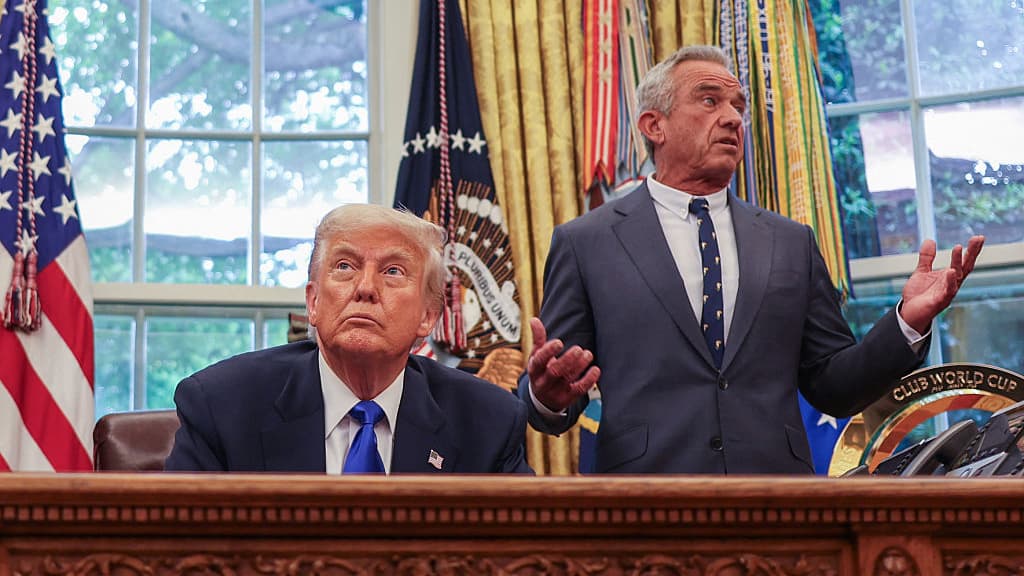
The MAHA movement gained national traction during the 2024 presidential campaign when Robert F. Kennedy Jr. endorsed Trump and brought his health-focused coalition into the Make America Great Again (MAGA) orbit. Kennedy, a former environmental lawyer and longtime vaccine skeptic, was tapped by Trump to lead the U.S. Department of Health and Human Services (HHS). Kennedy has since faced widespread criticism from doctors and scientists for his efforts to slash U.S. vaccine recommendations and research funding for vaccines. Still, Kennedy and MAHA retain national influence. An October survey found that American voters viewed Kennedy more favorably than many leading political figures including Trump, U.S. Vice President J.D. Vance, and U.S. Secretary of State Marco Rubio. A KFF poll in May found that 41% of U.S. adults support the MAHA movement. However, most U.S. adults surveyed said they didn’t agree with the Trump Administration’s handling of vaccines. Despite Kennedy’s attacks on the childhood immunization schedule, Americans across party lines have expressed overwhelming support for childhood vaccines.
Honeycutt, a close ally of Kennedy, had previously threatened to back some Democratic candidates in the midterm elections if Republicans failed to act on MAHA priorities, including tightening pesticide regulations and nutrition reform. Moms Across America Movement, the political advocacy organization she leads, endorsed 10 Democrats including Rep. Alexandria Ocasio-Cortez of New York, Sen. Cory Booker of New Jersey, and Rep. Chris Pappas, who won a highly contested bid for Senate in New Hampshire. Nine of the 10 Democrats endorsed by Honeycutt’s group won their races. (The group also endorsed dozens of Republican and independent candidates.)
“Trump promised [on the campaign trail] to go after pesticides, autism, childhood chronic illness. He shook Bobby Kennedy’s hand and promised to let him go wild. He did not fulfill that promise,” Honeycutt says. “He did not do anything substantial about pesticides. In fact, he made it worse.”
She points to an executive order signed by Trump in February that prioritizes U.S. production of glyphosate, a weedkiller that some research has linked to cancer. Many MAHA supporters want to limit glyphosate’s use. “I was disgusted” with the executive order, Honeycutt says. “It was a clear example of how this Administration is heavily influenced by Big Ag and chemical corporations.”
Since Trump took office, the U.S. Environmental Protection Agency has approved five pesticide ingredients that environmental groups say are PFAS, or perfluoroalkyl and polyfluoroalkyl substances—“forever chemicals” that could threaten people’s health. In April, only a minority of Republican House members voted to remove language from the Farm Bill that would have protected pesticide manufacturers from health-related lawsuits—more proof, Honeycutt says, that Republicans are “beholden to chemical companies.” (In the end, the pesticide liability protections were stripped from the bill, following support from a coalition of Democrats and MAHA supporters.)
“I think Republicans lost because they listened to the lobbying wing of their party instead of their base,” many of whom care about issues like pesticides, says David Murphy, a former fundraiser for Kennedy’s presidential campaign and founder of the food-system reform organization United We Eat.
Murphy was among a group of MAHA activists who recently published a MAHA scorecard that listed 42 promises that the Trump Administration had made to “make America healthy again.” According to the scorecard, Trump has kept zero promises, partially fulfilled 5 (including actions related to food dyes), and broken 37 of them.
“The MAHA coalition was instrumental in helping Trump win based on very specific promises he made to Kennedy…but he has failed to follow through,” Murphy says. “MAHA voters are upset across the country.”
The alliance between the MAHA coalition and Trump’s Make America Great Again (MAGA) movement has been a tenuous one from the start, strained in part by the close ties that Trump and his allies have to food and chemical industries. Even before the midterms, signs had been mounting of the alliance splintering. Calley Means, a top aide of Kennedy’s, resigned from his position in the Trump Administration on Oct. 22—less than two weeks before the midterms. Means reportedly quit in part over frustrations that the Administration was neglecting MAHA priorities, including work related to ultraprocessed foods. Means did not respond to TIME’s request for comment.
“I do think we are finally seeing MAHA become a victim of its own contradictions,” says Lurie of the Center for Science in the Public Interest. “It never made sense to expect that this Administration, with its antiregulatory and pro-business position, would have been able to execute on a platform that included restrictions of dangerous chemicals and pollutants. Why anybody expected that to work, I don’t really know.”
During a White House meeting in April between MAHA supporters and Trump officials, Alex Clark Voetberg, who hosts a popular MAHA podcast, warned Kennedy and top Trump aides that a sizable chunk of her audience had vowed not to vote in the midterms if Republicans didn’t take significant MAHA action by then, The Wall Street Journal reported. On Tuesday night, as Democratic wins began accumulating, Clark Voetberg wrote on social media that “MAHA moms stayed home and it could’ve swayed some of these races that were unbearably close.”
Kelly Ryerson, a MAHA supporter and advocate for pesticide regulation who also attended the White House meeting, says she wasn’t surprised by the Democrats’ victory. “When we met with the Administration in April, we knew this would happen,” she says.
Like most Americans, Ryerson says affordability and the war in Iran—which she describes as unnecessary and poorly planned given the “clear, foreseeable economic impacts” on the U.S.—were also issues on the minds of MAHA supporters going into the midterms. Honeycutt says MAHA proponents were also vexed by the Trump Administration’s failure to remove the COVID vaccine, which some MAHA supporters view as harmful, from the market.
Vaccines are an issue that fragments MAHA: many are skeptical of vaccines, though some support their use. Honeycutt, who has blamed vaccines for health issues in her children, says she hopes Democrats in power will “leave the vaccine issue to Kennedy.”
Several Democratic candidates who won congressional seats on Tuesday—including Dr. Annie Andrews, a pediatrician who flipped a South Carolina Senate seat—campaigned on strong pro-vaccine platforms. Andrews, like a number of other members of her party, has said she wants to impeach Kennedy over issues including his anti-vaccine agenda.
“If Dems want to continue to push vaccines, they are going to receive a tsunami of resistance” from some MAHA supporters, Honeycutt says.
Democrats, who are largely supportive of vaccines, have been seeking different common ground with the MAHA movement. In September, House Democrats listed “reclaiming MAHA” as one of their health care aims. Democrats who were chasing seats in Congress—including Dr. Abdul El-Sayed, who won a hotly contested Senate seat in Michigan—have made it a point to court MAHA voters by focusing on environmental and food-related issues.
“Abdul El-Sayed has talked a lot about getting pesticides out. We’ll see what he does,” says Honeycutt, whose group did not endorse him.
Honeycutt says she was deeply disappointed at the midterm losses of many MAHA-aligned Republican candidates, including Iowa gubernatorial hopeful Zach Lahn, who Kennedy stumped for, and Kansas Sen. Roger Marshall, who founded and chaired the Senate MAHA Caucus. But she says she is hopeful that Democrats will prioritize some MAHA issues, and that Trump will work with them to make changes happen. “Trump said he will work with the Dems. Let’s see. This could be a political paradigm shift, a real opportunity to get things done,” she says.
Ryerson says the midterms should serve as a reminder to politicians of the MAHA movement’s growing influence. “This could have so easily been different for this Administration. It blows my mind. They were unwilling to listen to us,” she says. “Maybe they didn’t believe we were so powerful.”
Leaders of both parties shouldn’t forget that with 2028 looming in the distance, says Murphy: “MAHA, and MAHA voters, aren’t going to go away.”
The post MAHA Supporters Say Trump’s Broken Promises Helped Democrats Win appeared first on TIME.