The Supreme Court ruling in April that weakened the Voting Rights Act set off fears across the South that Black voters would be discouraged from turning out to vote and that gains in Black representation could be reversed.
And so community networks went to work. Elders at Black churches invoked their memories of the civil rights movement. Students at historically Black colleges and universities led marches and set up political events. And organizers who had spent years warning about the threat of disenfranchisement sought to convince a new generation that its vote mattered.
It worked. On Tuesday, Black voters in the South showed up to vote at unusually high levels, and Black voters chose Democrats at higher rates than in 2024, according to Times Voter Trends. They played a pivotal role in elevating Democrats to state office or narrowing the margins in races once thought to be safely enshrined in Republican control.
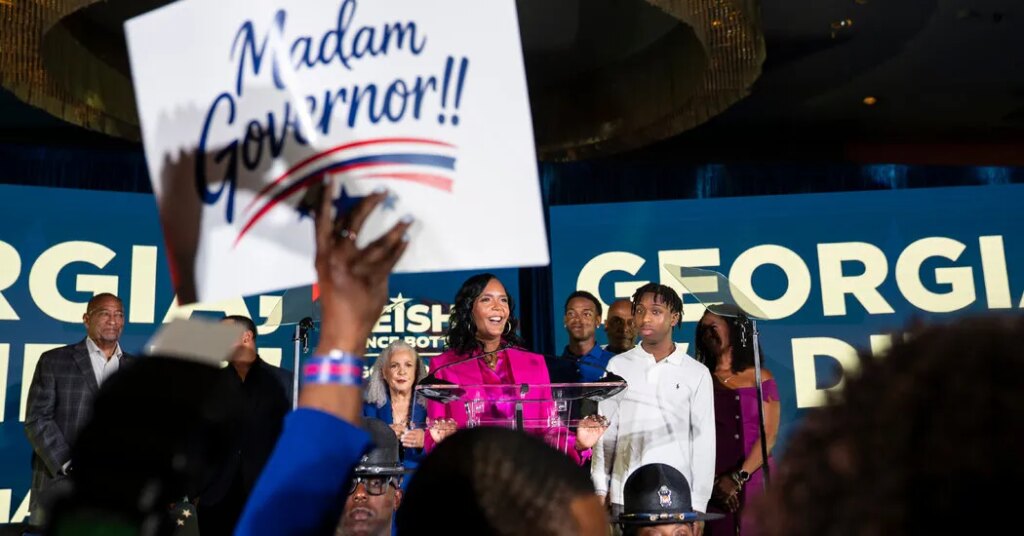
Georgia became the first state to elect a Black female governor. Alabama re-elected two Black representatives to the House. Mississippi could be on the verge of sending its first Black senator to Washington since the Reconstruction era.
Democratic candidates broadened their already overwhelming advantage with Black voters by successfully tapping into anger over not only the V.R.A. ruling but also high prices that strained budgets and the dismantling of programs aimed at bolstering diversity and Black institutions.
“Voters went above and beyond to come out to say: We’re going to elect a Congress that can begin the repair,” said Ashley Shelton, the executive director of the Power Coalition for Equity and Justice, which has been involved in the yearslong litigation over Louisiana’s congressional maps that led to the Supreme Court ruling. “We have to elect a Congress that’s going to stop this deterioration of our rights.”
In the House, Black voters supported Democratic candidates at a margin of roughly 80 percentage points nationwide, according to Times Voter Trends. That was a return to levels of support among Black voters that Democrats had enjoyed in 2020. But that support dipped in 2024, when Kamala Harris earned a smaller margin, at 70 points.
Representative Troy Carter, Democrat of Louisiana and a front-runner to lead the Congressional Black Caucus in January, said the caucus was on track to see one of its largest memberships in its history.
Early analysis of voter data showed that Black voters made up a larger share of the electorate in many Southern states than in 2024. Republican redistricting after the ruling sliced up districts in Tennessee, Alabama and Louisiana where Black voters had previously wielded significant power in choosing their representative.
Even in races where it did not change the outcome, high turnout among Black voters could provide Democrats with a pathway to whittling away at conservative strongholds across the South. About half of Black Americans live in the South, according to a 2025 Pew Research analysis.
The turnout also reflects the community networks that Black candidates and organizers relied on to help reach voters and connect frustrations with federal policy under the Trump administration to the effort to redraw district lines at both the congressional and state level.
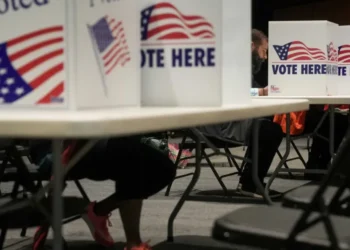
In the months before the election, those groups packed campaign events, knocked on doors for long-shot candidates and, perhaps most importantly, rallied first-time or reluctant voters to the polls.
“Anger alone does not build a movement. I think folks being able to really connect the dots is what really mobilizes people,” said Anneshia Hardy, a voting rights organizer who splits her time between Georgia and Alabama. “This has been brewing.”
The Democratic wins were shaped in part by white voters who shifted toward Democrats by 11 points in Mississippi, 16 points in Alabama and 18 points in North Carolina. But Democrats still managed to expand their already dominant margins among Black voters in Southern states, including Mississippi, Georgia, North Carolina, Alabama, Louisiana and South Carolina.
“I think people were just tired,” said Representative Shomari Figures, Democrat of Alabama, who held onto his seat even though Republicans changed his district to include more white, rural conservative voters.
While voters were clearly motivated by a number of factors, including high prices and federal policy, he said, “the redistricting effort was certainly a large piece of that pie.”
For some Black voters, the effort to undercut their vote weighed heavily, particularly in a region still shaped by the legacy of slavery and segregation.
“Permanent protections for voting rights, that’s what has been on my mind,” said Willie Williams Jr., 30, an artist and gallery owner in Birmingham, Ala. “It needs to be permanent and equal for everyone, especially for those who are most marginalized — Black people.”
In Georgia, Black voters helped elevate Keisha Lance Bottoms, the Democratic former mayor of Atlanta, to the governor’s mansion and keep Senator Jon Ossoff, the Democratic incumbent, in office. In Mississippi, Scott Colom, a district attorney, holds a razor-thin lead over Senator Cindy Hyde-Smith, a Republican, in a state where around a third of voters in 2026 were Black — one of the largest shares of Black voters in any state.
Both prospects had long seemed elusive.
“Living in Georgia and coming from Mississippi — two historically red states, but also two very Black states — representation matters,” said Conchetta Johnson, 39, who cast her first vote in a midterm election on Tuesday. “Growing up in a state with a complicated political history, a complicated racial history — that is the most important part for me.”
The Democratic wins were not comprehensive. The city of Memphis, where the highest concentration of Black Tennesseans live, is expected to be represented in the House entirely by Republicans after the General Assembly carved the city into three districts. Governor candidates in Tennessee and Alabama fell short, though their margins were narrowed to single digits.
Some Democrats questioned whether earlier or more robust investment in contests like the Mississippi or Louisiana Senate races could have made a difference this year. Representative Julia Letlow, the Republican in Louisiana, narrowly won, holding 50.9 percent of the vote over Jamie Davis, a Black Democrat and farmer.
The turnout, they said, was further proof that the region deserved the same opportunities and attention afforded to other states viewed as more easily winnable for Democrats. Both Mississippi and Louisiana have governor races in 2027.
“This is not going to be a one-and-done,” Mr. Carter said. “Buckle up, America. Our eyes are open.”
Sean Keenan, Bryant K. Oden and Caroline Soler contributed reporting.
The post Across the South, Black Voters Help Propel Democratic Wins appeared first on New York Times.