As the sun set in the remote south of Patagonia, the jagged shadows of Torres del Paine, the mountains at the heart of Chile’s iconic national park, stretched across the Las Chinas River Valley.
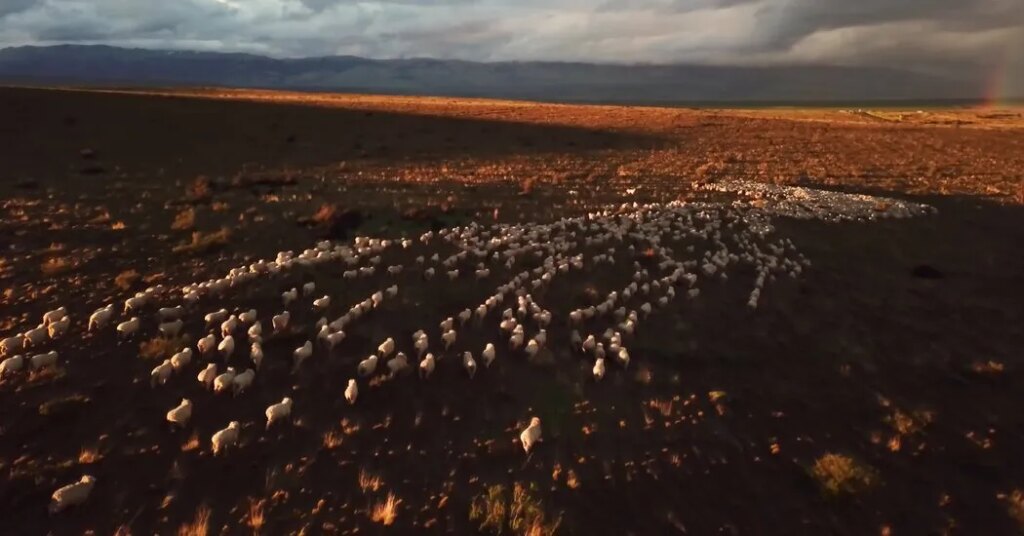
But another drama was playing out in the gloom on the valley floor, where our headlight beams were catching the woolly rumps of sheep as they bumped over tufts of grass.
With whistles and cries, baqueanos — Chile’s version of gauchos, or horseman-herders — hurried the flock across the Patagonian steppe, a wind-torn landscape of rain-soaked logs, wide lakes and lush pastures, toward a corner of the field for the night.
“I never get bored of this,” said Víctor Sharp, one of the baqueanos at Estancia Cerro Guido, the ranch and luxury lodge where I’d booked a three-day stay in early October.
Lighting another cigarette as dusk rolled across the plain, Mr. Sharp took a final lingering look at the mountains before climbing back into his jeep. Behind him, three sheepdogs leaped into the trailer and nestled around the carcass of a sheep, the latest victim of a puma attack.
For more than a century, estancias — the livestock ranches that dot the vast Patagonian wilderness — have played host to a bitter conflict between sheep farmers and pumas. Now, some estancias are awakening to the possibilities of conservation tourism, luring travelers from the backpackers’ trail to a broader experience of Patagonian culture.
Some already offer daylong ranching experiences and rudimentary overnight stays. Estancia Cerro Guido, however, the largest ranch in Chilean Patagonia, sits well ahead of this curve and demonstrates that a working ranch can also offer comfort.
The Working Life of a Ranch
About 65 miles north of Puerto Natales, a tourist town tucked among the fjords, Estancia Cerro Guido sprawls across 264,400 acres of grassland, shimmering azure lakes and snow-dusted peaks in the southern Andes.
In 2019, the Matetic and Simunovic families, two Chilean dynasties of Croatian descent, decided to turn their sprawling Cerro Guido property into something more than just a livestock ranch. While they aimed to maintain sheep and cattle rearing (and the baqueano tradition that came with it), they also wanted livestock to coexist with wildlife and tourism.
Now, two dozen baqueanos manage about 18,600 sheep and 1,800 head of cattle. Meanwhile, a hotel with a new dining area and 21 comfortable rooms cocoons guests from the wildness of the Patagonian weather. And a conservation foundation maintains the delicate balance between wild pumas and livestock.
The hotel’s luxurious, all-inclusive guest experience is almost entirely bespoke. Each evening, the next day’s outings are planned in a glass-walled room off the bar area with the help of a young and enthusiastic staff wearing boinas, or Patagonian berets. An expansive roster of activities immerses visitors in the working life of a ranch and serves as an enviable base from which to visit Torres del Paine National Park.
The other guests and I were made to feel as if we were part of the working ranch while also being regaled with the trappings of comfort and luxury. On a half-day horseback ride, I accompanied the stablehands as they checked in on newborn foals, and then sat down to admire the views with a charcuterie board in the shade of a lenga tree. On the first evening, I helped herd the sheep back to the ranch, before sitting down to a three-course meal.
The list goes on: There are archaeological expeditions to sites where arrowheads and weapons have been found, and treks across the valley to observe ancient rock art stamped in ocher. One afternoon, when the weather cleared, I hiked up to a rocky outcrop on the Sierra Baguales where, traversing a prehistoric lakebed, I found perfectly preserved segments of petrified wood littering the grasslands.
Later in the season, guests might find themselves helping shear the flock — or, on the conservation tour, checking camera traps or recording traces of pumas across the grasslands. The goal, I learned, is to ensure that visitors, however involved they choose to be, leave with a deeper understanding of Patagonia, its culture and its fragile equilibrium.
‘Culinary Traditions of Ranch Culture’
It’s a tagline here that Patagonia can offer all four seasons in a single day. The valley that stretches out before the hotel is often mottled by the shadows of clouds, with different parts soaked by rain, battered by hail and bathed in brilliant sunshine. After a day out in the elements, I whiled away my evenings watching the weather drift across the pampa from a cozy seat at the bar, or in the restaurant run by Claudio Fourcade, the hotel’s effervescent head chef.
After moving to Modena, Italy, in 2019, Mr. Fourcade discovered a love of curing meats and cooking on an open flame — two cornerstones of Patagonian cuisine. When the offer to join Cerro Guido came in 2023, it was a “match made in heaven,” he said.
“Our mission is to rescue the culinary traditions of ranch culture, with techniques like smoking, salting and fermentation,” he explained.
Mr. Fourcade and his team grow their fruit and root vegetables on the grounds; a greenhouse houses herbs, tomatoes and sprays of edible flowers for garnish. The smoky flavors are nurtured in a tiny smoking cabin behind the kitchen. Every evening, Mr. Fourcade feeds fruitwood into a burner that pipes fragrant smoke over the lines of bondiola, chistorra and prosciutto that hang in the dark.
The results are spectacular, and the three-course lunch and dinner menus change every day. During my stay, lentil and smoked sausage soup was served with heavy, flame-grilled churrasca bread, red pepper salsa and butter creamed with a shot of espresso and a sprinkling of matcha. For lunch on my first full day on the ranch, as I watched a spring storm batter the Sierra del Cazador on the far side of the valley, I was kept warm by pulmay, an arrangement of smoked sausage, fish, clams and pork in a salty broth. At another meal, lamb chops were accompanied by star-anise-infused carrot pickle, and honeyed, smoked pork ribs that held together just long enough to be loaded onto my fork.
Biodynamic wines from the Matetic family vineyards are paired with each course, and fruit from the cassis, red currant and sarsaparilla plants forms the base of the many inventive cocktails. On Wednesday and Sunday evenings, there’s a buffet dinner with barbecued meats and spit-roasted lamb, a Patagonian staple.
Reframing an ‘Inevitable Conflict’
When sheep were introduced to Patagonia in the late 19th century, they immediately thrived. With the British textile industry’s thirst for raw materials, estancias popped up across the steppe to capitalize on demand. By the 1920s, there were about two million sheep across the region’s pastures.
But an inevitable conflict arose. Southern Chile is the kingdom of the Patagonian puma (Puma concolor), the apex predator on the steppe. Estancias, at risk of losing 10 percent of the flock each year to puma attacks, employed leoneros, professional bounty hunters, to hunt them. (Until the 1980s, it was legal to hunt puma in Chile.)
“I knew Cerro Guido as an iconic estancia, but one where more than 80 pumas were killed every year,” said Pía Vergara, the founder and director of the Cerro Guido Conservation Foundation.
Ms. Vergara’s conservation project was incorporated into the estancia’s operations in 2019. Her foundation has trained 25 Maremma mountain dogs to live among the flocks and bark to ward off predators. Before long, puma attacks were down 51 percent. Neighboring estancias noticed, and have since purchased and trained their own dogs.
Since 2021, all guests have been invited on a half-day conservation tour as part of their hotel package. Shortly after arriving, I jumped into a jeep with two other guests and was handed a pair of binoculars as we headed out to the condorera, or condor’s roost, a 5,000-acre conservation area. The heads of sandy-brown guanacos, llama-like herbivores, protruded from among the thorny calafate bushes.
Not all guests spot pumas on their tours; none appeared for us. But the tantalizing prospect of seeing one of the elusive animals kept me and my fellow guests intently focused on the landscape. And as recompense, we saw other wildlife — including a ñandú, a flightless bird similar to an ostrich, as well as condors and eagles.
“We want to demonstrate as a foundation that it’s possible to do tourism in a respectful, responsible way,” said Ms. Vergara, who came to Patagonia five times herself before seeing her first puma.
The alternative, she explained, is an “extractive” form of tourism — in which you arrive somewhere and “do whatever you can to get your puma photo,” she said. “We want to show people how and why we are protecting these species.”
When I made it back from the conservation tour, I scraped the mud from my boots, ordered a glass of Baguales whiskey and, listening to hail tap against the wide window at the front of the bar, reflected on my time at Cerro Guido.
So far, I’d tried to track pumas (without great success), herded sheep, survived bursts of driving rain, ridden a jeep down muddy tracks and enjoyed three-course meals. What’s more, I had learned about the extreme fragility of this landscape and the urgent need to protect it.
It felt like I’d condensed Patagonian ranch life into a day. It felt like the new face of Patagonian tourism.
The post Under Patagonian Spires: Where Pumas, Sheep Herding and Fine Dining Collide appeared first on New York Times.