While a fire may be burning two states away, the smoke still arrives, settling over neighborhoods and dimming skylines. School administrators move recess indoors, and outdoor work slows or stops. And then there are the emergency rooms that receive an influx of patients who suddenly find themselves struggling to breathe.
Families who never see a flame still feel the effects of a wildfire, sometimes hundreds of miles away.
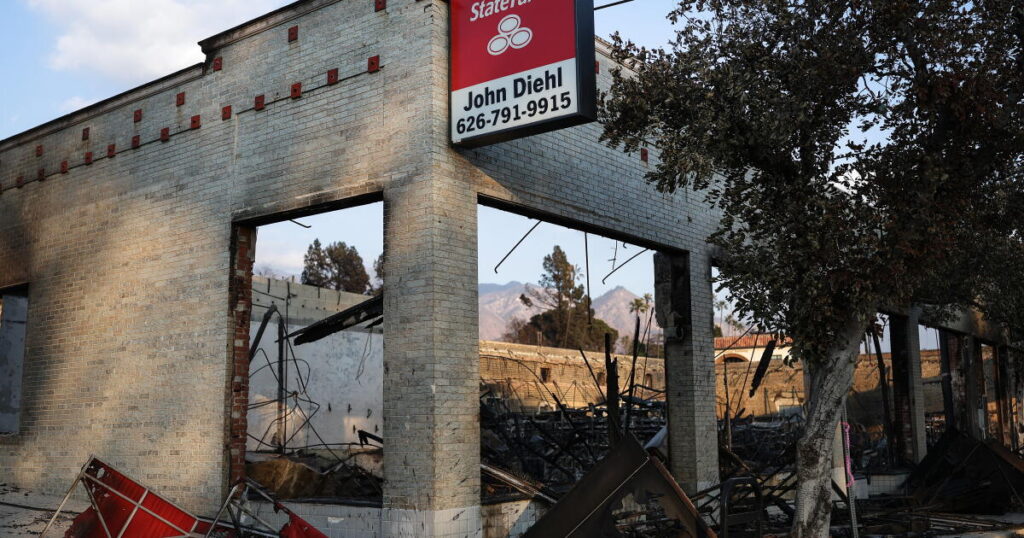
In the aftermath, accounting begins as we tally homes and businesses destroyed and assess the damage to roads, power lines, watersheds and timber. Later come the bills for recovery and rebuilding with staggering totals.
According to the 2025 U.S. Geological Survey, the annual cost of wildfire in the United States is estimated at roughly $424 billion when damage to infrastructure, private property and ecosystem services, along with emergency response and rehabilitation, is considered.
We’ve become very good at calculating the price of wildfire after the damage is done. Increasingly, research is also showing us what investments made before a fire can save. The challenge now is putting that knowledge to work, using evidence about avoided damages to guide where resources go and expand investment in forest health.
A recent study led by researchers at UC Davis provides a compelling example. Looking at nearly 300 wildfires that encountered U.S. Forest Service fuel reduction treatments across 11 Western states, researchers found that every $1 spent on treatments, such as prescribed fire and thinning, saved about $3.75 in wildfire damages. Altogether, the treatments were estimated to have prevented $2.8 billion in losses while reducing fire spread and severity. The analysis considered costs such as damaged structures and the health and productivity consequences of wildfire smoke.
In 2023, the U.S. Endowment for Forestry and Communities helped fund research by the California Council on Science and Technology and Blue Forest — a nonprofit conservation finance organization — examining the connections between forest management, wildfire smoke and human health. The work highlighted how wildfires affect both the communities in their path and those hundreds of miles away.
Forest management can also protect water quality by reducing the risk of high-severity fire. U.S. Forest Service research notes that severe wildfires can increase erosion and contamination in rivers and reservoirs, threatening drinking water and raising costs for downstream communities and utilities.
The endowment itself grew out of a challenge that crossed borders. Created in 2006 through the U.S.-Canada Softwood Lumber Agreement, the organization was established to benefit working forests and forest-reliant communities.
Twenty years later, North America faces another challenge that refuses to observe a border.
Evidence about the benefits of forest management creates an opportunity to rethink who invests in that work and why.
Healthcare organizations, insurance companies, water utilities, businesses and public agencies all benefit from more resilient forests. When research demonstrates the true costs they and communities can avoid, it strengthens the case for bringing more partners into the financing of prescribed fire, thinning and other proven forest management practices.
Strong forest markets are another part of that equation. Without buyers for the small trees and low-value wood removed during forest management, that material becomes an added expense. Markets for engineered wood, biochar and other emerging products can help offset those costs while supporting rural communities and forest-sector jobs.
Fire is a natural and necessary part of many forest ecosystems, and not every wildfire can or should be prevented. No single treatment or financial model will work everywhere. We need a portfolio of tools.
The evidence is giving us a clearer picture of what effective forest management can protect — not only homes and infrastructure, but also human health, clean water and local economies.
Public funding remains essential, but it cannot carry the full cost of wildfire mitigation alone. The opportunity now is to use what we know about avoided damages to guide funding decisions, attract additional investment and strengthen the forest markets that help make active management possible.
We increasingly know both what wildfires cost and what well-planned forest treatments can save. The question now is, “How do we put that knowledge to work?”
Pete Madden is president and chief executive of the U.S. Endowment for Forestry and Communities.
The post Shift the wildfire spending to damage prevention, not just reaction appeared first on Los Angeles Times.