The gamble paid off.
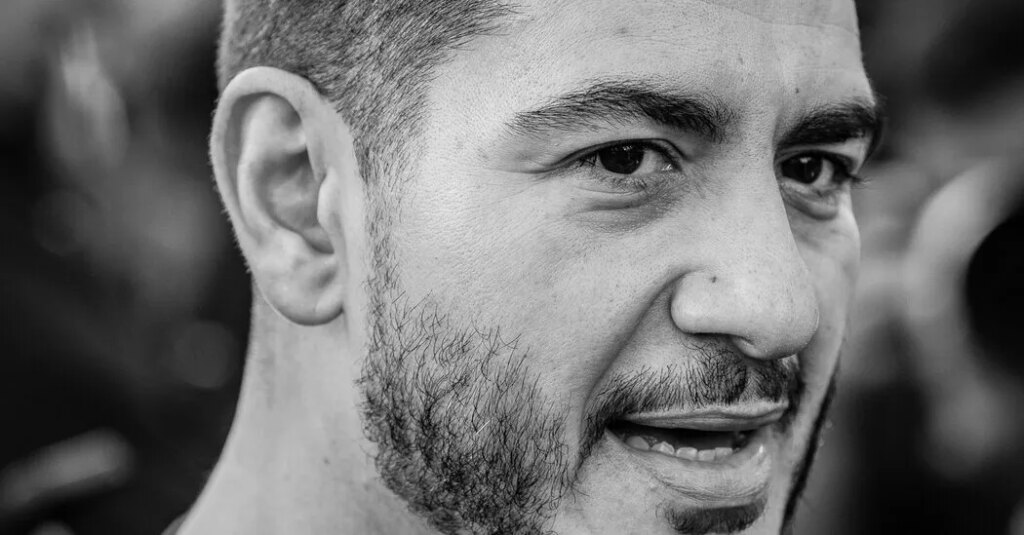
Abdul El-Sayed, a charismatic populist progressive who championed Medicare for all, abolishing Immigration and Customs Enforcement and ending military aid to Israel, won the Senate race in Michigan. After defeating Mike Rogers, a former Republican congressman who had been an F.B.I. agent, he will become America’s first Muslim senator. His victory — three years after Oct. 7 and 25 after Sept. 11 — is historic. It is sure to fuel the debate over how Democrats should wield their newfound power in Congress and what kind of candidate they should nominate for the presidency in 2028.
It’s too soon to say how that will shake out, and I expect his margin of victory to be interpreted endlessly. But El-Sayed’s win answers several questions. Can a Muslim American win in a statewide race? Can an out-and-out progressive succeed in a swing state? Can a Democratic candidate prevail without full-throated party backing and in the face of right-wing vitriol? Yes, yes and yes. More than anything, the result is an argument for the X factor in politics, the importance of skilled, talented candidates no matter their affiliation. Whatever else he was, El-Sayed was an exceptional package.
On paper, El-Sayed seems like an ideal Democratic candidate to defend a vulnerable seat in a swing state. He has brains (a Rhodes scholarship, an Ivy League medical degree) and brawn (high school football and college lacrosse). He is deeply religious, a devoted husband and a doting father to two little girls. To a party that has struggled to attract young men, he offers sculpted biceps and a genuinely jockish affect. He is handsome and telegenic, a natural communicator who fluently expounds on complex issues without sounding professorial. He has spent his life working on one of the party’s strongest and most important issues: health care. What’s not to like?
Yet for party leaders and centrist pundits, there was ample cause for reservation. El-Sayed’s policy positions were a few clicks to the left of the mainstream — encapsulated in his slogan “Money out of politics. Money in your pocket. Medicare for all.” — even if he embraced capitalism and does not identify as a socialist. Worse yet: Democrats were defending a seat they already held, crucial territory on a Senate map tilted toward Republicans. An insurgent left had won offices in deep blue states. Yet to roll the dice on an enticing but untested candidate in a crucial swing state election seemed, to many, like too big a risk.
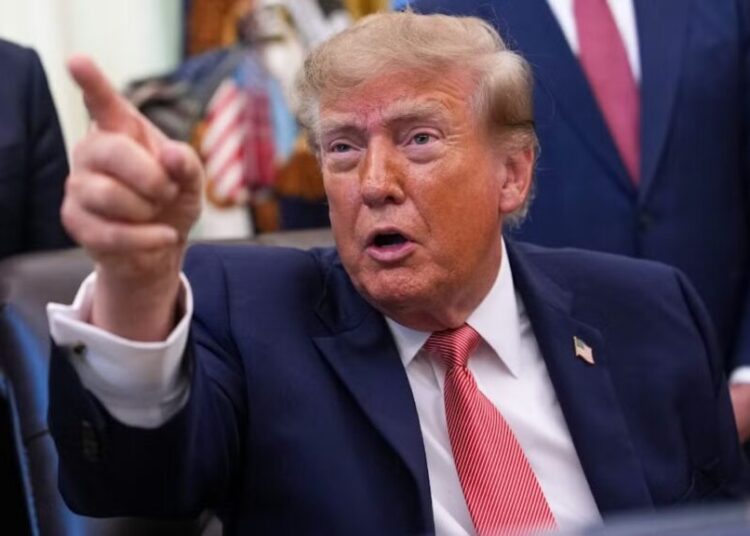
But El-Sayed was the subject of intense scrutiny not for his policies but for his religion and heritage as the son of Egyptian Muslim immigrants. Unsurprisingly, Republicans from President Trump — who called him a “jihadist Muslim Brotherhood member” and a “terrorist” — on down uncorked wildly racist attacks on him. Perhaps more surprising, some Democrats indulged in veiled versions of this ugly argument. “In my judgment, he does not represent the values of our party or our nation,” Jamie Metzl, a former foreign policy official in the Clinton administration, wrote on social media. Representative Haley Stevens, whom El-Sayed defeated in the Democratic primary, went a step further on Sunday and bizarrely endorsed his Republican opponent.
It is a grim fact that Islamophobia stains American politics. A poll conducted by Michigan State University last month found that more than 38 percent of respondents said that they would be somewhat or much less likely to vote for a Muslim candidate, with the much less likely ones making up most of the total. Indeed, in that poll the Democratic candidate for governor had a 12-point lead over his Republican challenger. El-Sayed’s lead there, by contrast, was less than three points — in a state with the nation’s second-largest population of Arab Americans, many of whom are Muslim. It was a discrepancy that suggested the limits of American inclusion.
And yet, he won. In this time of relentless division, El-Sayed’s victory is a reminder that politics is a business of individual men and women, with their own histories and ideas, persuading one voter after another to set aside the ways we are all different and focus on our shared dreams. It is telling that the two most successful Democratic politicians of my lifetime endorsed El-Sayed. Bill Clinton, the great triangulator, urged him to run for office after seeing him speak at his college graduation. Barack Obama, the party’s great conciliator, headlined an electric rally for him in the closing stretch. Irrespective of ideology, it’s clear that game recognizes game.
El-Sayed is evidently an elite political athlete. I can’t wait to see him spike the ball on the Senate floor.
The Times is committed to publishing a diversity of letters to the editor. We’d like to hear what you think about this or any of our articles. Here are some tips. And here’s our email: [email protected].
Follow the New York Times Opinion section on Facebook, Instagram, TikTok, Bluesky, WhatsApp and Threads.
The post In Michigan, the Gamble Paid Off appeared first on New York Times.