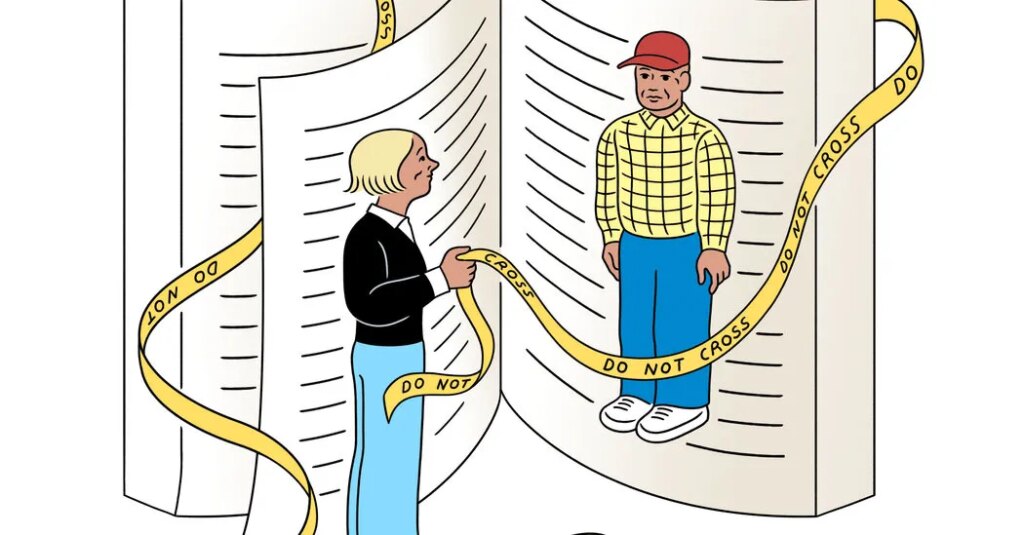
I have written a memoir that includes the story of a crime my mentally ill brother was convicted of more than 40 years ago. I have always had a very close relationship with my brother and am now overseeing his care in assisted living. The memoir, while delving into the circumstances surrounding the crime, is mostly about our relationship and its evolution through the years. I worked very hard on the book and have received very positive comments from mentors in the publishing world. It would mean a lot to me to get it published.
Here’s the problem: Do I ask my brother for permission to publish it? My parents and others who might have been hurt by the publication of the story are now gone. My brother is developing dementia and will most likely never be aware of the book’s publication if I do not tell him about it. He and I never talk about the crime (for which he was sentenced and incarcerated for several years), and I am afraid such a conversation might destabilize him. I have changed the names in the book.
What obligation do I have here? — Name Withheld
From the Ethicist:
We generally owe those we love fair warning when our choices may expose aspects of their private lives. If we write a book revealing intimate details of a sibling’s life, that sibling rightly expects to be informed. This doesn’t give the person a moral veto over publication. But we should consider their wishes, even if we ultimately don’t comply with them. And the best way to learn what they want is to ask.
Your brother’s condition doesn’t necessarily prevent him from expressing a meaningful preference. You might consult someone familiar with his care about whether discussing the book with him would pose the risks you fear. Even if it would, you should consider whether he would have consented when his ability to deliberate was less impaired. Having known him all your life, you may have a good sense of what he would have wanted.
The question is whether your reasons for publishing justify revealing things he would have preferred to keep private. One thing you might think about is whether you can tell your story while disclosing fewer sensitive details about his life. Because you have so much at stake, it would be wise to discuss these questions with someone who can consider his interests without sharing your hopes for the book. That your brother may never learn of its publication is a good reason not to upset him unnecessarily; it’s not a reason to disregard what he would have wanted.
A Bonus Question
I have lived in the same apartment building for more than 30 years and have long been friendly with a couple in the building who are now in their mid-70s. About two years ago, the wife began showing signs of dementia, and her condition has steadily deteriorated. Despite repeated concerns expressed by both building employees and by me, her husband refuses to acknowledge how unsafe her situation has become.
Although he sometimes works from home, she is left alone most days. She frequently appears in the lobby, disheveled, confused and convinced she is locked out of her apartment. When her husband returns, he impatiently points out that she had her keys all along. She has also wandered outside, putting herself at risk. Most recently, she appeared in the lobby wearing only a T-shirt.
I am appalled by her husband’s refusal to arrange supervision or explore available government services. When approached, he becomes irritated and insists that no help is needed. The couple has no children, and their friends who once visited regularly have not been seen in years.
I find it distressing to witness this woman’s decline and apparent neglect, but I am unsure how to intervene. Would it be appropriate to report the situation anonymously to Adult Protective Services? — Name Withheld
From the Ethicist:
It would, and you should. (You should also encourage the building’s management to make a separate report.) Being a good neighbor can involve respecting other people’s privacy; it can also involve recognizing when someone is vulnerable and at risk. The woman’s husband is having a hard time acknowledging her condition. But deferring to his denial can’t take priority over responding to her obvious needs.
Readers Respond
The previous question was from a reader who wondered if she should change her vacation plans to spend Thanksgiving with her mother. She wrote:
Last summer, my 85-year-old mother moved 3,000 miles to be closer to me. My sibling recently moved here, too. The move has had mixed results: My mother enjoys being closer, but I am not able to see her as often as she would like. She has made some friends, but she’s turned out to be needier than I thought. … She also came at a time when my difficult mother-in-law was in hospice. Our holidays and those of my spouse’s family here revolved around my mother-in-law’s care for a long and wearying time. She passed this summer. As you might expect, we’re all ready to relax. The concern here is that my sibling is going out of town for Thanksgiving with his family. My spouse and I would also like to go away for the first holiday we’ve had to ourselves in a long time! But there’s my mother. She’s pretending our proposed getaway is perfectly fine with her and that she’ll find some way to spend the holiday, but she’s clearly not looking forward to it. I’m torn between thinking, She’s a big girl, she’ll manage, and thinking that my spouse and I should suck it up this year and have Thanksgiving with my mother, and then maybe next year things will be different. I’d appreciate your thoughts. — Name Withheld
In his response, the Ethicist noted:
Your mother would be happier if you all spent Thanksgiving at home together; you and your spouse would be happier if you spent the holiday elsewhere. There’s no solution, then, that will be best for everyone. … Your mother has offered, in effect, to give up her preferred option so you can have yours. It would be a mistake to suppose that, because she’s your mother and you’re her child, her wishes must always come second. But it would also be a mistake to deny her the opportunity to make a generous choice. … Even with your mother’s blessing, you may spend Thanksgiving guiltily imagining her alone. Then again, if you cancel your trip out of a sense of duty, you may resent your mother, and she may sense it. What was supposed to be a gift could turn into a cheerless occasion for you both. … On balance, I’m inclined to think you should take the trip. … There’s a larger question here, of course. Your mother moved across the country with the expectation of having a fuller family life, and things haven’t worked out as she hoped. You and your sibling should consider how you can help her build a more satisfying life where she now lives. That’s a good deal more important than whether you’re together on the fourth Thursday in November.
(Reread the full question and answer here.)
⬥
We had a similar situation with my elderly mother. Now that she’s gone, I think we all feel glad for efforts we made for her and one another. Why not plan a Thanksgiving with your siblings and your mom on a different day to celebrate? Then you can go away comfortably after having a nice family time together. — Janet
⬥
You only have one mother, and she won’t be here forever. I say that from the perspective of someone who recently lost his mother and will be spending Thanksgiving without her for the first time. I can tell you firsthand, it hurts more than words can express. Make some time for her on Thanksgiving. Have an early dinner together, then head out on your trip in the early evening. A few hours’ delay certainly isn’t going to ruin your getaway, but the time you spend with your mom could mean the world to her — and someday, it may mean the world to you, too. — Douglas
⬥
I am a mother in a similar situation and have also encouraged my child not to be concerned about how I will spend Thanksgiving. What we are doing is having a Friendsgiving the Saturday before. Then we can have a celebration with one another, and friends who have conflicts on Thanksgiving can celebrate with us, too. It makes sense for people to use the longer time off to travel and then find another time to get together with the geographically closer people. — Jean
⬥
I agree with the Ethicist and faced that dilemma for 15-plus years. My parents relocated to a retirement home close to our family when they were in their 80s. My siblings all live elsewhere. I felt I was disappointing my parents each time we spent Thanksgiving or Christmas elsewhere — or took an extended vacation. None of my siblings wanted to travel here and leave their families on holidays. My parents both lived to 100! I am very thankful that they accepted our desires to travel, otherwise I know I’d have been resentful for many years.— Anne
⬥
As an older reader who doesn’t always get to see her daughter for the major holidays, I think the best way to resolve this dilemma is to take your mother’s suggestion to go on your trip — you need the break. But she would probably appreciate it a lot if you’d confirm to her that you will happily spend the next holiday (maybe Christmas?) with her. That way she will have something to look forward to, and you can enjoy your getaway without any guilt pangs. — Jennifer
The post Can I Publish a Memoir About My Brother’s Crime Without Telling Him? appeared first on New York Times.