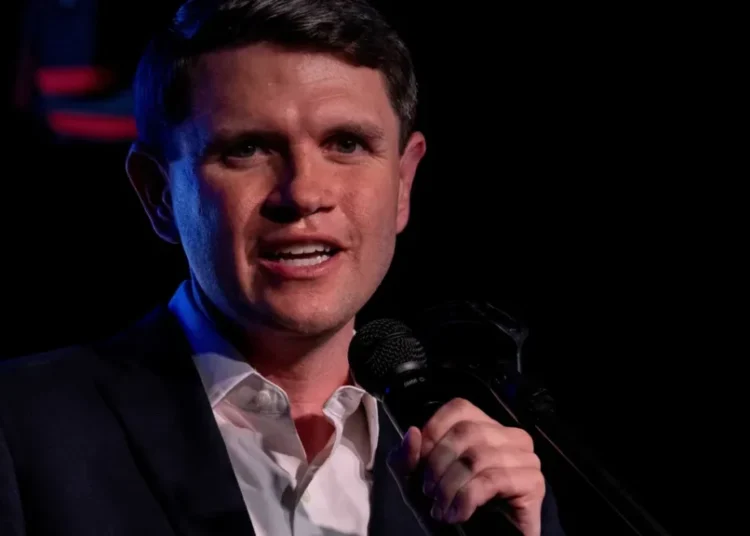
Democrats romped across America in the midterms, from Texas to the Great Plains. Times Opinion asked seven columnists and contributors to break down the implications of these results state by state, and what they mean for the future of American politics.
-
W.J. Hennigan on how Lindsey Graham’s legacy was destroyed
-
Peter Beinart on why Georgia’s Jon Ossoff looks so presidential
-
Michelle Goldberg on James Talarico’s triumph in Texas
-
Michelle Cottle on the fall of Susan Collins in Maine
-
Nicholas Kristof on how Sherrod Brown made Ohio a swing state again
-
E.J. Dionne Jr. on Adam Hamilton’s understated Kansas campaign
-
Frank Bruni on Roy Cooper’s relentlessly boring North Carolina success
W.J. Hennigan on South Carolina
Lindsey Graham’s legacy is in tatters.
For the first time this century, South Carolina has elected to one seat a senator whose last name isn’t Graham.
Darline Graham, the Republican incumbent, lost her bid to win the seat that for 23 years belonged to her brother Lindsey, until his death in July. Dr. Annie Andrews, the Democratic nominee, will instead head to Washington.
It’s a devastating defeat for the Republican Party, which hasn’t lost a Senate campaign in South Carolina since 1998. It’s a rebuke of President Trump, who urged Ms. Graham to run for a full six-year term after her brother’s death and visited South Carolina three separate times to galvanize voter support for her campaign.
But it also will be remembered as the race that dismantled Mr. Graham’s legacy as one of the most influential lawmakers in modern American political history — a stalwart conservative career that has endured a series of indignities in the less than four months since he died.
His sister’s campaign ran into trouble straightaway. In August, Ms. Graham struggled to answer a debate question about America’s national security interests in Taiwan and the South China Sea. It wasn’t a curveball — it’s a standard foreign policy question — but she fumbled it, confessing that “national security is not my thing.” In that moment, she exposed the stark contrast between her and the lawmaker she was seeking to replace. South Carolinians know Mr. Graham as a foreign policy specialist who made frequent overseas trips and knew world leaders by their first names.
As her inexperience became ever more evident, Mr. Graham’s own achievements began to unravel in Washington. On Oct. 9, Mr. Trump announced he struck a deal to purchase diesel from Russia, effectively nullifying measures established in a bill that bore Mr. Graham’s name. And the president continues to withhold support for Ukraine while publicly pressuring the president of Ukraine, Volodymyr Zelensky, to curb attacks on Russian infrastructure — two stances that Mr. Graham would find unconscionable.
Now, not only has Ms. Graham lost her brother’s seat, she also has been defeated by more than 20 percentage points in around a dozen counties. This is due in no small part to Mr. Trump’s miscalculation; there were other candidates, people who were not political novices, nor in mourning, whom he could have turned to after Mr. Graham’s death.
Wherever the blame lies, the result is the same: Ms. Graham will not carry Mr. Graham’s policy positions into the future, particularly involving support for Ukraine and on the Iran conflict, which likely Democratic majorities in the House and Senate would surely push to end. Here, again, is a dismaying twist for Mr. Graham, who was an unabashed war hawk who championed military intervention against Tehran for years.
Mr. Graham recognized early on that Mr. Trump was the future of the Republican Party. By 2018, he had shifted from an early critic to an ardent public supporter of the president. Over time, he became a frequent visitor to the White House and lent credibility to many of Mr. Trump’s foreign policy decisions.
For years, Mr. Graham was chastised by Republican and Democratic colleagues alike for holding his nose for a seat at the table — or, as he told my colleague Peter Baker over dinner in Washington, playing “the hand we’re dealt.”
On Tuesday, as many of Mr. Trump’s handpicked candidates face defeat, it appears that Mr. Graham’s choice to stay close to the president was a liability — and perhaps the true beginning of the end of the politician’s legacy.
Read more on Georgia, Texas, Maine, Ohio, Kansas and North Carolina.
Peter Beinart on Georgia
Jon Ossoff sure looks presidential.
A year ago, pundits declared Georgia’s Jon Ossoff the senator most likely to lose his seat. On Tuesday, he won decisively. National Republicans had largely conceded the race months ago. The Associated Press announced his victory shortly after the polls closed.
Mr. Ossoff won so decisively, in part, because he articulated a message that connected Democrats’ fear of authoritarianism to the broader public’s fear that life is unaffordable. It’s a message that other Democratic candidates, like James Talarico in Texas, have emphasized as well. It could prove central for the party again in 2028. And it boils down to one word: corruption.
Donald Trump’s shameless self-dealing made Mr. Ossoff’s argument easier. Since returning to the White House, according to news reports, Mr. Trump has made more than $1 billion from his family’s cryptocurrency businesses alone. Americans of both parties have noticed. A Washington Post poll last month found that one-third of Republicans and independents who lean Republican now believe Mr. Trump is enriching himself in office, while a Fox News poll ranked corruption as voters’ top concern nationally.
Mr. Ossoff courted Republicans by speaking in bipartisan terms: He acknowledged that Mr. Trump didn’t invent political corruption. “Yes, the system really is rigged,” he said. “But he’s not unrigging it. He is re-rigging it for himself.”
Of course, it helped that Georgia Republicans chose a weak nominee. But Mr. Ossoff didn’t only benefit from a favorable political environment. He also spoke differently from the Democrats who challenged Mr. Trump two years ago.
Authoritarianism was a central theme of Kamala Harris’s failed presidential campaign; public graft fell further down her list of concerns. That cost her. Exit polls found that Ms. Harris won 80 percent of voters who called democracy their most important issue, while 81 percent of voters who prioritized the economy backed Mr. Trump. In Ms. Harris’s 2024 Democratic National Convention acceptance speech, she used the words “freedom,” “democracy” and “liberty” a total of 15 times. She didn’t mention “corruption” once.
By stressing corruption, in contrast, Mr. Ossoff made Mr. Trump’s assault on the rule of law tangible. He showed voters how democracy and economic distress are intertwined. On the campaign trail, he argued that “corruption is why nothing works for ordinary people. It’s why you pay a fortune for prescriptions. It’s why your insurance company gets away with denying your cancer treatment after you paid your premiums for decades.” In this way, he showed that the president wasn’t just transgressing abstract norms of good governance. He was helping the rich and powerful rip Americans off.
In that sense, Mr. Ossoff was following a path forged by other parties trying to defeat aspiring autocrats. Peter Magyar, who decisively ended Viktor Orban’s 16-year rule in Hungary this spring, gained national prominence with a 2024 viral video in which he accused Mr. Orban of turning the government into a “family-owned business.” The good-government group Democracy International reported that Mr. Magyar’s campaign “reduced complex democratic concerns into a simple proposition: ‘Corruption has a cost.’”
Similarly, in Serbia this September, student protesters angry over the long and corrupt run of President Aleksandar Vucic voted in a new era. “The focus of the protest was on corruption, government corruption,” Heather Conley, a senior fellow at the American Enterprise Institute, told PBS. “We’re seeing that issue become a real global issue.”
If Democrats retake Congress, they’ll have a chance to use congressional hearings to lay the groundwork for making corruption a key theme again in 2028. Mr. Ossoff could make it the centerpiece of a presidential campaign. Given how much power the ultrarich now wield in Washington, and how many ordinary Americans are struggling simply to get by, it won’t be hard to convince Americans that JD Vance, Marco Rubio or any of Mr. Trump’s likely Republican successors are tainted by his administration’s epic graft.
The hard part will be convincing them that Democrats — who even Mr. Ossoff concedes are viewed as corrupt themselves — can be trusted to behave differently if they regain power.
Read more on South Carolina, Texas, Maine, Ohio, Kansas and North Carolina.
Michelle Goldberg on texas
Finally. FINALLY. Texas is blue.
When I met Gina Hinojosa in September, her race to become Texas’ first Democratic governor since Ann Richards seemed like a wildly long shot. At the time, Hinojosa told me that a fifth of the state still didn’t know her name, and she was being outspent 6 to 1. Given how often Texas has broken Democratic hearts, I asked her why we should believe that the state could really flip. Hinojosa said it was because Texas Democrats finally had a team.
When Beto O’Rourke ran for Senate in 2018, he was on his own, without a strong slate of statewide candidates. But this year, Hinojosa was running alongside James Talarico, the young, dynamic Senate candidate, and, for the first time in Texas history, Democratic candidates in every statehouse and congressional district. “We’re ready,” she said.
So was Texas. If Talarico alone won on Tuesday night, it would have been an earthquake. Texas hadn’t elected a Democrat to the Senate since 1988. In 2024, Donald Trump won the state by nearly 14 points. But now that Talarico and Hinojosa have both won, along with other Texas Democrats up and down the ballot, it’s hard to overstate the scale of the psychological blow to Republicans. Texas, after all, has long been a dependable political anchor for Republicans, much as California is for Democrats. “Texas is the foundation of the Republican Party in America,” the state’s right-wing comptroller, Don Huffines, warned in a post on X last week, amid an early vote showing Democratic strength. “When the foundation breaks, it ALL falls apart.”
Huffines didn’t know how right he was. On Tuesday, the foundation of the Republican Party dropped out all over the country, leading to victories in contests Democrats barely dreamed of winning — not just Kansas and Ohio, but South Carolina. Still, that shouldn’t overshadow what brilliant races both Talarico and Hinojosa won.
Talarico waged one of the best campaigns in the country, trying to inspire cynical voters with a politics of loving thy neighbor. Both he and Hinojosa, in their different ways, promised to bring together deeply divided communities to wrest back power from predatory billionaires. Kicking off his Senate campaign in Round Rock, Texas, last year, Talarico said, “The people at the top — the Elon Musks, the Rupert Murdochs, the Mark Zuckerbergs of the world — they spend so much time and energy keeping us angry and divided because our unity is a threat to their wealth and their power.” On the trail, Hinojosa often said that the race turned on a single question: “Does Texas belong to the people, or is this the billionaires’ world and we just live here?”
The Republican campaigns had their own answer. Talarico’s opponent, Texas’ attorney general, Ken Paxton, is almost comically corrupt, and Elon Musk, the world’s richest man, spent more than $160 million trying to drag him across the finish line. Republicans ran gross A.I.-generated ads meant to demean Talarico and terrify voters. One depicted him wearing a dress and singing about trans kids. Another showed him defacing a Bible with crayons.
While Musk gave much less to Greg Abbott, he was still the governor’s single biggest donor this cycle. And part of the reason Abbott was vulnerable was because he’d enthusiastically welcomed tech companies to build data centers in the state. In Texas, Hinojosa told me that A.I. is one of the forces making people feel as if their lives are out of control, and data centers are the physical manifestation of that. They are a “demonstration of the governor doing the bidding of moneyed interests and leaving the people to fend for themselves.”
It will take some time to fully digest the lessons and consequences of the staggering rout Republicans suffered on Tuesday. But in addition to being a repudiation of Trump, it was also an overwhelming rejection of the tech barons he’s allied himself with. Talarico and Hinojosa’s campaigns were leaps of faith, premised on the conviction that Texans wanted something more than billionaire bootlicking and hatreds amplified by social media algorithms. “We have a lot more work to do if we’re going to defeat the billionaire megadonors who have taken over this country,” Talarico said back in Round Rock in September of 2025, when his underdog campaign had just begun. “But this is an incredible start.”
Read more on South Carolina, Georgia, Texas, Maine, Ohio, Kansas and North Carolina.
Michelle COTTLE on MAINE
It was time for Susan Collins to go.
Well, whaddaya know. Looks like not even Susan Collins was buoyant enough to escape President Trump’s red undertow.
After 30 years of defying even extreme national political forces, the last Republican senator holding on in a blue state has wiped out like a drunken surfer. Her defeat in Maine drives home how national politics have trumped local concerns, even for lawmakers with strong personal brands and a deep store of good will among their electorates. Especially when that reputation was increasingly built on nostalgia and wishcasting.
A relic of the dying strain of independent, northeastern Republicanism, Ms. Collins made Democrats crazy in a way few other Republicans manage. They seethed at what they saw as her empty expressions of concern about her party’s increasing radicalism. They argued that on those occasions when she voted against her party, as with the One Big Beautiful Bill Act, it was theater that didn’t make a real difference. And she kept winning, even as she accumulated baggage in the Trump era, including her vote to acquit the president in his first impeachment trial and her votes to confirm Supreme Court Justice Brett Kavanaugh and, more recently, Robert F. Kennedy Jr.
Until now. She was dragged down by the economic pain her state has suffered at the hands of Mr. Trump’s policies, most vividly his preposterous tariff war with Canada, which hit Maine hard.
Not to dismiss the Everyman charms of the new Democratic senator-elect, Troy Jackson, but this race was never about him. He was little more than a placeholder, a late-in-the-game substitute for Graham Platner, the oyster-farming populist who thrilled progressives until his candidacy collapsed beneath a pile of scandal and regret. Digging through the rubble of the primary, party elders dusted off Mr. Jackson, a former president of the State Senate who had placed third in the primary for governor.
A former logger, Mr. Jackson had more authentic working-class cred than Mr. Platner, which did not entirely redound to his benefit. He was a little too rude and rough around the edges for some people’s taste, with all the charisma of cottage cheese. Even his campaign team didn’t like his style and kept him almost hidden for much of the race.
But he avoided major missteps, and he did well in his debates against Ms. Collins — even if his telling her to “shut up” raised questions about his abrasive manner and attitude toward women. All things considered, Mr. Jackson was solidly meh. But it turned out that meh was enough to get him over the finish line. And once in the chamber, he could easily prove himself. His time in the state legislative trenches, including leadership, should give him a bit of a head start, and it’s worth noting that an electrifying campaigner and a successful lawmaker are not necessarily the same thing.
With Ms. Collins’s departure, the Senate is losing its last Rockefeller Republican. Not that the absence is likely to be keenly felt. For all her self-congratulatory moderation, the Maine senator made increasingly little difference in the hyperpolarized chamber, something even she recognized. During one of her debates this fall, when asked for an example of a time her vote against her president and party changed the outcome, she came up empty. In the end, even her vaunted independence gave way to Mr. Trump’s heavy hand.
In the Republican Senate conference Ms. Collins is leaving behind, the conditions for cross-aisle deal making have rarely looked bleaker. The only pragmatic, independent-minded moderate left standing is Lisa Murkowski. And for all her Alaska grit, there’s not much Ms. Murkowski can do by her lonesome — unless the bipartisan spirit suddenly moves the president. Which pretty much guarantees we’re in for more partisan nastiness and dysfunction until 2028 rids us of Mr. Trump’s toxic presence and his party can, hopefully, start easing its way back toward sanity.
Read more on South Carolina, Georgia, Texas, Ohio, Kansas and North Carolina.
Nicholas Kristof on Ohio
Sherrod Brown saw what the rest of the Democratic Party couldn’t.
Democrats haven’t always appreciated Sherrod Brown’s political instincts; after all, he lost his Senate seat from Ohio in 2024. But his election this time confirms that he knows something about winning states Republicans expect to conquer. He doesn’t talk down to the working class, he champions their interests, and he mostly sidesteps the culture wars. Those will be crucial skills if Democrats are going to have a chance at winning back the White House in 2028.
While he is reliably liberal on social issues, Brown’s focus has always been on economic concerns. He kept the faith with private sector labor unions and mostly avoided the woke language that alienated so many working-class Americans.
He’s a Yale graduate but doesn’t come off as elite. Even his forever rumpled presentation, as if he had shopped at Goodwill and worn his clothes overnight, endeared him to those suspicious of anyone too Brooks Brothers. Although he lost in 2024, he outperformed Kamala Harris, the Democratic presidential nominee, in Ohio — and making Ohio competitive for Democrats is an important feat.
Throughout the industrialized world, the broad disenchantment with politicians and elites has mostly bolstered populists from the far right — from the AfD in Germany to the National Rally in France to MAGA Republicans in the United States. But populism does not inevitably mean the ethnonationalist right.
Brown’s populism has generally been sensible, and he was way ahead of the curve in warning about what is now called the China shock — the way trade with China would devastate many manufacturing towns. Many liberals like me were free-traders, and Brown was prescient about the risks of factories closing and the trail of misery that would cause.
This election cycle, many Democratic candidates followed the populist path he blazed, veering away from pronouns and identity issues while hammering Republicans on pocketbook issues like the cost of gas and diesel. James Talarico, Jon Ossoff, Roy Cooper and a number of others pursued a very grounded economic populist agenda, railing against President Trump’s economic record and castigating corruption, all while underscoring their local authenticity.
The critique of Brown in the 2026 Ohio election, other than that he was a lefty who would help advance a national Democratic agenda that many Ohio voters are suspicious of, was in part that he wasn’t populist enough. To some voters, he was a forever politician who represented the status quo that they feel has betrayed them.
It’s true that Brown, 73, has been in politics for more than half a century. He was first elected to the Ohio legislature at the age of 21 and then moved to the House of Representatives in 1992 and to the Senate in 2006. But he has managed to tilt against the establishment that he long was part of. A hot issue in Ohio this year was data centers, and Brown made his skepticism about them a central issue in his campaign, criticizing his opponent Jon Husted for previously supporting incentives to construct them.
As long as inequality persists and the economy underperforms, populism will be with us, I suspect — here and in Europe. I fear that liberals worldwide have been too quick to surrender the populist ground to charlatans on the right. And here in the United States, becoming the party of the more educated isn’t a promising path, considering that less than 40 percent of Americans over the age of 25 have a four-year college degree. Six out of 10 Americans see themselves as working class, and many are suspicious of politicians generally. (I think they have a right to be, considering how poorly politicians have served them over the past half-century.)
Democrats have made progress in this election, and it’s heartening that last month a majority of likely voters said that they once again see Democrats as the party of the working class. In the new Congress, Brown won’t be an isolated liberal populist voice, as he often was in the past; he will have others who think as he does. May the rest of the Democratic Party offer them newfound respect, for in a populist world the United States and other countries will be better off if that terrain is occupied by a vanguard of social liberals who are also sensible economic populists.
Read more on South Carolina, Georgia, Texas, Maine, Kansas and North Carolina.
E.J. Dionne Jr. on Kansas
Adam Hamilton showed Democrats that centrism is still a winning strategy.
Blue Kansas? Really?! Yes.
Remarkably, Adam Hamilton’s victory over the incumbent Republican senator Roger Marshall became not only possible but likely as Election Day neared, even though the last time a Democrat won a Senate election in Kansas was 1932, in Franklin Roosevelt’s Great Depression landslide.
True, Kansas has elected Democratic governors and has one now. And, yes, the collapse of President Trump’s popularity and the standing of the party that bows to him played a big role in this result.
But Mr. Hamilton would not have won without, well, Mr. Hamilton. His specific shade of blue — resolutely critical of the president and his lack of “decency” but also religious, moderate and open to all — enabled him to entice converts. It will be a tempting model in other places Democrats have long written off.
Mr. Hamilton, the pastor of the largest Methodist church in the country, conveyed a happy warrior vibe, his communication skills honed by decades in the pulpit. His comfort with Republican voters came naturally: He notes that about a third of his congregation identifies with the G.O.P., as Mr. Hamilton did at times before this election.
In Mr. Marshall, he was blessed with a weak incumbent. The New York Times reported in September that Mr. Marshall, as an obstetrician-gynecologist, had sued more than 700 patients with outstanding bills, which became the subject of a tough Hamilton ad.
These dynamics played out amid a broad farm state rebellion against Mr. Trump’s tariffs and his decision to go to war with Iran. Foreign countries’ retaliation against tariffs cut off important markets for farmers, who have been hit hard by rising diesel and fertilizer prices. The result: Democrats discovered this year that they can make inroads in political terrain long seen as hostile.
In 2018, another anti-Trump midterm election year, Democrats found they could reach across old divides by nominating military and national security veterans — particularly women such as Abigail Spanberger of Virginia and Mikie Sherrill of New Jersey, now the governors of those states. This year, they sent a message of openness to religious voters with candidates such as Mr. Hamilton and Texas’ James Talarico. Both parried critics on the religious right by speaking about the moral demands of Christianity, particularly on behalf of the poor.
What will that mean when Mr. Hamilton enters the Senate? He will probably make common cause with senators such as Raphael Warnock, a fellow minister, and pragmatic Democrats such as Chris Coons and Tim Kaine; Mr. Hamilton mentioned these three when I spoke to him in September. He has said that tackling big issues such as the deficit and Social Security will require Republicans and Democrats to work together.
“The Gospel isn’t just about a personal faith,” he said. “It’s about the call to be in the world.”
I reached Mr. Hamilton by phone on Election Day and asked him what those words meant for the kind of senator he’d like to be.
“I realized something this morning,” he replied. “There were a few years in elementary school when I was bullied. And that has always made me want to speak up for people who are being bullied. So as a senator, I want to stand up for people who are being hurt by what’s happening in Washington on matters like immigration, health care, nutrition benefits and on our farms.”
Standing up to bullies is a calling fit for the moment. So is taking on some of the country’s big problems. His ecumenical approach might even produce results.
Read more on South Carolina, Georgia, Texas, Maine, Ohio and North Carolina.
Frank Bruni on North Carolina
Roy Cooper ran a relentlessly boring campaign. It’s a winning strategy.
By the time Election Day rolled around, Roy Cooper’s victory in the Senate race in North Carolina, which flipped a seat in the chamber from Republican to Democrat, was almost a foregone conclusion, given how early he took a lead in polls, how consistently he held on to it and how increasingly hostile to Republicans the midterm climate seemed to be.
But make no mistake: This is a purple state, a dab redder than it is blue, and it hadn’t chosen a Democrat in a Senate or presidential contest since 2008, when Barack Obama came out on top here. It was anyone’s to win before Cooper kicked off his bid. And his triumph speaks to a whole lot more than good timing.
“The national environment may have spotted Cooper a few points,” Asher Hildebrand, a Duke University professor who closely tracks North Carolina politics, said. “But the rest of the margin is a story of candidate quality.”
As much as any midterm race, Cooper’s affirmed the power of the right person waging the right campaign. A former two-term governor of North Carolina who had been the state’s attorney general for four terms before that, he had near-universal name recognition, so he didn’t have to waste time or money introducing himself to voters. He had been vetted thoroughly, so there were no private scandals, personal demons or other such drama in store.
He could focus on his chosen message, which is what he did — relentlessly, unerringly, with the confidence that he didn’t need sweeping exhortations, catchy slogans or viral memes to draw attention. His unelectric rallies were billed as the Make Stuff Cost Less tour, during which he spoke in prosaic terms about quotidian anxieties: access to health insurance, the cost of groceries, utility rates. Many Democratic candidates identified affordability as voters’ key concern. Few lived, breathed and droned on about it the way Cooper did.
“Low risk.” “Workmanlike.” That’s how Hildebrand described Cooper’s campaign, and he meant those terms as high compliments. “Voters like his brand of authentic, no-nonsense competence, which is refreshingly idiosyncratic in this age of partisan flamethrowing,” he said.
Cooper’s Republican opponent, Michael Whatley, was unknown to most North Carolina voters when he became the Republican nominee in March. He had never held elected office. He had no record to run on. But he couldn’t turn that inexperience to his advantage by styling himself as a fresh-faced, untainted, anti-establishment insurgent because he’d worked for many years as a lobbyist — and was on the ballot essentially because President Trump had put him there.
That made him “the classic Trump loyalty candidate,” said Michael Bitzer, a professor of political science and history at Catawba College in Salisbury, N.C. And loyalty was liability as the race progressed and Trump’s popularity continued to sink. According to an Elon University poll several weeks before Election Day, 34 percent of North Carolina adults approved of Trump’s job performance while 57 percent disapproved. Perhaps a charismatic Republican untethered to Trump could have transcended that ill will. A phlegmatic toady like Whatley was doomed.
Especially given his uncommonly unflappable and durable rival, who said to the electorate: You know me. You trust me. I’m not here with bitter grievances and gaudy promises. I’d just like the chance to lower your electric bill.
Read more on South Carolina, Georgia, Texas, Maine, Ohio and Kansas.
Michelle Goldberg and Nick Kristof are Times columnists. Peter Beinart, Frank Bruni and E.J. Dionne Jr. are contributing Opinion writers. W.J. Hennigan writes about national security for Opinion. Michelle Cottle covers national politics for Opinion.
The Times is committed to publishing a diversity of letters to the editor. We’d like to hear what you think about this or any of our articles. Here are some tips. And here’s our email: [email protected].
Follow the New York Times Opinion section on Facebook, Instagram, TikTok, Bluesky, WhatsApp and Threads.
The post 7 Writers on How the Blue Tsunami Swept America appeared first on New York Times.