And the winners are …?
Yes, you’re dying to know, and I’m dying to know — but we don’t know yet. Sometime today, though, we should have a pretty good idea whether the “blue wave” the polls have predicted has actually materialized in the U.S. midterm elections and given the Democrats control of one or both chambers of Congress, or whether Republicans will prevail.
One thing we do know already is that turnout appears to be high. American voters care about this election, a lot. Despite the efforts of some Republicans, the midterms have become all about President Trump for many voters.
We’ve collected the latest for you, as of the time this newsletter lands in your inbox. You can also follow along here for the most recent updates. (I’ll do the same!)
In voters’ hands now
It has been a divisive campaign and, at times, a nasty one.
Democrats have blamed the president and his signature policies — especially tariffs and the war in Iran — for the fact that many Americans are struggling to make ends meet.
Republicans have tried to transform the election from a referendum on President Trump into a choice between their party and their Democratic opponents, whom they’ve tried to cast as far-left radicals.
Trump, for his part, has repeatedly urged his supporters to act as if his name is on the ballot, insisting that Republicans will win if his base turns out to vote.
Later today, we’ll see who prevails.
My colleague Lisa Lerer explains in the video below how voters are weighing the effects of Trump’s agenda.
What we know so far:
-
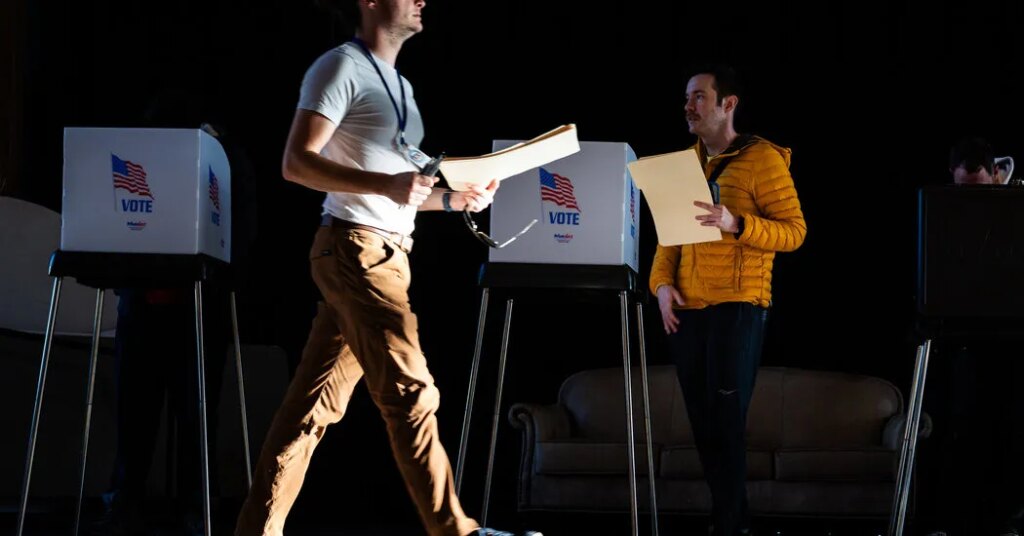
High turnout: The polls are still open, but many millions of votes have already been cast. In each of the major Senate battleground states, including Texas, North Carolina and Michigan, early turnout has exceeded the levels of the last midterm election.
-
Lots of money: These are the most expensive midterm elections, as measured in spending on political advertising, since ad tracking began in the 2018 midterms. Elon Musk alone contributed $474 million to Republican groups, candidates and their allies. That’s more than any donor has ever spent in an election cycle.
-
Worries about foul play: Trump has kept up a sustained attack on the integrity of U.S. elections. On Monday, he offered a $1 million reward for information that led to an election fraud conviction, without providing any details. Many election officials and Democrats worried that the offer could lead to tensions at polling stations and baseless challenges to the results. The administration has tried to prove that many noncitizens have cast ballots, but few people have been charged with offenses related to voting fraud.
-
Be patient: It could be days or weeks before the full results are known, particularly in races that are close. In 2024, it took three weeks to determine the winners in California’s closest House races.
Here’s more to read while we’re waiting:
-
A tricky task: More than 400 Times reporters, editors, data analysts, video journalists and photographers are covering the midterms. They’re working to understand a large country with voters who are complicated, and sometimes contradictory. Want to read more about how our journalists are going about it? Click here.
-
The new swing states: Control of the Senate will hinge on the outcomes in the battleground states of Alaska, Iowa, Kansas, Maine, Michigan, Minnesota, Nebraska, New Hampshire, Ohio, South Carolina and Texas. Here’s when to expect results.
Our U.S. politics coverage is still free in The New York Times app for a limited time.
MORE TOP NEWS
THE MIDDLE EAST
-
As Trump weighs a renewed attack on Iran after the U.S. midterm elections, Gulf Arab officials fear that the fighting will be worse this time around.
-
The U.S. military carried out limited strikes on Qeshm Island in Iran, according to U.S. officials who described them as a defensive measure.
-
Israel shared intelligence with the U.S. asserting that Iran was considering using chemical weapons. Some U.S. officials were alarmed, others skeptical.
-
Trump said that the U.S. would cut aid to Israel at the end of the year.
-
After Israel’s election, opponents of Benjamin Netanyahu are facing a dilemma over whether Arab lawmakers should be asked to join a new government.
OTHER NEWS
-
A Russian attack that killed at least 31 Ukrainians at a school distributing medicine and food could be among the deadliest of the entire war.
-
Bomb threats targeted at least seven planes in Europe. All of the flights landed safely, and officials said that no explosives had been found.
-
Poland beefed up security at its border with Russia in response to what it called “disturbing movement” that could be preparations for “armed incursions.”
-
On a Caribbean tour, King Charles expressed “profound personal sorrow” and “horror” over Britain’s role in the trans-Atlantic slave trade.
-
Drones are the top killer of civilians in Sudan’s war this year, according to the U.N.
WHAT ELSE IS HAPPENING
-
Ian Berry, the only photographer who documented the 1960 Sharpeville massacre, a turning point in the struggle against apartheid in South Africa, died at 92.
TOP OF THE WORLD
The most clicked link in your newsletter yesterday was about the Canadian comedy show “This Hour Has 22 Minutes.”
SPORTS
Hockey: Norway, Sweden and other countries said they would refuse to play Russian teams, as opposition to Russia’s return to international hockey grew.
Football: The Tenerife striker Jesus de Miguel died after colliding with an opponent during a match.
MYSTERY OF THE DAY
Do animals grieve?
Jane Goodall once watched a chimp stop eating and socializing after the death of his mother. African elephants have been seen returning to the body of a fallen matriarch, periodically prodding her with their trunks. An orca spent at least 17 days swimming with the body of her dead calf. Researchers are now studying grief in the lab, including looking for neurological signals in the brains of widowed coyotes.
MORNING READ
The Spanish port town of Ferrol has long been synonymous with Spain’s military. The Spanish Navy built ships there in the 18th century, and more than a century later, the future dictator Francisco Franco, son of a naval officer, was born there.
Now the city is becoming known for welcoming Chinese industry. SAIC Motor, a big electric vehicle manufacturer, is planning to open a plant nearby. The project is expected to bring jobs, but some fear it might bring costs, too. Read more about Spain’s gamble on Chinese investment.
AROUND THE WORLD
Celebrating Day of the Dead
Deep in the rugged mountains of southern Mexico, the dead returned home last week to Metlatónoc, a remote Indigenous town where ancestral beliefs remain woven into daily life.
For the Indigenous people known as the Na Savi, or People of the Rain, death is not an ending but a passage to the place where the dead dwell. And during the 10-day celebration, the departed return to visit with the living. Read more about their homecoming for the dead.
RECOMMENDATIONS
Read: Cannibalism is a popular trope in horror fiction, with many female authors drawn to the taboo topic. Our reporter explains.
Gasp: Forget pretty pastels. These designers make frightening floral arrangements.
Explore: A personal curator in your pocket? Museums are hoping A.I. can make it a reality.
Uplift: Here are four ways to feel more hopeful.
RECIPE
This simple yet nutritious Provençal soup is made with wild greens that you might forage in the French countryside on an afternoon’s walk. Nettles, watercress and dandelion greens are great. If you must choose just one green, make it Swiss chard.
WHEN WAS THIS?
For The Times’s 175th anniversary, we’ve selected five photos from our archives. Can you guess the year they were taken?
TIME TO PLAY
Here are today’s Spelling Bee, Mini Crossword, Wordle and Sudoku. Find all our games here.
That’s it for today. See you tomorrow! — Katrin
We welcome your feedback. Send us your suggestions at [email protected].
The post Midterm Suspense appeared first on New York Times.