There have been three great crises in American history: the Civil War, perhaps the defining event in our history after the Revolution itself, the Great Depression and World War II. These events tested our republic and our resolve in fundamental ways, but the center always held — elections took place, there was a peaceful transfer of power and the judiciary was still independent. Our core democratic institutions remained fundamentally strong, respected by the public and our leaders alike. The guardrails of our democracy held and were even strengthened as we emerged from each.
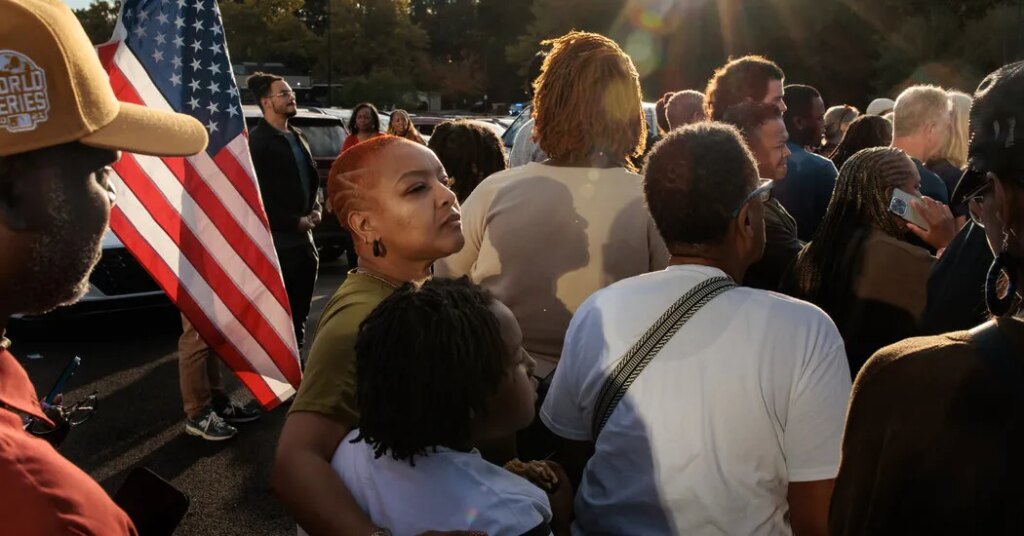
As we go to the polls today in this most consequential of midterm elections, we face our country’s fourth great crisis. Because of misinformation, which the current administration encourages, age-old fears and conspiracies have created a sense of us versus them that is fundamentally at odds with a healthy democratic society. Elections are in doubt, the highest court seems compromised, history has been distorted, books have been banned, and dictators have been coddled while our closest allies have been ridiculed and dismissed. People are rightly concerned whether our institutions are at a breaking point.
I’ve spent the better part of the past two years crisscrossing the country, discussing the release of our PBS series on the American Revolution. No matter where I went or to whom I spoke, people asked me the same questions: What did I learn about our complicated and fragile republic over the nearly 10 years it took to make the film? Can a country as divided as ours survive? What might our founders think of us today?
I think the founders would be hugely disappointed that so many members of the legislative branch have ceded so much power to the executive branch, which has filled that vacuum with corruption and assaults on the rule of law, even undermining the fundamental right to vote. John Adams, who insisted that a republic could not function without virtuous leaders, would be appalled at the prevailing vulgarity and incompetence.
From the start, the creation of the United States was unlikely. For most of human history, people had lived under authoritarian rule, but in the 13 former British colonies clinging to the Eastern Seaboard, people (white men) would create something new: citizens.
“All experience has shown,” Thomas Jefferson wrote in the Declaration of Independence, “that mankind are more disposed to suffer, while evils are sufferable, than to right themselves by abolishing the forms to which they are accustomed.” Maintaining a democracy would be difficult, an active exercise that would simultaneously try to honor our individual freedoms (what each of us wants) and our collective freedoms (what we need).
George Washington’s great achievement was not just winning a war against overwhelming odds, but persuading 13 new states with different economies, religious beliefs and competing interests that they were now part of something new in which old animosities would yield to an individual, as well as collective, sense of union. There would be an “us,” with no “them.”
During the Constitutional Convention in the summer of 1787, delegates understood that in the many compromises they would strike, they also had to engineer defenses against the rise of a tyrant. In a letter to James Madison, Jefferson worried that a president who lost an election might “pretend false votes” and “hold possession of the reins of government.” Alexander Hamilton was also concerned that an “unprincipled” man would “mount the hobby horse of popularity” and “throw things in confusion.” “In a government like ours,” he wrote, no one is “above the law.”
Today, nearly six years after an angry mob stormed the Capitol to overturn the results of the 2020 election, election denial is still part of the current administration’s playbook. Only four of the 13 Republican candidates in highly competitive Senate races have said that they would accept the outcome of the upcoming elections unconditionally.
It hasn’t always been that way. During Watergate, as damning evidence accumulated, members of President Richard Nixon’s own party concluded that their obligation to the Constitution was greater than their obligation to him or the G.O.P. In August 1974, Republican congressional leaders went to the White House and told Nixon that his support in Congress had collapsed. He announced his resignation the next day.
Citizens today should remember that our democracy relies on an ongoing conversation between them and the past. At Gettysburg, only a few months after the largest battle ever fought on American soil, Abraham Lincoln asked the living to dedicate themselves to “a new birth of freedom,” recognizing that every generation must renew and expand on the promises first made in Philadelphia. Dwight Eisenhower, who knew better than most the terrible cost of war, reminded us in his farewell address that only “an alert and knowledgeable citizenry” could preserve liberty and security.
I’m optimistic that the American people recognize that our democratic institutions and sense of decency can bring us together.
We have come back from crises before. We were more divided than we are today during the Revolution, the Civil War, Reconstruction and Vietnam. For 250 years, our country has prevailed in fits and starts, forging achievements, however imperfect, related to race and equality in American life.
But given our divisions, as we vote we must each ask ourselves: What kind of leadership will see us through the current crisis? Why do we continue to support leaders who are invested in deepening our divides, who tap into conspiracy theories to frighten the public, deny facts and, to quote Alexander Hamilton, “throw things into confusion,” so that they “may ‘ride the storm and direct the whirlwind’”?
Most midterm elections are seen as referendums on the policies of the president. This one is no different. But there’s something more fundamental at stake here, beyond policy differences. This election is about the people — who are empowered to check our chief executive — and the candidates running for Congress, who either have sworn an oath to the Constitution or hope to do so. Whether they are prepared to honor their oath should matter enormously to everyone who values the idea of us — the idea of America.
Ken Burns is a documentary filmmaker. His last film was a series on the American Revolution.
The Times is committed to publishing a diversity of letters to the editor. We’d like to hear what you think about this or any of our articles. Here are some tips. And here’s our email: [email protected].
Follow the New York Times Opinion section on Facebook, Instagram, TikTok, Bluesky, WhatsApp and Threads.
The post Ken Burns: We Face Our Nation’s Fourth Great Crisis appeared first on New York Times.