Vincent Ialenti is a former Energy Department program manager and a senior research fellow at Tampere University in Finland.
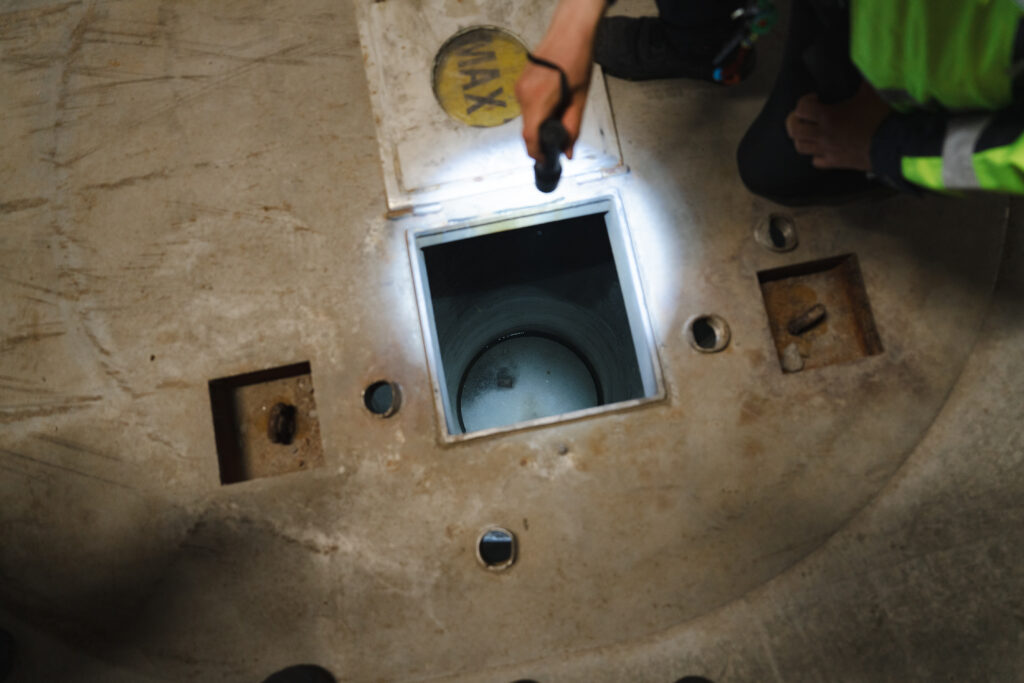
On Oct. 22, Finland granted a nuclear waste company the world’s first operating license for a deep geological repository for spent nuclear fuel — the highly radioactive material left behind by reactors. At Onkalo, more than 1,400 feet below the Baltic islet of Olkiluoto, copper canisters surrounded by clay will be built to secure nuclear waste for hundreds of thousands of years. Final disposal will begin after tests and safety inspections are completed.
Onkalo is a remarkable feat of engineering. The political achievement is just as striking. Finland kept its nuclear waste program on track for more than four decades, weathering changing governments and keeping its host municipality, Eurajoki, at the table. In the United States, where nuclear waste policy lurches from one administration to the next, that consistency is almost unimaginable.
The U.S. has accumulated about 97,000 metric tons of spent fuel, stranded at nearly 75 sites in more than 30 states. Communities never consented to keeping it indefinitely. Yet without a repository like Onkalo, the waste lacks a final destination. Even if the U.S. embraces spent-fuel recycling, reprocessing still leaves behind highly radioactive waste that requires deep geological disposal.
The Energy Department signed preliminary agreements with six states to explore hosting Nuclear Lifecycle Innovation Campuses, which could combine fuel production, reprocessing plants and waste disposal. But its Sept. 30 target for reaching more formal “host agreements” has passed. West Virginia withdrew after residents learned that state officials had proposed possible nuclear campus sites without consulting affected communities.
I have witnessed the contrast firsthand. From 2012 to 2014, I conducted anthropological fieldwork among scientists preparing Onkalo’s “safety case”: the technical argument that says the repository can protect human populations across future climate changes, earthquakes and ice ages. Later, at the Energy Department, I managed a $24 million program to help American communities evaluate, on their own terms, whether to host a spent-nuclear-fuel storage facility.
America has run Finland’s experiment in reverse. Federal law still designates Nevada’s Yucca Mountain as the nation’s sole repository site, even though Congress hasn’t funded its development since fiscal 2010. The Energy Department launched a consent-based siting process during the Obama administration, sidelined the process under the Trump administration, revived it under the Biden administration, and then shelved it again during President Donald Trump’s second term. The result: no spent fuel repository. Just political whiplash.
Trump’s nuclear campus plan puts states at the forefront of the search for hosts. However, a governor’s signature is no substitute for the informed consent of the communities who will live beside the waste. Five features of Finland’s approach explain how it sustained local support for decades:
First, Eurajoki was legally authorized to say no in the initial stage of the project’s development. That veto power gave the municipality leverage. The leverage gave the community’s consent meaning. Meaningful consent built trust. Eurajoki’s council voted 20-7 in favor of the waste repository.
Second, Posiva, the company behind Onkalo, studied four possible sites — weighing social conditions alongside geology. It chose a well-informed municipality already home to a nuclear plant.
Next, Finns’ relatively high confidence in public institutions gave Posiva a preexisting reservoir of societal trust.
Further, hosting paid. With reactors and a repository located side by side, nuclear facilities became a key pillar of Eurajoki’s economy and tax base.
Finally, Finland taxes current generations to support future generations. Since 1988, nuclear operators have paid into a state-administered fund for future waste management. The fund now holds enough to cover the costs of all nuclear waste generated in Finland.
With Eurajoki in mind, American communities weighing a nuclear campus should ask: Can we walk away? Did we volunteer ourselves, or were we volunteered by state officials? What economic benefits will we get? Where will the money come from? Will the Energy Department’s promises survive electoral turnover?
That last question leads straight to Washington. U.S. spent-fuel policy sits in the Energy Department’s Office of Nuclear Energy, whose mission is to advance nuclear energy. There, waste management competes for attention and funding with reactor innovation and commercialization. The spent-fuel program is also vulnerable to annual budget swings and Cabinet-level politics. The U.S. Nuclear Waste Fund holds over $50 billion, but spending the money requires approval from a Congress racked by partisanship. This is a precarious framework for commitments measured in decades.
America cannot import Finnish institutions or civic culture, but it can heed Finland’s broadest lesson: Consent depends on reciprocity, and reciprocity requires institutions that can keep their word decade in and decade out.
For years, experts across the political spectrum have called for a single-purpose U.S. nuclear waste organization with steadier funding, programmatic continuity and insulation from partisan turnover. Proposals range from an independent federal agency to a federally chartered corporation. But the underlying logic is the same: States, tribal nations and host communities deserve a more stable partner that can uphold its side of the bargain.
Before signing a hosting agreement, states and communities should follow Eurajoki’s lead: demand clear terms for consent, negotiate lasting economic benefits and seek sturdy multigenerational commitments that can outlast changes of administration.
Finland’s Onkalo project shows the world what patient, steady, trusted institutions can achieve. If America wants communities hosting nuclear waste to plan decades, centuries or millennia ahead, Washington must plan beyond the next administration.
The post America is running Finland’s nuclear experiment in reverse appeared first on Washington Post.