Kratom, long used by people seeking relief from addiction to prescription opioids and alcohol, is increasingly being pitched as a wellness product that purports to raise energy, sharpen focus and enhance athletic performance.
Some makers of kratom, a substance that is derived from the leaves of a tropical tree and often sold in the form of drinks, powder or capsules, have distributed free samples at gyms. Others have sponsored sporting events or trumpeted the product’s benefits with the help of social media influencers and wellness podcasts.
What this marketing often fails to acknowledge is the potential for kratom to lead to addiction, liver injury, seizures and in some cases, fatal overdoses.
The Food and Drug Administration has not approved kratom products for any medical use. Federal officials have moved to temporarily ban products with high levels of a synthetic version of kratom known as 7-hydroxymitragynine, or 7-OH. They also announced plans earlier this year to ban a semi-synthetic form of kratom called mitragynine pseudoindoxyl, or M.G.P.I., but they agreed to allow it at certain levels after industry lobbying.
Some states have banned kratom outright or restricted sales to minors. But in many parts of the country, the drug remains widely available in gas stations, smoke shops and online.
Doctors are especially concerned about the growing number of synthetic kratom products which can be far more potent than natural kratom. M.G.P.I., which is an opioid, has been linked to at least 48 fatal overdoses. But even products marketed as whole leaf or natural can contain compounds like M.G.P.I., and carry a risk of addiction, experts said.
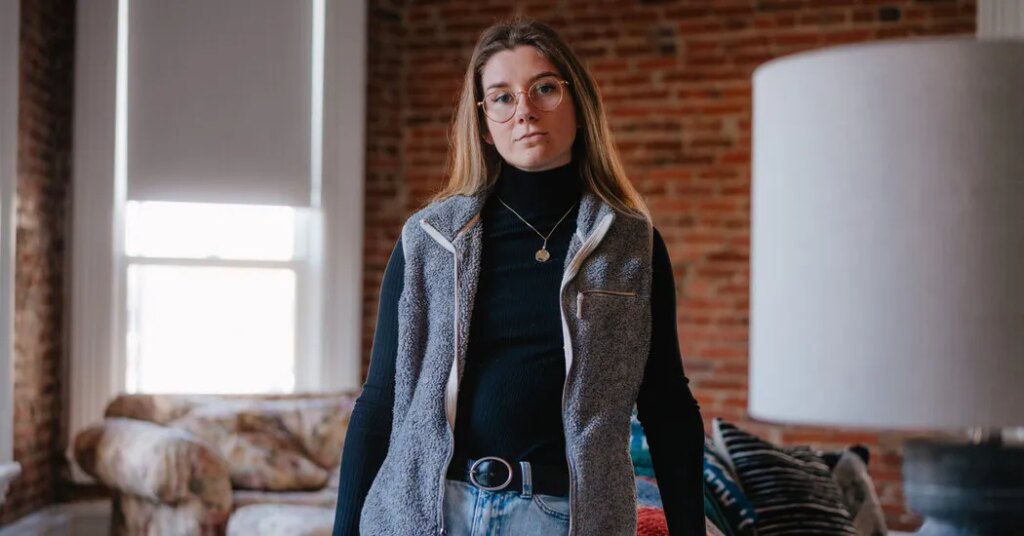
When Hilary Tesluck, 30, first tried kratom, she was looking for an alternative to the prescription medication she took for anxiety. To Ms. Tesluck, kratom sounded like a “life hack” worth trying, similar to the vitamins and supplements she took every day. Initially, she felt like it eased her anxiety and depression.
“I would praise kratom and share it with everyone I knew,” she said.
After about a year and a half of what she considered moderate use, she began taking kratom in larger doses and more frequently. When she realized the drug seemed to suppress her appetite, she began taking even more, to lose weight. At her peak use, Ms. Tesluck was consuming up to 100 capsules a day.
She often became severely nauseous after taking it. “I would throw up some of my dose and then take more immediately, just because I didn’t want to waste anything,” Ms. Tesluck said. She began falling asleep unexpectedly while working from home, episodes she attributed to the high doses of kratom.
It was only when she ran out during a snowstorm that she realized she had become addicted. Ms. Tesluck woke the next morning drenched in sweat. Her muscles ached and she felt anxious. “Now I know I can’t miss a dose,” she recalled thinking.
While estimates vary, some studies suggest between 29 and 40 percent of regular users of kratom become dependent, as was the case for Ms. Tesluck, who now works for a nonprofit focused on kratom addiction. Experts said they were concerned that many people trying kratom based on its wellness claims do not fully understand how dangerous it can be.
“The public deserves accurate, nuanced information rather than messaging driven primarily by commercial incentives,” said Dr. Cornel Stanciu, the director of addiction services at New Hampshire Hospital.
‘It Very Quickly Turns on You’
Kratom brands have used a number of wellness-focused tactics to promote their products. One brand, MIT45, has sponsored the men’s division of the International Fitness and Bodybuilding Federation, in a partnership described as having the potential to “transform the fitness industry,” and “enrich the experience for athletes.” The company also previously paid individual athletes to promote its products, Ryan Niddel, its chief executive officer, said.
MIT45 continues to sell its products at gyms and through other health and wellness channels, Mr. Niddel said.
When asked about safety concerns, Mr. Niddel maintained that the company’s products posed little risk when consumed according to its serving and frequency recommendations, adding that sponsored athletes had been instructed to avoid health claims. “We think it has a place in the market, but that place isn’t for everybody and that place isn’t in high quantities for long periods of time,” he said.
Another brand, Mitra-9, has recruited mixed martial arts fighters, wrestlers and sobriety content creators for a social media campaign promoting its products. Kingdom Kratom, which markets its products specifically for workouts, sells kratom sample packs that its website suggests customers test “across a training week.”
One popular brand, Feel Free, has drawn particular scrutiny for its marketing tactics, which have included distributing free samples through partnerships with university athletic programs and an Instagram campaign for using the hashtag #alcoholalternative. (That campaign was the subject of a class-action lawsuit that ended in an $8.75 million settlement.)
The company, like other kratom makers, has also promoted its product on podcasts. Jasmine Adeoye first heard about kratom on an episode of The Skinny Confidential Him & Her Show, now known as The Bossticks. Michael Bosstick, the co-host of the podcast, called kratom a “magical elixir.”
Ms. Adeoye, 31, said at first she drank Feel Free only occasionally, on the weekends. But as a stressful remote job left her feeling anxious and isolated, she started drinking more.
“It feels very, very safe at first,” she said, adding: “It very quickly turns on you.”
Within a year, Ms. Adeoye said, she was drinking two, two-ounce bottles a day, sometimes back-to-back. (Feel Free’s serving size is half a bottle, and the company warns against consuming more than one bottle in 24 hours, because it can be “habit-forming.”)
Ms. Adeoye maxed out two credit cards to support her habit, she said. Her sleep deteriorated, and she developed heart palpitations that would wake her up at night. She kept her addiction to herself.
“Who’s going to believe me if I’m addicted to a wellness tonic?” she recalled thinking. “You start to believe there’s something wrong with you when you become addicted,” she said.
In response to questions about Feel Free’s marketing, Aaron Henninger, the chief marketing officer of its parent company, Botanic Tonics, said the company is “continuing to invest in research to better understand our products and their effects.”
He added that Feel Free “will continue to prioritize the safety and well-being of our customers above all else.” The company now clearly identifies kratom as an ingredient in its products’ labeling and advises people with a history of substance abuse not to use it.
Dr. Stanciu and other experts noted that people who have previously struggled with alcohol or other drugs may be especially vulnerable to kratom addiction. He added that targeted marketing through podcasts, influencers and wellness branding gives consumers a false sense of safety, especially when audiences include young people or those with a history of substance abuse.
That was the case for Jason Ellis, a podcast host, former professional skateboarder and mixed martial artist. Mr. Ellis first learned about kratom through friends in the fight community, who described it as something relaxing — “kind of like a painkiller, but herbal,” he recalled.
In 2023, Mr. Ellis, who had spoken openly on his podcast about his history of misusing alcohol and painkillers, received a message from Jerry W. Ross, the founder of Feel Free, he said. Mr. Ross offered him free cases of his company’s products, along with a cut of purchases made through a listener discount code, in exchange for promoting the drinks, according to Mr. Ellis. (Mr. Ross did not respond to a request for comment.)
Mr. Ellis took the deal, and tried the products himself. Within about six months, he was drinking up to three bottles a day. He recalled a time when his child called him while he was using kratom, hoping to talk. “I’m thinking, when can we get off the phone so that I can get high again?” he said.
He and others described attempting to quit kratom, only to relapse or struggle with difficult withdrawal symptoms, like sweating, chills and muscle aches — like “the flu, but worse,” Ms. Tesluck said.
She tried several times to quit, going so far as to seek treatment at a detox program. She sometimes went weeks without kratom, only to return to it when she began feeling depressed.
“I would cry all day long,” said Ms. Tesluck, When she finally was able to quit, she said, she experienced a mental fog that persisted for months.
Ms. Tesluck said she continues to hear from people who were introduced to kratom through free samples offered at gyms or on social media. She is concerned that the problem could become even worse if more potent products gain traction.
“Companies are coming out with new derivative products that are even stronger,” she said. “It’s not slowing down.”
The post They Tried Kratom for Its Purported Health Benefits, Then They Became Addicted appeared first on New York Times.