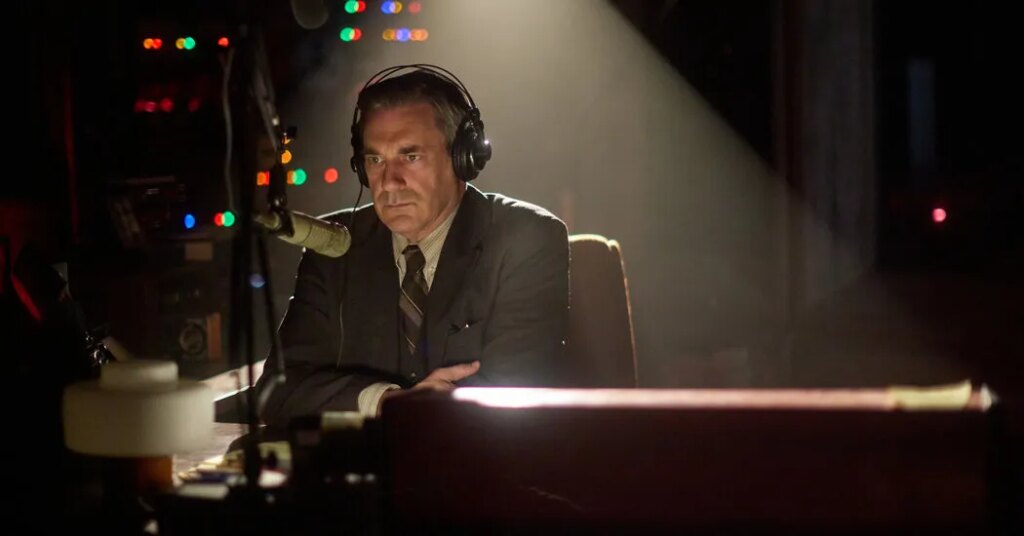
A little over a month ago, “American Hostage” premiered. The series, about a real-life armed standoff at an Indiana mortgage office in 1977, is one of those out-of-nowhere surprises I love to discover as a TV critic. It has committed performances from Jon Hamm and Giovanni Ribisi and eerily timely things to say about the frustrations of the powerless with the powerful.
You should watch it if you can. Which you probably can’t, unless you reach into your wallet, one more time.
See, “American Hostage” is on MGM+. What is MGM+? Good question! It’s a streaming service, descended from the premium channel Epix. (What is Epix? No time for that!) More saliently, it is $7.99 a month. That is, it’s $7.99 on top of the endlessly scrolling list of subscriptions you probably already have.
(Note: With many of the plans I discuss here, there are multiple pricing options — monthly or annual, with or without ads, bundled this way and that way. You may want a calculator.)
TV critics are not traditionally in the habit of considering price when they decide what to cover. This isn’t restaurant criticism. But lately TV consumption has begun to feel like high-end dining, with no limit of upcharges and price hikes and caviar supplements sending the tab to the heavens.
This is frustrating for consumers in inflationary times. But it’s also not great for the art, or at least for the experience and conversation around it. It creates yet another division of haves, choosing from a vast menu in media’s first class, and have-nots, missing out in steerage. It turns a medium that was once universal, if frustrating, into one that is increasingly inaccessible, if often excellent. “American Hostage” is good. But is it $7.99-a-month good? Is any show?
Once, TV was free — well, save for the investment in a set and an antenna and your precious time watching ads. Everyone had access to the same air and the same shows. I was born in the rabbit-ears era of TV, and I will not romanticize it as having been better. But like so many aspects of life “improved” by technology, it was less complicated.
This changed with the popularization of cable. “The Sopranos” helped turn HBO from an occasional domestic luxury (or motel-room amenity) into a cultural must-have. Increasingly, the TV worth watching and talking about was something you had to pay for. And then pay a little more. Cable channels proliferated, and the cable bundle — smushing together the channels you watched with the many you didn’t — got fatter and fatter.
Oversqueezed media consumers wished it could be different. If only you could pick and choose which platforms you subscribed to! Somewhere on Wall Street, a finger curled on a monkey’s paw, and the streaming business was born.
Now, if you had an internet connection (another fee, unless your neighbor’s Wi-Fi password hygiene was lax), you could choose your services à la carte: Netflix, Hulu, Amazon, Peacock. Disney+, Paramount+, AMC+. YouTube TV and YouTube Premium. Dropout, for comedy. Shudder, for horror. Crunchyroll, for anime. Want to follow pro sports? You may want a second job.
I am familiar with all of these because my work requires that I be able to watch anything that runs anywhere. Someday when I retire, dismantling my monthly media commitments will resemble unwinding the assets of a bankrupt Fortune 500 corporation.
At the same time, I am writing for people who are weighing another subscription against gas and groceries. And we all exist in an economy that is increasingly built around subscriptions for damn near everything, as discussed in a recent episode of “Last Week Tonight With John Oliver.” (HBO Max, starting at $10.99/month with ads.)
Sure, $7.99 is cheaper than a matinee movie ticket where I live, let alone a Broadway show or concert. But is it worth it for you? How would I know? As a critic, I know what is worthwhile, and the streaming era has created more spaces for the worthwhile to flourish.
The best of the art form is now scattered across a lot of walled gardens whose walls get a little higher every year. At this point, the rate of announcements you receive for streaming price increases — which are outstripping inflation — rivals the texts from candidates asking for donations. (PBS, despite its funding challenges, looks like a better deal every day.)
So the medium that used to be a pop-culture lingua franca becomes a Tower of Babel. The stories you experience and the references you get are determined by the purchase decisions you’ve made. A terrific show — say, last year’s “Hal & Harper” on Mubi — can languish on an obscure service, its audience curtailed before it even premieres.
And a population already fragmented by tastes, demographics and subcultures becomes further subdivided by economics. You can go rogue and share streaming passwords. You can create a system of reminders to drop various platforms. Or you can just give up, pick a service or two, and pray the algorithm gives you something good.
What’s good this year? There’s the new “East of Eden” on Netflix ($8.99 a month with ads, $19.99 without, $26.99 in 4K). There’s my favorite new series of the year, “Widow’s Bay” on Apple TV ($14.99 a month ad-free — or “free,” I guess, if you buy qualifying Apple products every three months for eternity). There’s a great new installment of FX’s “The Lowdown,” which streams on Hulu ($12.49 with ads, or part of an array of bundles as lengthy as the instructions for a tax return).
There’s also “Cupertino,” a new legal drama about the tech industry that I enjoyed more the longer it went on — and which blessedly airs on CBS, one of those old broadcast networks whose signal still flies magically through the air and can be gathered by an antenna.
Don’t have an antenna? There are plenty of streaming services with a “live TV” feature. It’ll cost you.
How much do you pay for TV streaming services? We want to know.
We would love to hear your thoughts about the costs of streaming TV. Fill out the form below, and we may contact you for an upcoming story. We will not publish or share your contact information outside the Times newsroom, and we will not publish any part of your submission without contacting you first.
The post Can You Afford to Watch TV? appeared first on New York Times.